How to Ship Seafood: Chilled and Frozen Packaging
To ship seafood, first identify the product form and required arrival condition. Chilled fillets, frozen shrimp and live shellfish need different treatment. Establish the required condition before selecting coolant, containment and carrier service.
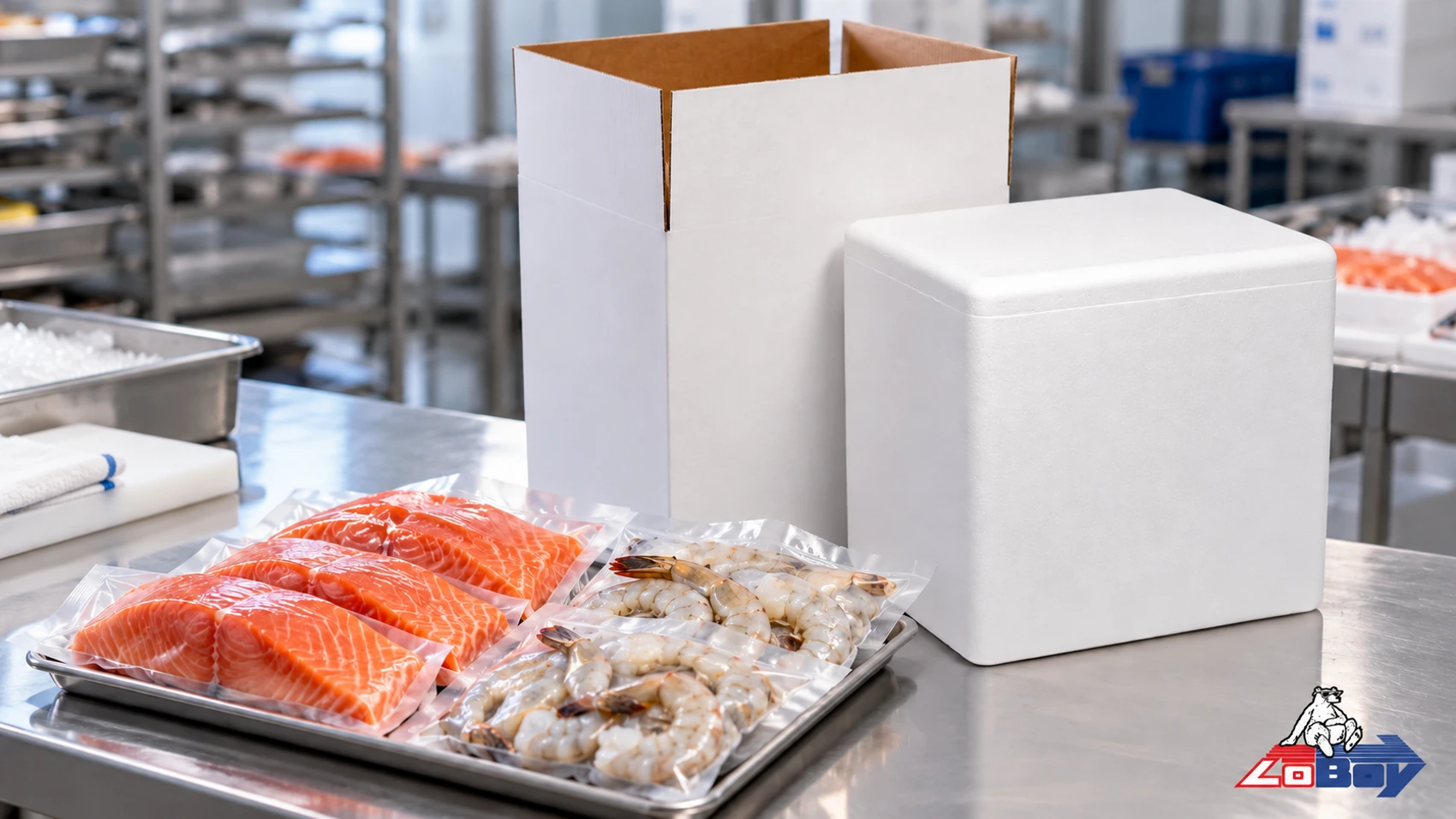
A wet carton, a punctured bag and a warm arrival are different failures. Your seafood packing process needs to address each one.
LoBoy supplies insulated coolers and gel packs for seafood-packing programs. Use this guide to define the packaging you need, then test the complete system with your products.
The How to Ship Perishables hub connects these decisions to the wider packaging resources.
Separate chilled, frozen and live shipments
For non-live seafood, chill or freeze the product to its intended shipping temperature before packing. Start frozen shipments with frozen seafood and chilled shipments with properly chilled seafood. Warm seafood adds heat for the coolant to absorb, leaving less capacity for transit. Keep seafood in appropriate storage until packing and minimize time outside it. Live seafood needs species-specific handling; do not apply frozen-food preparation to live shipments.
Start the packing plan with the product form. Whole fish, vacuum-packed portions and frozen bags may fit differently and create different leakage risks. Record the dimensions of the actual sale unit.
Live seafood requires species-specific handling and carrier acceptance. A method designed for frozen lobster tails cannot establish how to ship live lobsters. Keep those programs separate during planning and testing.
For frozen products, the frozen-food guide provides the wider temperature-control framework. Chilled shipments can also use the perishable-food resource.
Define the sale unit and arrival standard
Record what the buyer will open: a whole fish, a tray of fillets, a bag of shrimp or several wrapped portions. Include the inner packaging in each measurement. A long fish can determine cooler length even when the rest of the order is small.
State whether the order must remain frozen or arrive chilled. Record the required product temperature and how you will check it. The words packed on ice describe a method; they do not define a measured arrival result.
Keep product forms in separate packing families until trials show which orders one arrangement can cover. A change from flat portions to bulky whole fish can alter fit, pressure on seals and coolant space. A vacuum seal also does not remove the need for the product's temperature controls.
Contain moisture before it reaches the cooler
Check product bags for damage and confirm that their seals are intact. Add a suitable leak barrier around the product packaging. Use absorbent material suited to the expected moisture.
Protect sharp edges and avoid placing fragile seals under load. A foam cooler and outer carton cannot repair failed inner packaging. Trial handling can reveal puncture or movement problems before thermal testing begins.
Check containment under realistic handling
Build a sample order with the inner packaging and protective layers you plan to use. Check where corners, fins or rigid container edges press against neighboring packs. Check seams after trial handling and record any leaks.
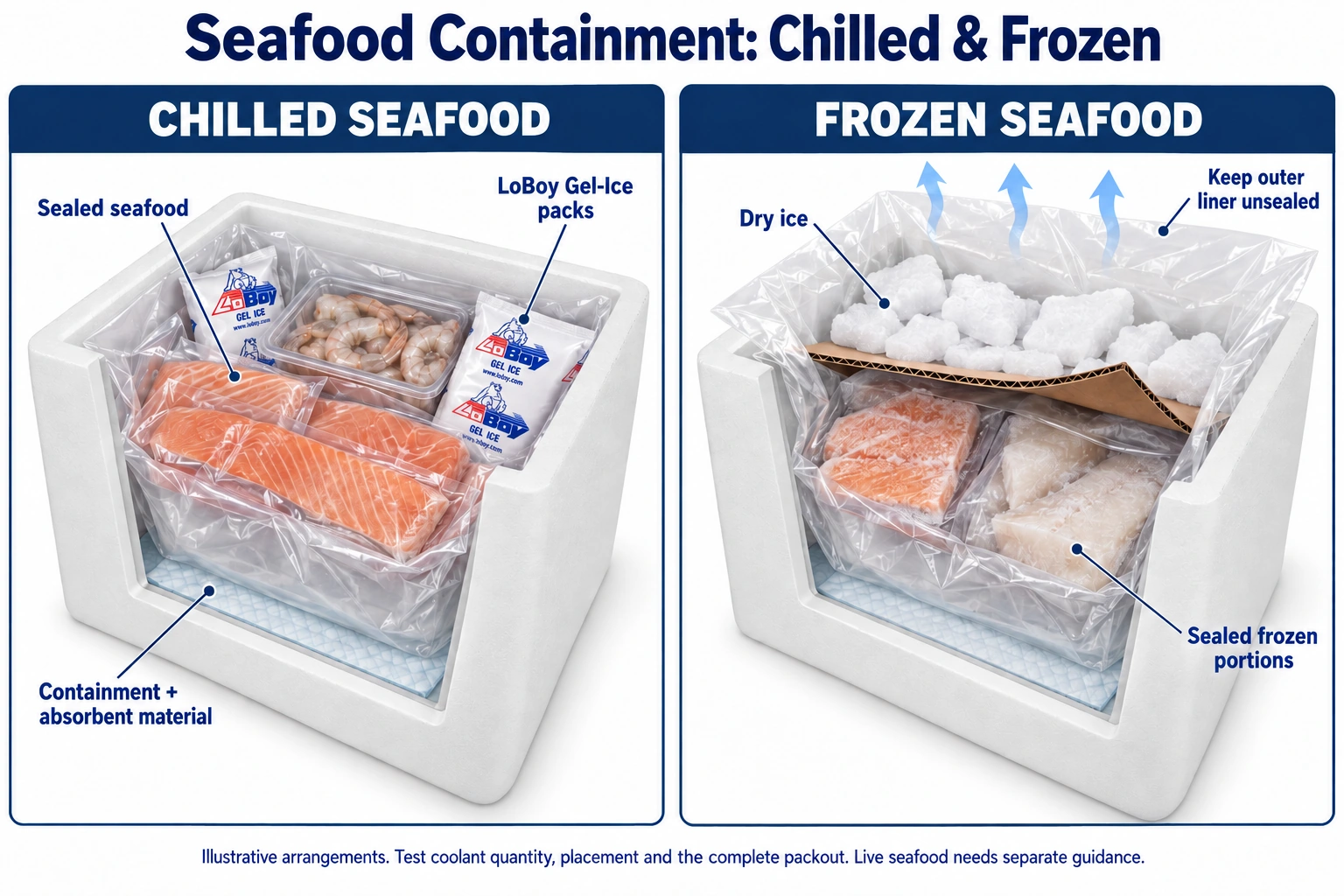
Contain liquid around the product, before it reaches the foam cooler. Choose added protection that suits the load. For dry-ice shipments, the full package must still allow gas to escape.
Select an insulated container that fits
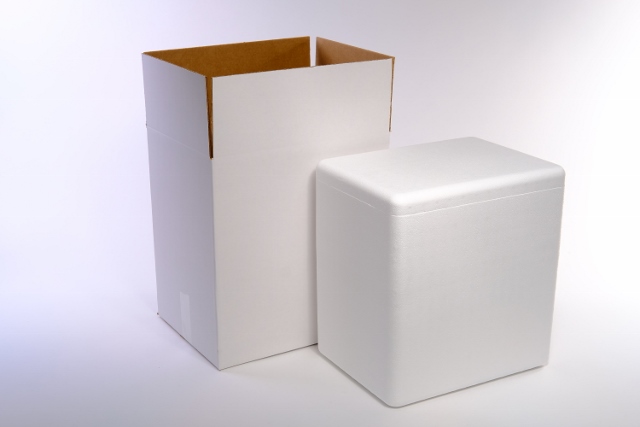
Allow room for seafood, coolant, absorbent material and padding. Check the longest wrapped item against the cooler's usable inside space. Avoid bending or compressing sale units to force a nominal fit.
Review LoBoy shipping coolers with your proposed arrangement. Add a protective outer carton and secure the load against movement.
Check fit with a complete seafood order
Consider a mixed order of flat fillet packs and a taller shrimp container. Place the wrapped items in the proposed layout. Add the actual leak barriers, absorbent material and coolant. Measure the full arrangement before choosing the shipping box and cooler.
Check that the lid seats fully and the outer carton closes without crushing the load. Look for tray corners pressing into bags or product seals trapped under other items. Adjust the arrangement before the temperature trial, then photograph the final layout for the packing team.
Repeat the fit check for the smallest order in that family. Empty space may allow a small load to shift even when the largest order fits well. Use suitable support without blocking the gas release needed for dry ice.
Match coolant to the required condition
Use a tested arrangement for chilled seafood and other perishable goods. Gel packs for shipping explains how preparation and placement affect the result. Do not assume that a certain pack count works for all seafood orders.
Frozen seafood may use a tested dry-ice system. Follow the dry-ice guide for handling, venting and carrier preparation. Protect the product from unsuitable direct coolant contact.
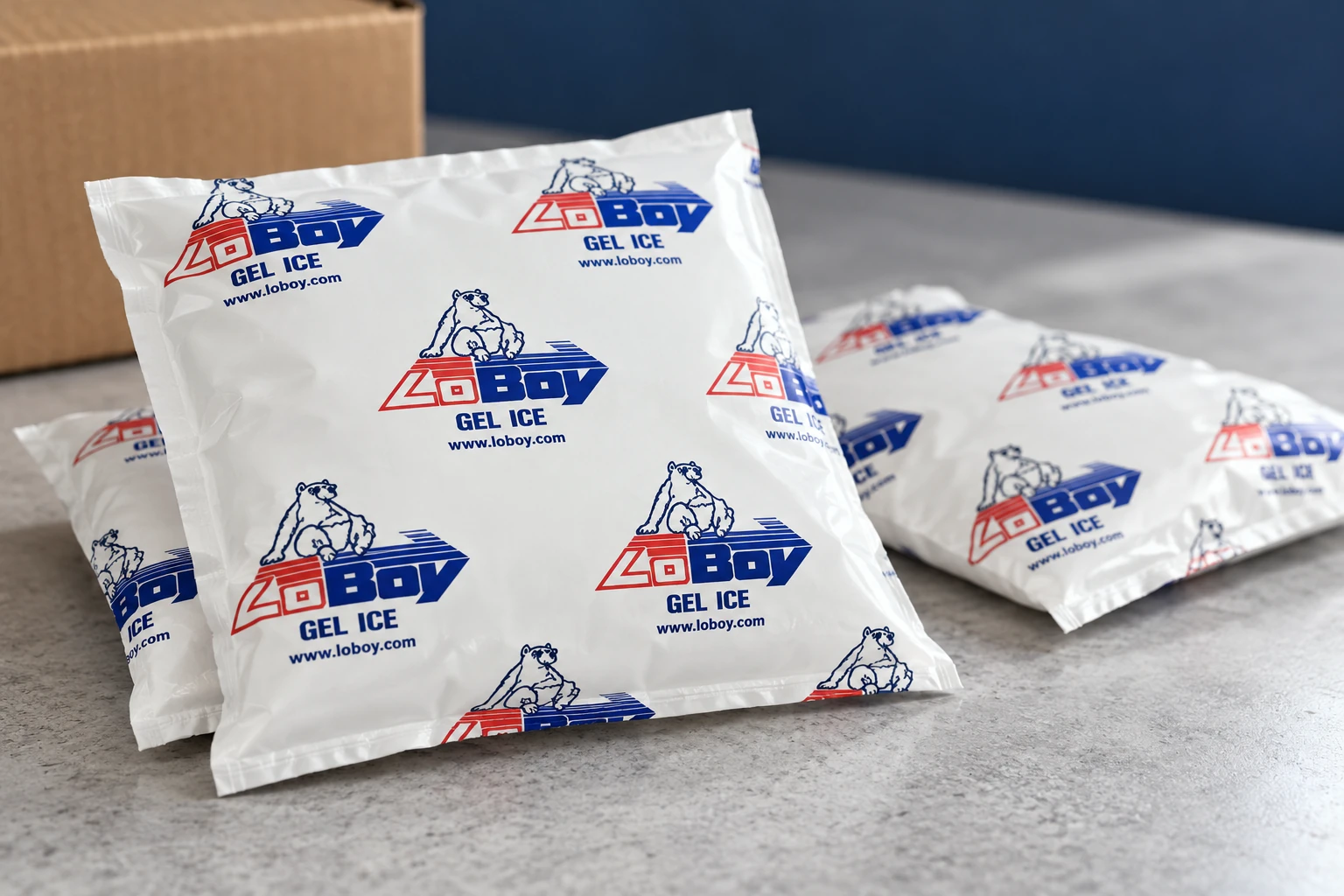
Compare the available LoBoy reusable gel ice packs when planning a chilled-food trial. The product format and packing arrangement need to work together.
Decide whether wet ice belongs in the method
Wet ice adds meltwater to the packing problem. Do not replace gel packs with loose ice and assume the existing containment still works. Check the carrier's current rules for the selected service before planning that method.
FedEx's perishable-packing guidance favors gel packs for items that need to stay cold. When wet ice is used, its instructions call for absorbent material, an inner liner and double-bagged ice. Follow the full instructions rather than treating these components as a complete packing recipe.
Keep the method clear in the packing instruction. Staff need to know whether they are handling gel packs, wet ice or dry ice. Each creates different preparation and containment needs, and dry ice requires gas release.
Build a packing instruction staff can repeat
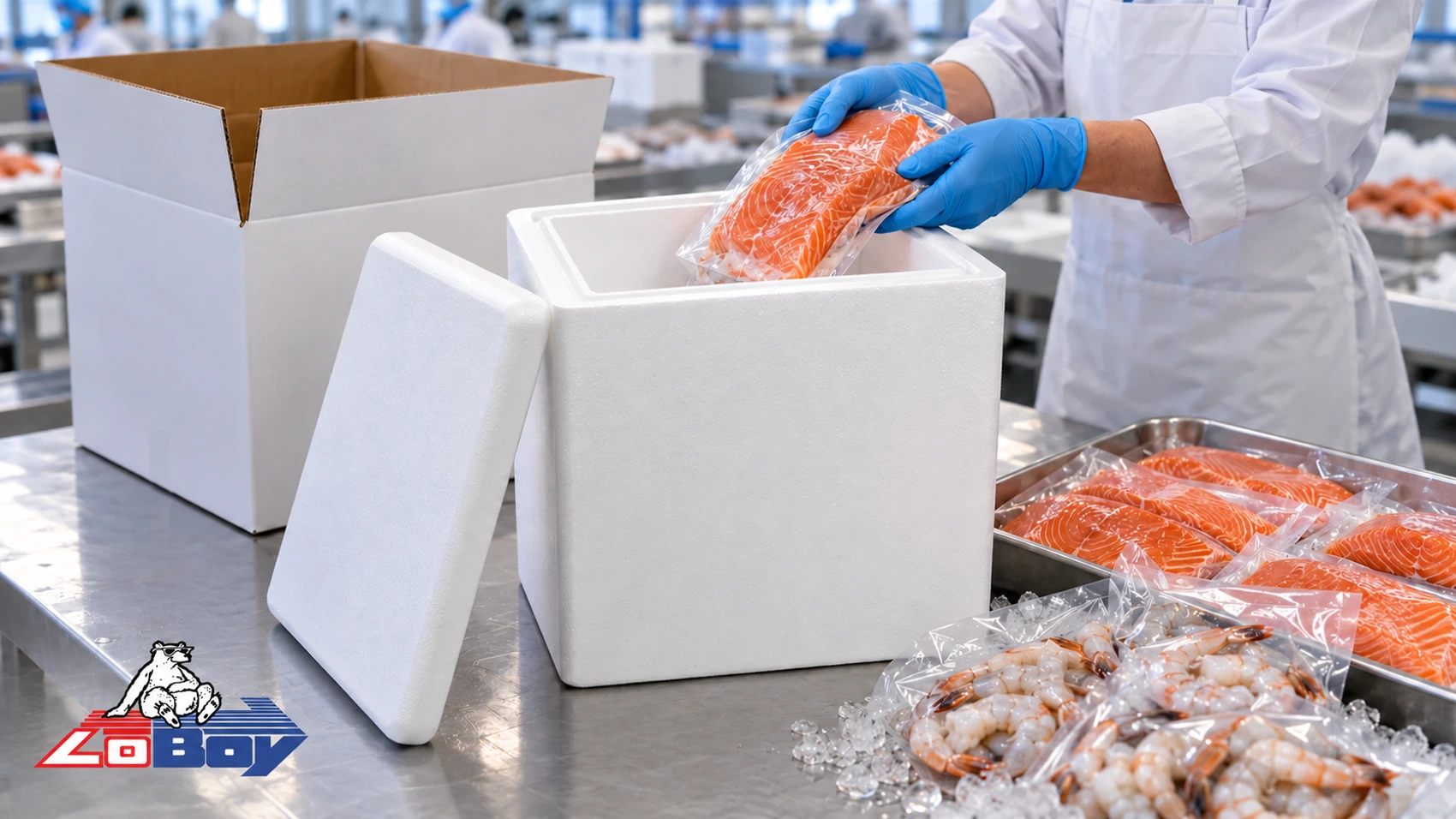
- Prepare the clean cooler, leak barriers, absorbent material and labels.
- Keep seafood in its required storage until loading.
- Inspect and contain the product.
- Place coolant and protective layers according to the tested layout.
- Secure the load and add temperature sensors when required.
- Close the package using the approved method.
- Confirm service acceptance and shipping information before collection.
Test temperature and containment separately
Record each tested load range and coolant amount. Include the likely collection and receiving window. Review the plan when product sizes, routes or seasons change.
Check both temperatures and physical damage after a trial. A dry exterior does not prove temperature control, and a cold payload does not excuse leakage. Set acceptance criteria for both before adopting the packing instruction.
Keep separate records for leaks and temperature
Give each trial a package version and order description. Record starting product temperature, coolant preparation and weight, cooler model, inner packaging and component positions. Mark each sensor position to support comparison with later trials.
Set separate pass-or-fail checks for product temperature, intact seals, liquid containment and load movement. A bag can leak while the food stays cold. A carton can remain dry while the seafood warms beyond its required limit. Both findings belong in the trial record.
Test the full transit time from packing through receipt, including the delay margin your operation needs. Record collection and receipt times separately. Retain failed results as well as successful ones; a packing instruction needs clear limits.
Review changes in fish size, tray format, product weight or coolant before using them for customer orders. Change one trial factor at a time when investigating a failure. This helps distinguish a seal problem from a cooler-fit or temperature-control problem.
Confirm dispatch and receiving arrangements
Check the actual carrier service, destination and collection cutoff before packing. Confirm that it accepts the seafood form and the selected coolant. Dry ice adds hazardous material preparation requirements; use the current rules for that service.
Plan dispatch around a recipient who can receive and store the order promptly. Reassess the shipping window before release after a missed collection or changed delivery date. Adding coolant without reviewing the tested arrangement does not establish a new safe window.
Plan the arrival experience
Give the recipient storage directions and expected delivery information. Track the shipment and define a response for delivery exceptions. Record damaged bags, wet cartons and temperature concerns as separate failure types.
FoodSafety.gov recommends a thermometer check when shipped perishable food arrives. Appearance and smell cannot establish safety. Give clear receiving instructions and a way to report an order that fails the agreed checks.
Give the receiver an actionable arrival check
Ask the receiver to inspect the outer carton, cooler and product packaging promptly. Record wet areas, damaged bags and signs of load movement separately from the product-temperature result. Photos can help show damage, but they cannot establish temperature history.
For shipped perishables, FoodSafety.gov advises checking with a food thermometer. Its general guidance allows frozen food, partially frozen food with ice crystals, or food at 40°F or below. Your specification for frozen seafood may be stricter. Record whether the order meets that agreed condition as well as the safety check.
After confirming safe arrival temperature, store the food in a refrigerator or freezer promptly. Food arriving above 40°F should not be eaten or tasted to assess safety; notify the supplier. Supply a clear contact route so the receiver can report the order number, receipt time and findings.
Seafood shipping questions
Can one seafood box cover chilled and frozen orders?
One cooler may fit both jobs, but each complete packing system needs its own test. Coolant, preparation and receiving requirements can differ.
Is odor a reliable temperature check?
Use the product's receiving criteria and appropriate temperature measurements. Appearance or odor alone cannot establish the shipment's temperature history.
Find the procedure for the seafood you sell
- Liquid escaping from the load: Seafood leak prevention
- Whole fish, fillets or portions: Shipping fish
- Live versus prepared lobster: Shipping lobster
- Species and product-form distinctions: Shipping shellfish
- Chilled or frozen retail shrimp: Shipping shrimp
Keep live-seafood programs separate from the sealed containment used for non-live frozen foods. Obtain the applicable species, food-safety and carrier requirements before selecting closures and coolant.
For commercial seafood operations, the FDA hazards and controls guide provides hazard-specific context. It does not establish that any generic LoBoy packout is suitable.
Check the complete cooler-loading sequence when turning the chosen arrangement into an instruction.
Compare complete packing options before purchasing
Compare a cooler together with its outer carton, coolant load and protective materials. A smaller container may reduce unused space but leave too little room for the required coolant. A larger one may fit a long fish while needing more support for small orders.
Record the assembled package dimensions and weight for each candidate. Use those actual details when asking a carrier about service and rates. The container price alone cannot describe the cost of the complete shipment.
Include packing time, storage space and the number of cooler sizes your team can manage in the decision. Keep the comparison tied to successful trials and the orders you expect to ship. Operational convenience cannot replace the product's temperature or containment requirements.
Compare seafood packaging options
Use the perishable shipping costs guide to compare the full cost of each seafood packing option, including containment, coolant, labor and carrier charges.
Tell the LoBoy Client Solutions Team what seafood you ship, its packed dimensions and required condition. Use those details to compare cooler fit before testing the complete packing arrangement.