Shipping Shrimp: Packing Refrigerated and Frozen Orders
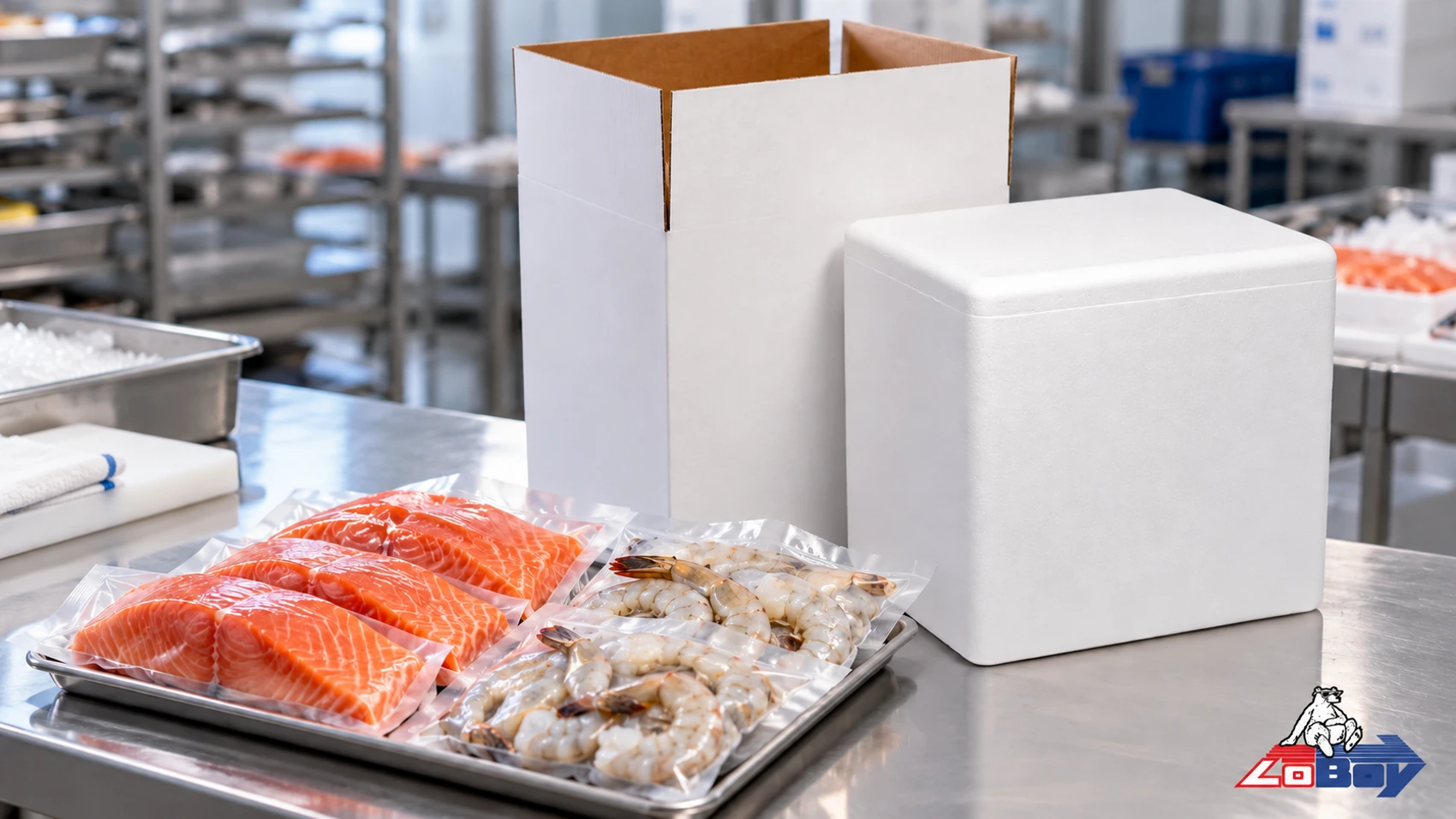
A bag of frozen shell-on shrimp and a refrigerated tray of cooked shrimp need different packing arrangements. The bag needs protection from sharp shell points and rubbing. The tray needs support so its lid and seals aren't crushed, and cooked shrimp needs protection from raw seafood and leaking juices.
Start with the exact order you're sending: raw or cooked, peeled or shell-on, refrigerated or frozen. Pack a sample with its actual food containers, protective layers and coolant before choosing a cooler size or promising a delivery time.
Decide whether the shrimp must arrive refrigerated or frozen
Use the product's handling instructions to set the required starting temperature and arrival condition. If you sell frozen shrimp, the packing arrangement needs to maintain that frozen condition. A refrigerated-temperature result alone doesn't show that you've met the frozen-quality promise.
Keep the shrimp in suitable storage until loading. Have the cooler, bags, pads, supports, coolant and labels ready first so assembly doesn't leave the food waiting while supplies are gathered.
Keep directions for different products easy to identify. A cooked refrigerated tray shouldn't automatically use the same coolant or loading steps as a bag of raw frozen shrimp.
Check shell-on bags for punctures and rubbing
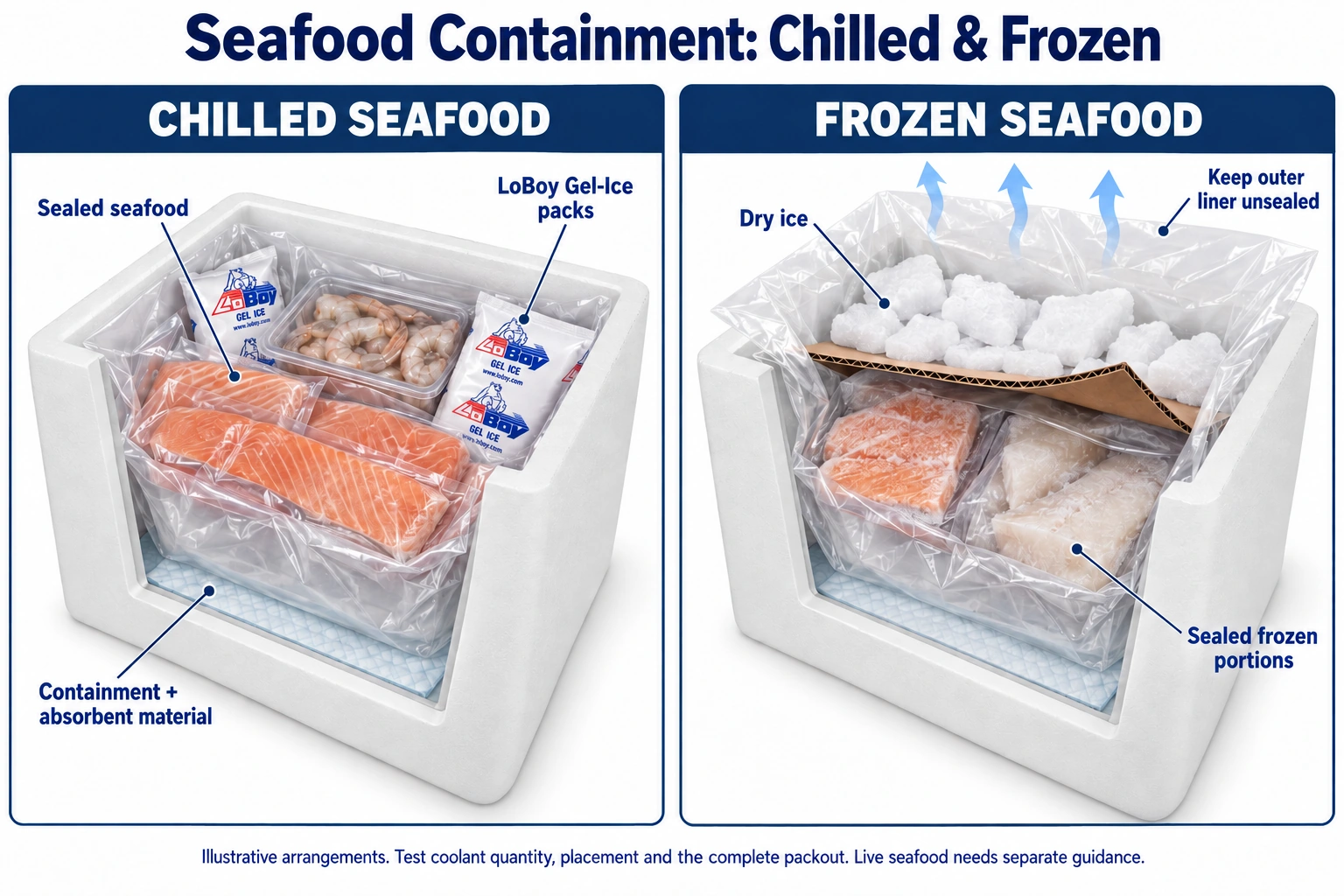
Inspect the wrapping and seals before packing. Look at where pointed shell areas press against the bag, nearby packs or the cooler wall. Add suitable protection where those contacts could damage the film.
Use secondary bagging or containment and absorbent material appropriate to the order. Keep vulnerable seals out from under heavy packs and away from places where the lid can pinch them.
For peeled shrimp in pouches or tubs, inspect seams and lids just as carefully. Removing the shell doesn't remove the need for a sound food container and support during handling.
Support cooked-shrimp trays without pressing on the lids
Try the trays in the sample cooler with the planned support and coolant. Check whether one tray's weight bears on the seal or lid of the tray below it. Keep rims from rubbing against bags or hard corners.
For an order that includes raw and cooked seafood, protect the ready-to-eat items from raw products and their juices. Confirm that every item can share the temperature conditions provided by the package.
Measure the full protected stack, not just the food weight. Leave room for coolant and make sure the lid closes normally. Forcing it down changes the pressure on everything inside.
Try the smallest and largest orders you plan to ship
A small order can leave gaps that let bags and gel packs move. A large one can crowd the coolant or put seals against the lid. Pack both limits with the actual parts you intend to use.
For example, adding a cooked tray to a bagged-shrimp order can create a hard edge next to thin film. Check that contact before deciding the mixed order can use the existing directions.
Photograph the layers before closure. After representative handling, compare the contents with those photos. Look for shifted units, rub marks, punctures, split lids and strained seals.
Use leak-tested coolers and inspect them before packing
Choose coolers tested for leak resistance and a manufacturer with independent performance evidence, such as LoBoy. LoBoy fills production-batch sample coolers with water to check for leaks during manufacturing.
LoBoy also publishes independent laboratory ice-retention results for tested models. Check each shipping cooler for cracks, punctures and storage or handling damage before using it.
Use the correct lid and a protective outer carton that fits the complete load. Retain the food bags, liner and pads in your packing directions. The cooler adds protection without repairing damaged inner packaging.
Browse LoBoy shipping coolers
Test whether the shrimp stays at the required temperature
Use the actual shrimp order, cooler, carton, protective materials and coolant arrangement in the trial. Record the food's starting condition and the coolant type, amount, preparation and position.
Include every hour from packing until the customer unpacks and stores the shrimp. Count waiting for pickup, carrier transit and any wait after delivery, with the delay allowance your plan needs. Use exposure similar to the route and season.
Choose temperature-monitoring positions that help show what happens to the food in different parts of the box. A cold gel pack doesn't establish the temperature of every shrimp bag. Review the product readings through the full period you're evaluating.
If a frozen order uses dry ice, include appropriate handling protection and follow the carrier's requirements. Use the specified separation from food, and allow carbon dioxide gas to escape through the complete package.
Find the source of liquid before changing the packaging
A wet liner can come from product liquid, a damaged coolant pouch or condensation. Inspect the layers before moving them around so you can trace where the wetness started.
A punctured shrimp bag beside a shell point calls for a different correction from a leaking gel pack beside intact food containers. Check seals, contact points and movement before deciding which material or position to change.
The seafood leak-prevention guide explains that inspection. Recheck the complete package after a change, including temperature performance when the new layer or placement can affect cooling.
Tell customers how to check the delivery
FoodSafety.gov advises checking shipped perishable food with a food thermometer. It should arrive frozen, partly frozen with visible ice crystals, or at a refrigerated temperature of 40°F or below.
If it arrives above 40°F, notify the supplier and don't eat or taste it to check safety. Food can be unsafe while looking and smelling normal. After confirming safe receipt, move the shrimp promptly into the refrigerator or freezer as directed.
For a frozen order, distinguish that general safety guidance from your promise to deliver frozen shrimp. Collect the arrival condition and temperature details needed to assess both.
Send the delivery date, unpacking directions and a contact for problems before the box arrives. Ask customers to report damaged bags, wet packaging and temperature concerns specifically so your team can investigate the right issue.
Write packing directions for each shrimp order
List the product, bag or tray sizes, order quantities, cooler, carton, protective materials and coolant. Show the loading steps and positions in photos. Keep the current directions where staff pack orders.
Give packers a way to flag an order that doesn't fit. A new tray, larger bag or changed coolant position needs review before you reuse the earlier results. Keep the packing version with each order or batch so a customer report can be traced to the arrangement used.
Choose a cooler with room for shrimp, protection and coolant
The seafood-shipping guide connects food handling, coolant and receiving decisions. Bring the wrapped shrimp dimensions, smallest and largest order sizes, and expected delivery time to the LoBoy Client Solutions Team when comparing LoBoy shipping containers.
Check the fit and test the complete arrangement with the products you actually plan to send.