How to Ship Perishable Food: Refrigerated Packing
To ship perishable food that needs refrigeration, define the required arrival temperature first. Choose a cooler, coolant and delivery window that pass trials with your actual orders. Protect the food containers from leaks and damage as well as heat.
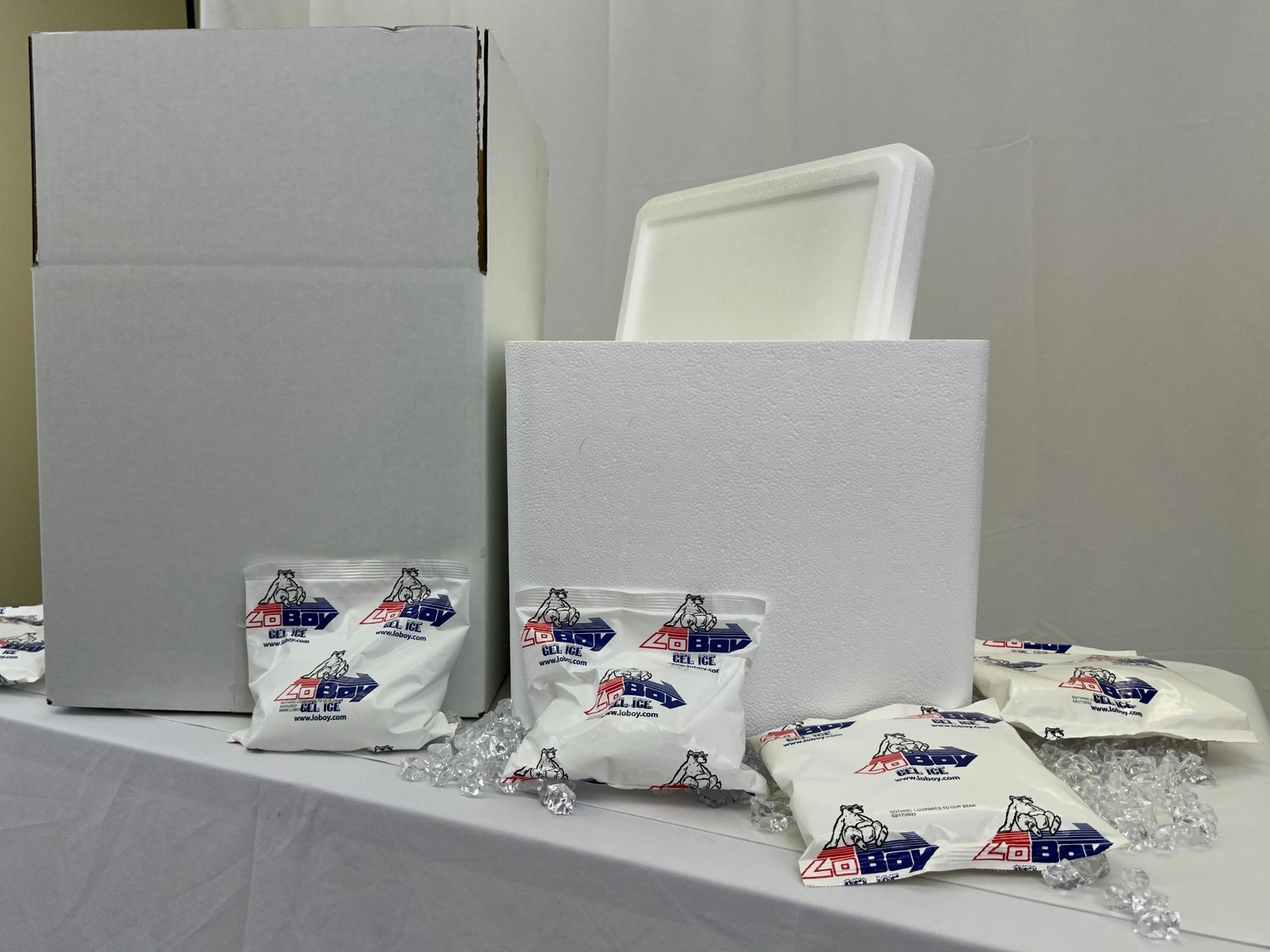
A chilled-food order needs more than a cold exterior when it arrives. Leaking containers, delayed storage and uneven cooling can each create a failed delivery.
This guide focuses on chilled food. For orders that must remain frozen, use How to Ship Frozen Food. LoBoy supplies insulated containers and gel packs for these packaging programs.
For the full resource map, including medicine and frozen products, use How to Ship Perishables.
Identify what needs refrigeration
Chill refrigerated food to its intended shipping temperature before packing, following the requirements for that product. Starting with warm food uses gel-pack capacity for initial cooling, leaving less for heat entering during transit. Keep food in appropriate refrigerated storage until ready to pack; use the cooler and gel packs to help maintain its prepared condition.
Prepared meals, dairy products and produce can need different temperatures and packaging. Follow the requirements of the actual product. Treat temperature-sensitive perishable goods as a complete cold chain, from storage through receipt.
Record the handling needs of each item in a mixed order. Separate products with conflicting needs, or test a package that meets all of them.
Protect food and containers before loading
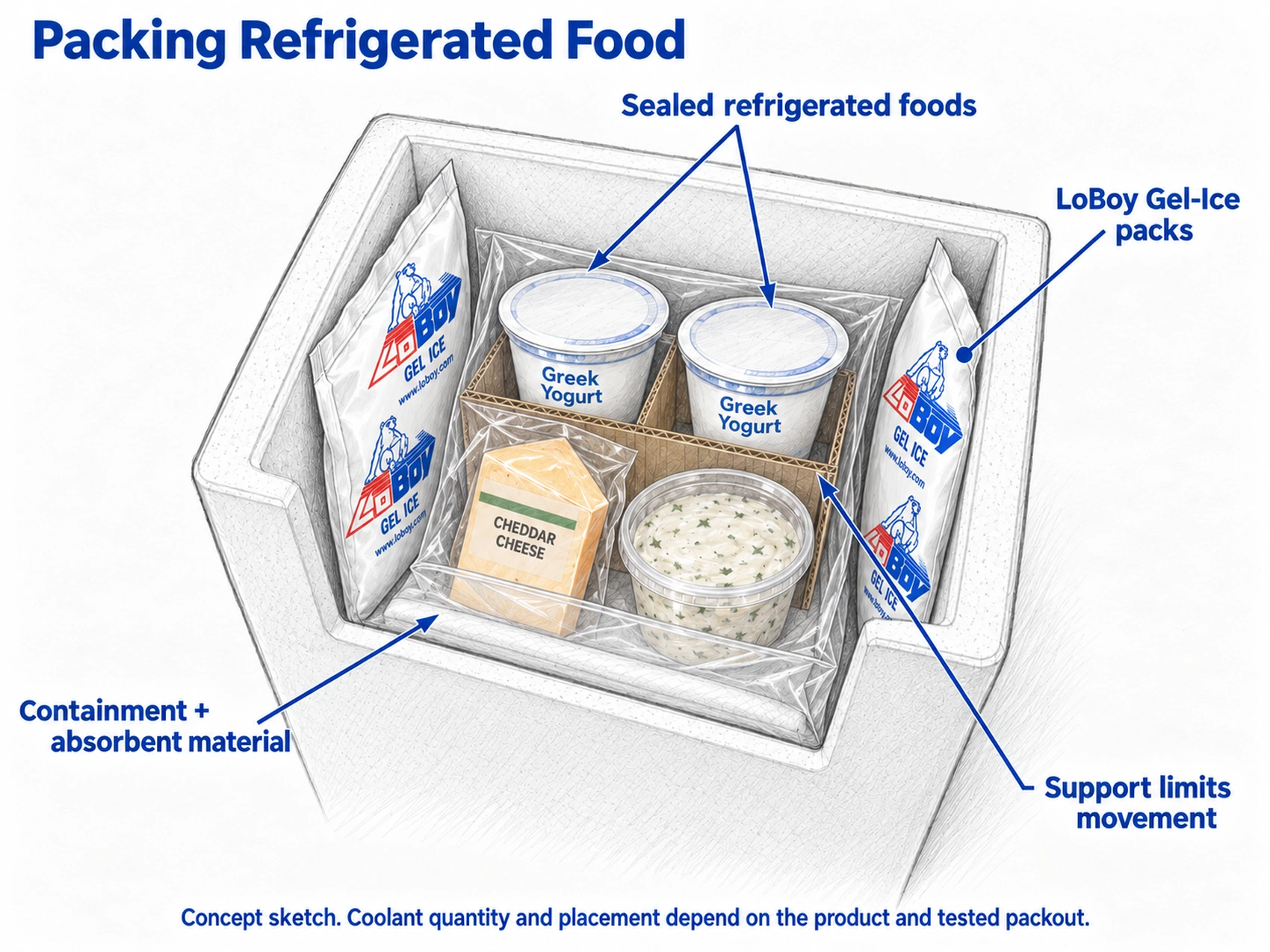
Close food containers securely and add a suitable leak barrier. Arrange containers so the load does not press against vulnerable lids and seals. Add absorbent material where moisture or leaks could affect the package.
A failed food-container seal remains a leak risk inside an insulated cooler. Test how the food containers handle movement and stacking with coolant in place.
Choose the cooler and gel-pack arrangement
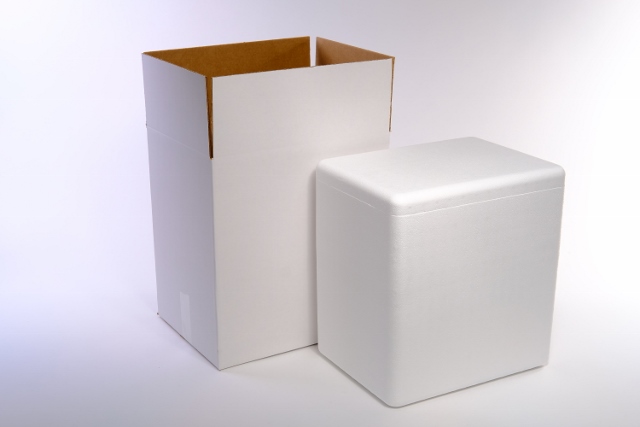
Measure the full load with protective layers, coolant and barriers included. Compare usable inside dimensions when selecting LoBoy shipping coolers.
Review gel-pack conditioning and placement before writing the packout. Establish coolant quantity and layout through trials with your actual food orders. Another shipper's pack count cannot establish your result.
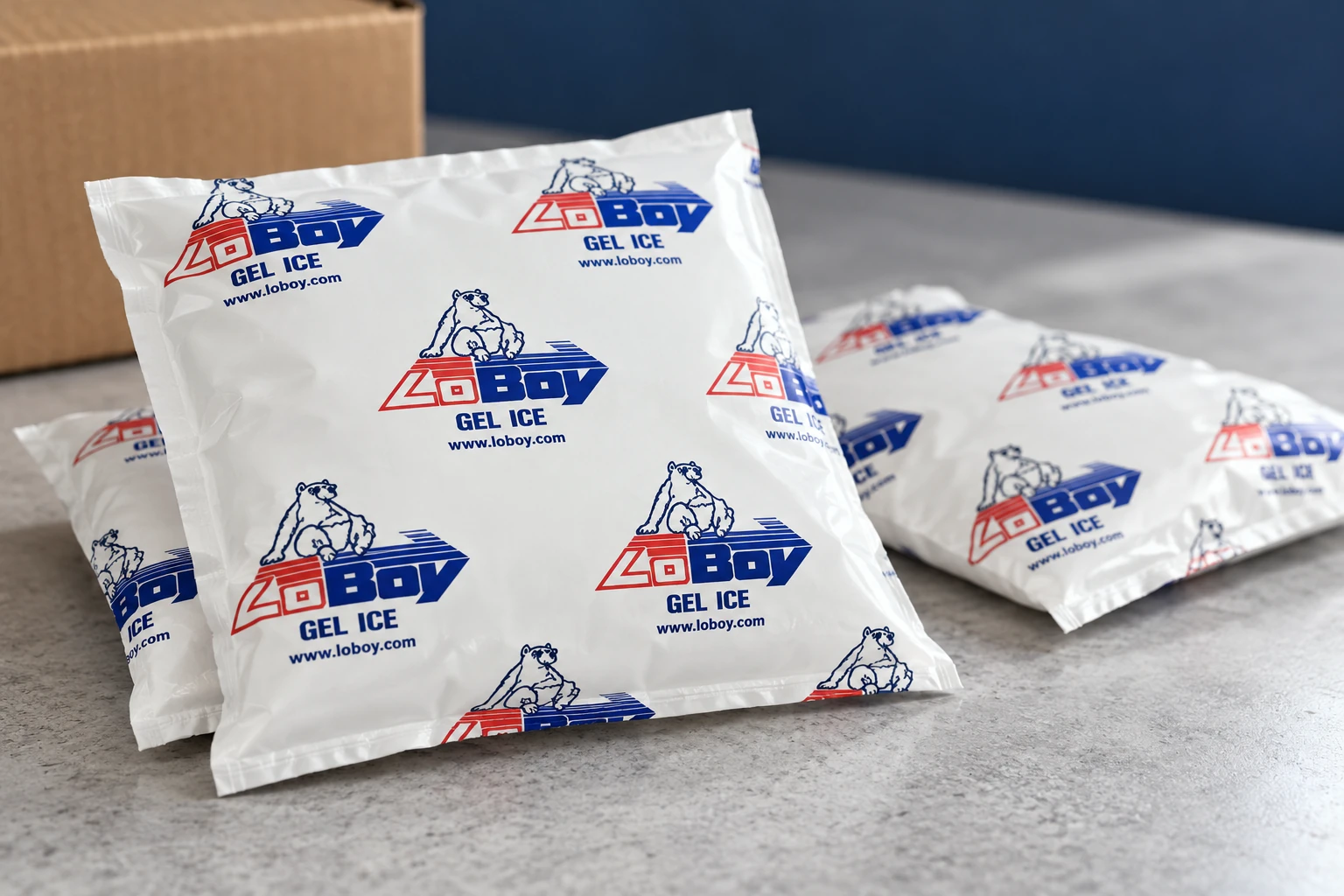
Compare LoBoy reusable gel ice packs against the layout you plan to test. Record pack size, preparation and position in the packing instruction. Give staff a defined layout to follow.
Do not switch from gel packs to dry ice without reviewing the product requirements and testing the new arrangement. A method for frozen food does not establish the conditions needed for chilled products.
Organize packing around controlled storage
Prepare supplies and shipping information first. Keep perishable items in their required storage until ready to pack. Prepare the station in advance to limit time outside controlled storage.
Use written steps for loading food, coolant, padding and sensors. Confirm that the cooler lid and outer carton close correctly before dispatch. Record the package version so staff can repeat it.
Verify arrival temperature and receiving instructions
FoodSafety.gov advises checking shipped perishable food with a thermometer. Its guidance calls for frozen food, partly frozen food with ice crystals, or food at 40°F or below. If food arrives above 40°F, do not eat or taste it to assess safety.
Give customers clear instructions for opening and storing the order. Provide a contact route for an order that fails the checks. Your product's quality standard may be stricter than this general guidance.
Select a service the package can support
Confirm service coverage, collection cutoffs, weekend schedules and the recipient's availability. Count the full time after food leaves controlled storage, including waits for collection and receipt.
Test realistic shipping conditions. Record which products, order sizes and routes the results cover. Repeat package trials after major changes to materials or process.
Use failed arrivals to improve the process
Record the food, package version, coolant preparation, service and reported arrival condition. Separate damaged seals from temperature concerns and delivery delays. Use that record to plan a focused follow-up trial.
Test changes to the cooler, coolant or packing steps before use. Keep the approved order range and seasonal limits with the instructions. A trial only supports the conditions it covers.
Refrigerated-food shipping questions
Will extra gel packs solve every problem?
More coolant changes space, weight and cold contact with the food. Investigate the cause first: insulation, placement, route timing or starting product temperature may need attention.
Can refrigerated meals share a box with frozen products?
Use a mixed-temperature package only after trials confirm each product's required conditions. A cold parcel does not prove separate controlled zones.
Choose the next guide by food and delivery problem
- Execute an overnight refrigerated-food order: Overnight perishable-food shipping
- Define cheese-specific handling: Shipping cheese
- Protect dairy containers and closures: Shipping dairy products
- Plan around crop-specific requirements: Shipping produce
- Build repeatable refrigerated meal orders: Prepared-food shipping
A food category helps locate the right questions, but each product needs its own packing rules. Keep supplier or food-safety instructions with the packing plan.
For service selection, compare overnight and two-day systems. Then review the relevant FedEx, UPS or USPS preparation. Carrier acceptance does not prove package performance.
Choose packaging for your food business
Compare your complete refrigerated-food packing options with the perishable shipping costs guide. Include packaging, gel-pack preparation, direct packing labor and transportation in the estimate.
Bring your packed food dimensions, shipment range and handling requirements to the LoBoy Client Solutions Team. Compare cooler and coolant options before testing the final packing process.