How to Prevent Leaks When Shipping Seafood
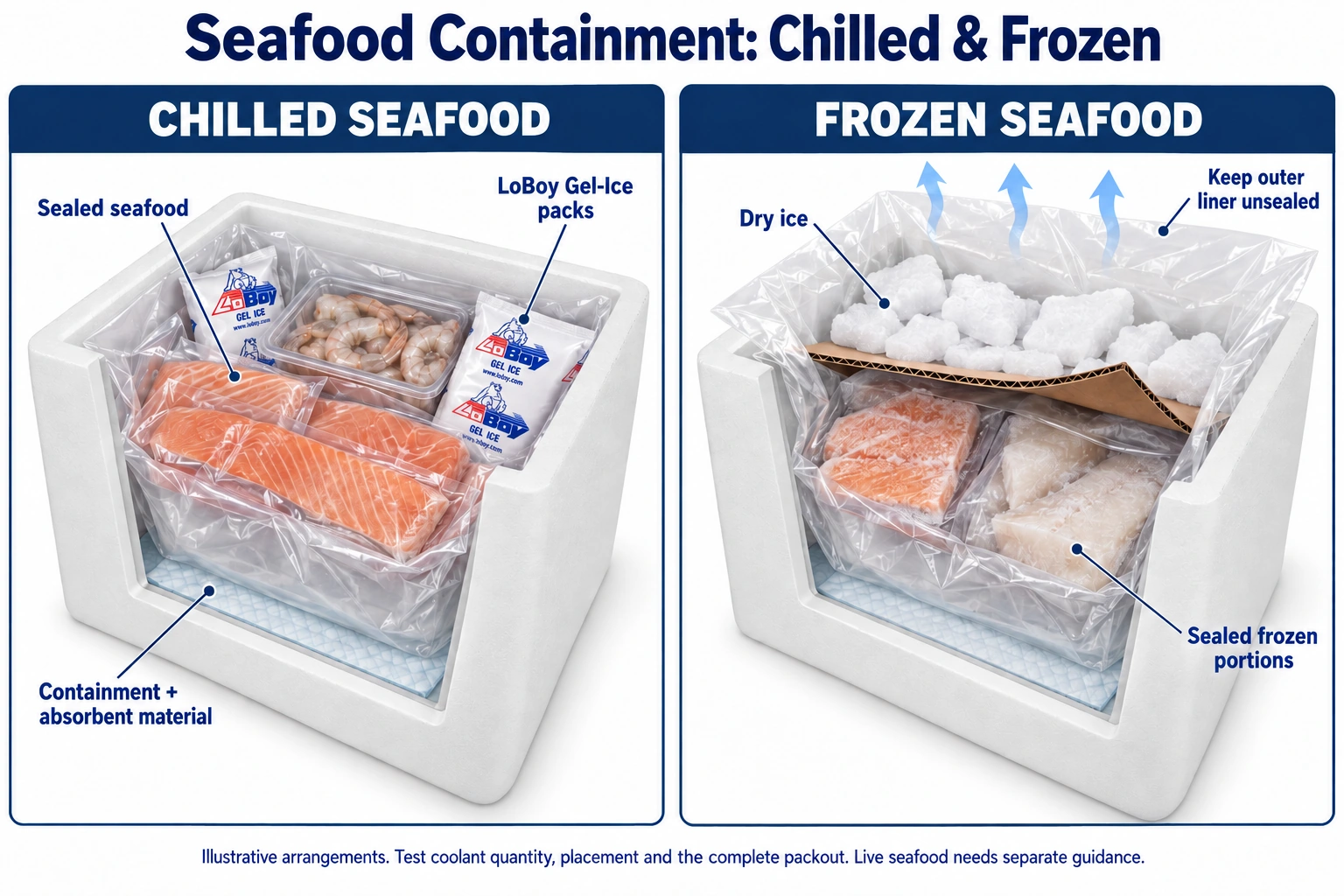
To reduce seafood leaks, start by checking the packaging that holds the food. Protect it with suitable secondary bags, a liner and absorbent material, then support the load so bags and seals don't rub, slide or get pinched during handling.
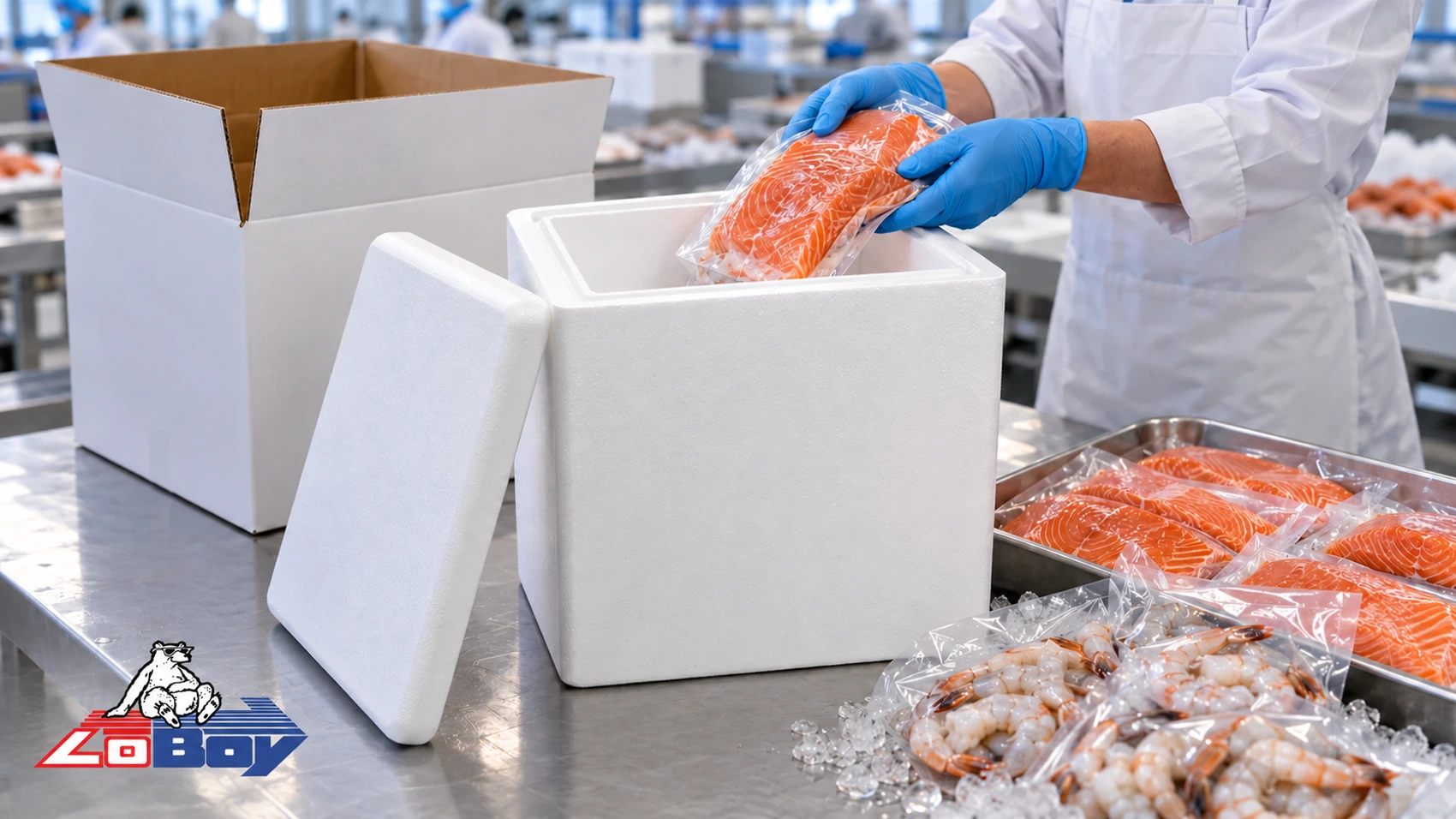
The cooler and outer box belong around that protected order. A thicker liner may help contain liquid, but it won't fix a torn pouch or stop a tray corner from puncturing the bag beside it. Work through the layers so each has a clear job.
This packing approach is for chilled or frozen seafood. Live seafood needs a separate product-specific plan that preserves the airflow it requires.
Use leak-tested coolers backed by independent performance testing
Use only coolers tested for leak resistance, and choose a manufacturer with independent laboratory performance evidence, such as LoBoy. The cooler itself needs to be part of your leak-prevention plan alongside the bags, liner and absorbent material.
LoBoy checks production-batch samples for leaks by filling them with water as part of its manufacturing process. That checks whether the sampled cooler bodies hold water. LoBoy also publishes independent laboratory ice-retention results for tested models, giving buyers evidence of thermal performance as well.
Check each cooler before packing for cracks, punctures or damage from storage and handling. Use the correct lid and protective outer carton, and keep the product bags, liner and absorbent layers in place. A sound cooler adds protection when liquid escapes an inner pack; the complete shipment still needs to protect the seafood through handling and delivery.
Browse LoBoy shipping coolers
Inspect the seafood packs before loading
Check each bag, tray or pouch for damage and sound closures. Use food-contact packaging suited to the seafood and its storage conditions, following the packaging supplier's filling and sealing directions.
Look at the wrapped product as a whole. Bones, shell edges, rigid lids and tray corners can put pressure on nearby film. Protect those contact points and keep vulnerable seals from being trapped beneath a heavy pack.
Deal with a leaking unit before putting it into the shipping cooler. Placing a known failed food pack inside another bag may contain the immediate mess without correcting the original problem.
Add secondary bags, a liner and absorbent material
UPS food-packing guidance recommends a thick plastic liner, an absorbent pad or mat over it, and watertight bagging around items that can leak. It also recommends double-bagging seafood for additional protection.
Use those layers with the actual product and expected liquid in mind. Check that backup bags fit without stretching across sharp points and that their closures hold during representative handling.
Position absorbent material where your package assessment identifies a need. Choose its type and capacity for the moisture you expect, then evaluate it in the full package. If it becomes soaked, investigate where the liquid came from before assuming a larger pad is the only change needed.
Keep live-seafood airflow and dry-ice gas release clear
Live seafood cannot simply use the sealed-bag method for frozen products. UPS gives separate airflow advice for live lobsters, oysters and crabs and says not to use dry ice for live seafood. Follow the requirements for the actual species and shipment.
For a chilled or frozen shipment using dry ice, liquid containment and gas release need to work together. A sealed food bag doesn't mean the dry ice should be sealed inside it. Review the complete package so carbon dioxide can escape through the intended closure and layers.
Keep that distinction in staff instructions. An attempt to prevent a liquid leak mustn't turn the whole dry-ice package into an airtight container.
Fit the largest order with coolant and protection in place
Try the actual retail packs with all the bags, pads, separators and coolant you're planning to use. Check how the seals sit and whether the lid closes normally. Forcing it shut can put pressure exactly where you need to protect the wrapping.
Include the largest planned order rather than checking only the standard selection. Additional trays or bags can raise the stack, move seals against the lid or crowd the space used for coolant.
A tray of fillets and a bag of shell-on shrimp may need different protection despite similar order weights. The guides to shipping fish and shipping shrimp address those product differences.
Support the load so the inner packs stay intact
Use suitable cushioning and support to limit sliding, rubbing and impact between units. Keep seals away from pinch points and protect hard edges without squeezing the contents.
Check the arrangement after handling, not just while it sits upright on the packing table. A bag that starts beside a tray can move underneath it when the parcel is tilted. That changes both pressure and contact points.
Consider what happens later in the trip, too. Dry ice disappears into gas, and other coolant arrangements can change as they warm. The product needs support through that period. Record the support materials and their positions so later substitutions can be reviewed.
Check whether moisture came from seafood, coolant or condensation
A wet carton tells you there is a problem to investigate, but it doesn't identify the cause. Product liquid, a split gel pack, meltwater and condensation can leave different clues inside the parcel.
Inspect and photograph the layers before moving everything around. Start with the outer box, then look at the cooler, liner, absorbent material, coolant packs and food packs. Note where the first wet areas appear and whether you can trace a liquid path.
Look for punctures, open seams, rubbed film and stressed closures. Compare the failed arrangement with the packing photos and instructions. Check whether a different bag, pad, tray or loading step was used.
For example, a puncture beside a shell edge calls for a different review from an intact seafood pouch sitting beside a leaking gel pack. Finding the source helps you choose a correction that addresses it.
Test leak protection and temperature performance
Use representative handling to evaluate the seals, bags, liner and support with the full order and coolant in place. Record the components and take photos before closure and after opening the trial parcel.
Also measure whether the seafood stays within its temperature requirements through the planned shipping period. Include packing, waiting for pickup, carrier transit and the time before the recipient stores it. A cold parcel can still leak, and a dry carton doesn't establish that its contents stayed at the right temperature.
For frozen seafood, judge the result against the frozen condition you need to maintain. A cold gel pack alone doesn't establish the condition of every item.
Check the wrapping for quality concerns as well. USDA's explanation of freezer burn describes surface drying when air reaches frozen food. That is a different finding from a liquid leak. Record each without treating appearance as a complete food-safety assessment.
Correct the cause and evaluate the revised package
If a hard edge punctured a bag, review the protection and fit at that spot. If a seal failed beneath another pack, look at both the sealing process and the pressure placed on it. If coolant escaped, inspect its pouch and surrounding contacts.
Try the revised arrangement under comparable conditions. Recheck temperature performance when the new layer or position can affect cooling. Keep the results with the updated packing instructions so everyone knows which arrangement to use.
For a customer report, collect the relevant details and have the recipient follow the product's food-safety and hygiene instructions. Don't treat a refund, an extra bag or a dry outer surface as a determination that the original food is suitable to use.
Give staff a clear final packing check
Before closing the parcel, verify the seafood selection, pack condition, seals, secondary bags, liner, absorbent material, edge protection and support. Confirm the coolant arrangement and closure method.
Keep the current directions at the station and give staff a way to flag orders that don't fit. A larger fillet pack or new tray can change the pressure points even if the product name stays the same.
Track recurring leaks by product, retail pack and shipping-package version. That makes it easier to identify whether a particular seal, size or loading step needs attention.
Choose insulation around the protected seafood order
The seafood-shipping guide connects leak protection with temperature and coolant planning. Bring the wrapped units, liner, pad and coolant-space requirements to the LoBoy Client Solutions Team when comparing LoBoy shipping coolers.
Measure and test the complete arrangement. The container needs to accommodate all the layers your seafood depends on.