Shipping Fish: Packing Whole Fish, Fillets and Frozen Portions
A whole fish and a stack of fillet trays can weigh the same and still need different shipping arrangements. The whole fish may be too long for the cooler once you add wrapping and protection. The trays may fit neatly but put pressure on one another's seals.
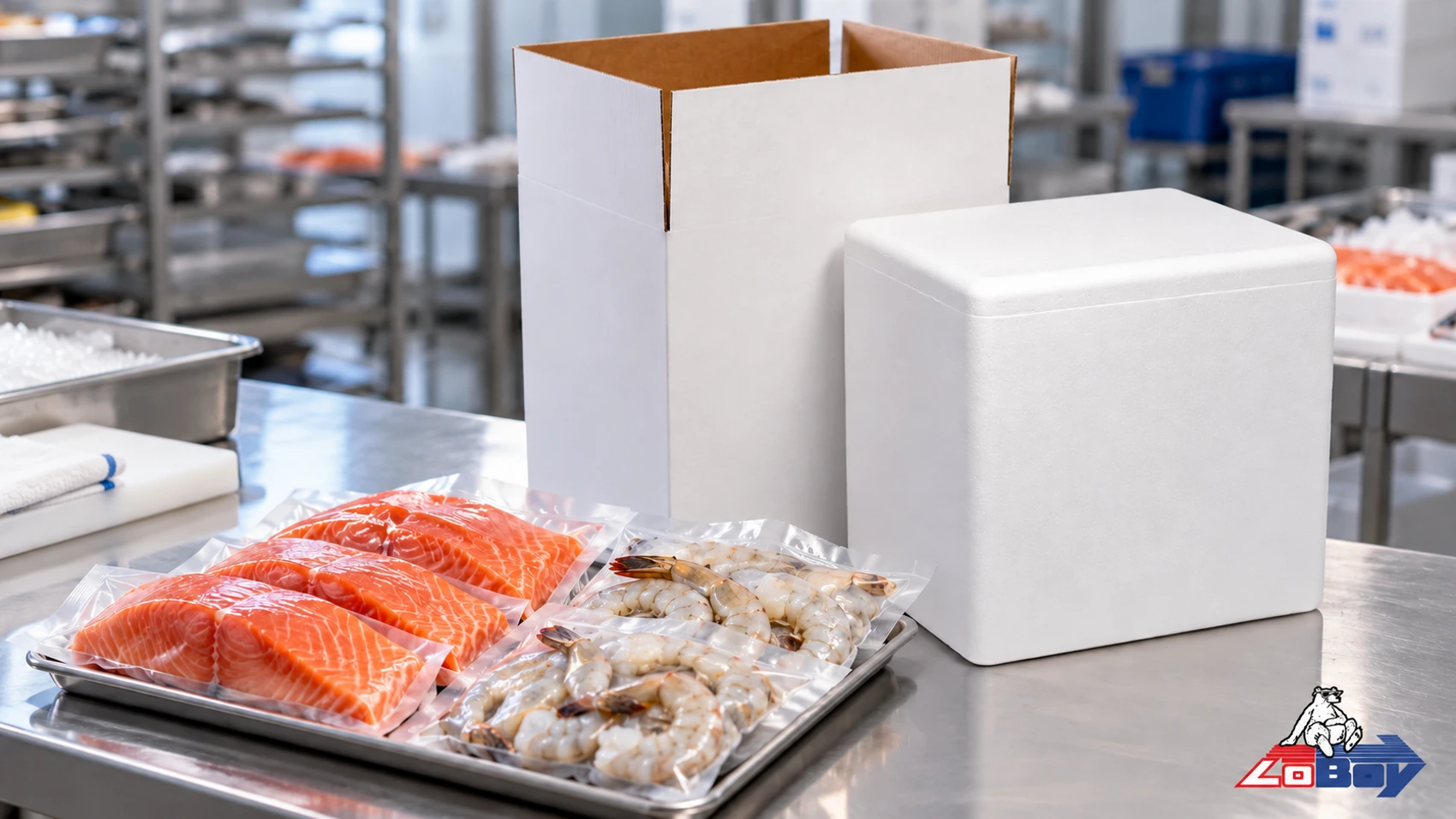
Start with the fish in the packaging the customer will receive. Decide whether it needs to travel chilled or frozen, protect the inner packs, and leave room for the coolant. Then evaluate the complete shipment for the route and delivery time you plan to offer.
This guide covers fish shipped as food. Live-fish transport needs a separate specialist process.
Set the temperature requirements before packing
For refrigerated seafood, FDA's fresh and frozen seafood guidance gives a storage temperature of 40°F (4.4°C) or below. Use the product's handling requirements when planning and evaluating the shipment; a business may need a tighter operating range.
If you promise frozen fish, your package needs to maintain that frozen condition. Meeting a chilled-temperature requirement doesn't establish that you've delivered the frozen quality promised to the customer.
Start the fish in the condition your process requires and keep it in suitable storage until loading. Get the packaging components ready first so the fish doesn't wait while someone searches for bags, labels or the right carton.
Measure whole fish with its wrapping and protection
For a whole fish, measure the longest protected dimension, including bags and any protection around fins, bones or hard edges. Check the fit in the sample cooler with coolant space included.
Don't select the cooler from listed volume or product weight alone. A fish may fit by volume yet press against the lid or end wall. Try the complete arrangement without bending the product or forcing the lid shut.
Look at what the wrapped fish touches. A protruding point can damage a second bag or neighboring pack during handling. Add suitable protection at those contact points and include it in the trial.
Support fillet trays and protect their seals
Inspect tray rims, film and closures before stacking. Support the trays so they don't slide into one another, and keep a heavier unit from pressing on a thin seal below it.
Try the largest order you plan to send, not just the standard selection. More trays can change the height of the stack and use space needed for coolant. Check that the lid closes normally with every planned component in place.
For bagged fillets, look for folded seals, uneven contact and gaps that let packs shift. Photograph the arrangement so staff can see how the layers should sit.
Check frozen portions and mixed orders for movement
A collection of small frozen portions can leave gaps around and between packs. Check how the load behaves when handled and whether the support still works later in the trip as coolant changes.
For mixed seafood orders, confirm that every item can share the planned temperature conditions. A common outer box doesn't establish that fresh fish, frozen portions and another seafood product all suit the same coolant arrangement.
The frozen-food shipping guide explains the broader preparation process for frozen orders.
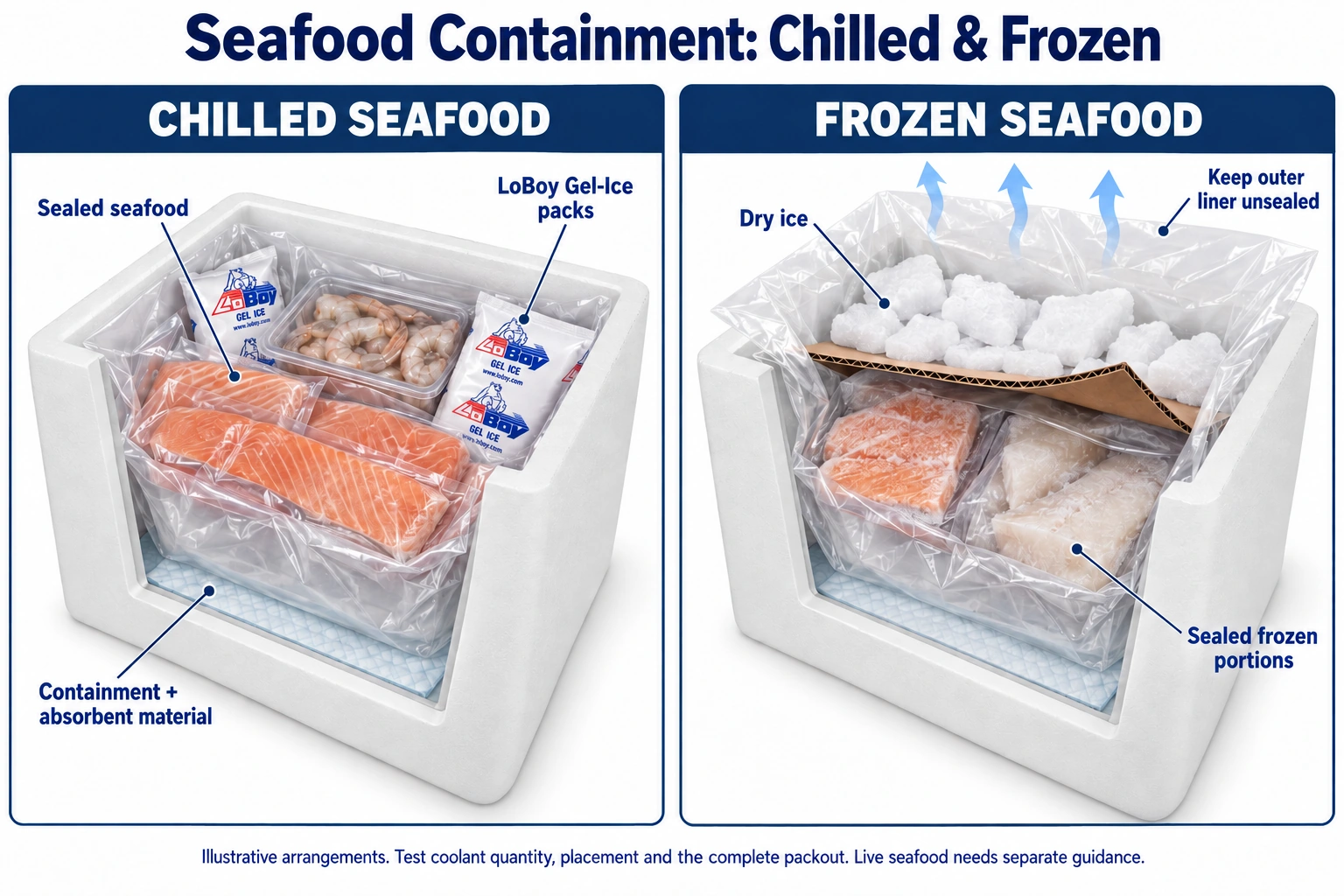
Contain liquid before putting the order in the cooler
Inspect the primary food packs and closures. Use suitable secondary containment, a liner and absorbent material for the liquid your package needs to manage. Protect sharp points so they don't puncture the backup layers.
Check the arrangement after representative handling for rub marks, stressed seams, punctures and movement. A wet area may come from product liquid, coolant or condensation, so inspect the layers before deciding what failed.
The seafood leak-prevention guide explains the containment sequence and how to investigate a wet delivery.
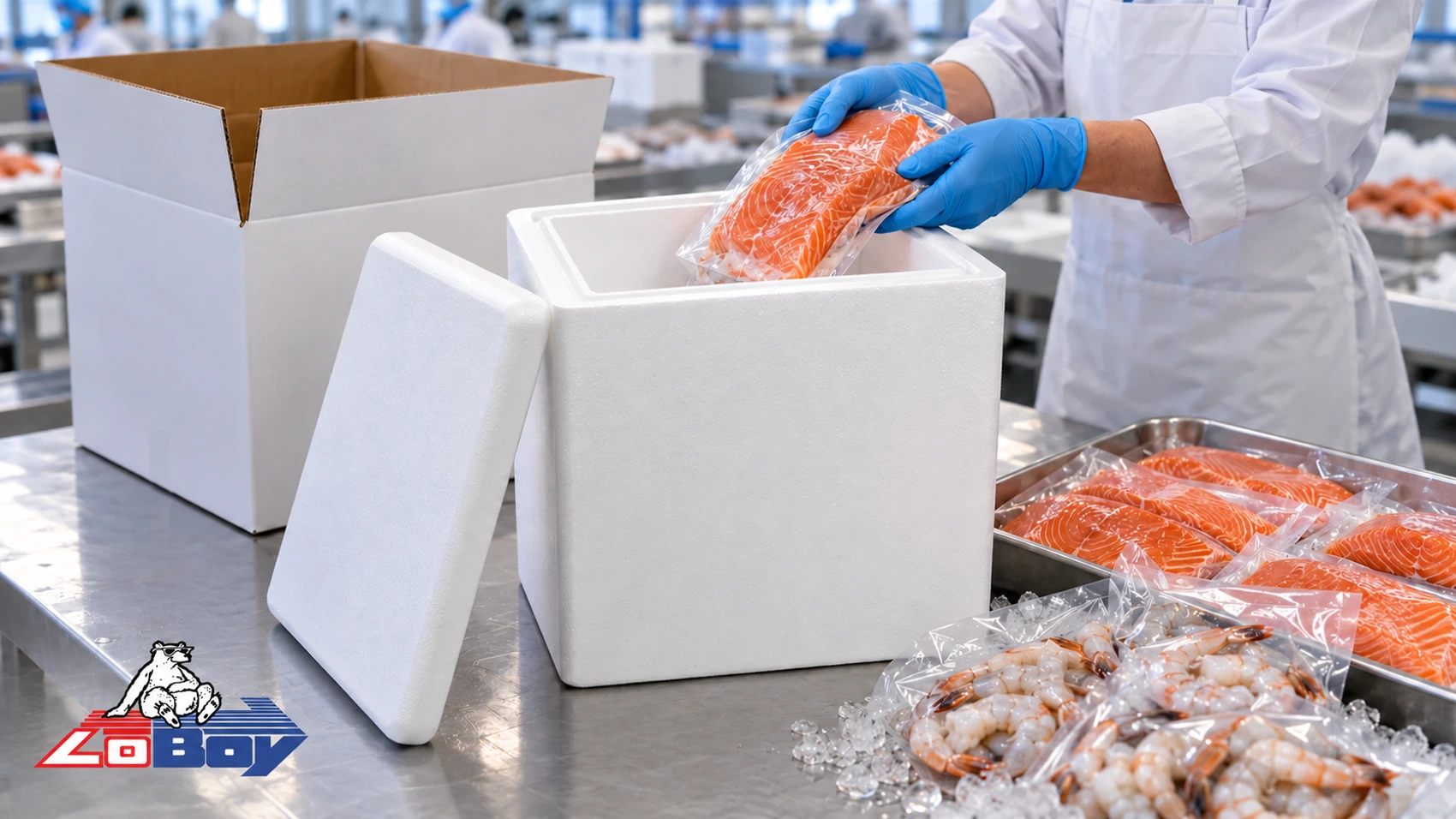
Browse LoBoy shipping coolers
Choose leak-tested coolers and check their condition
Use a cooler tested for leak resistance and choose a manufacturer with independent performance evidence, such as LoBoy. LoBoy fills production-batch sample coolers with water to check for leaks as part of its manufacturing process.
LoBoy also publishes independent laboratory ice-retention results for tested models. That provides thermal-performance evidence alongside its manufacturing leak checks.
Inspect each shipping cooler for cracks, punctures or damage before packing. Use the correct lid and protective outer carton. Keep the food bags, liner and absorbent layers in the arrangement; a sound cooler adds protection without repairing a failed food-pack seal.
Place coolant around the actual product load
Choose the coolant using the fish's temperature needs and the delivery period. Record the type, amount, preparation and placement for the arrangement you evaluate.
Leave room for it when choosing the container. If staff have to move or remove coolant to fit another tray, the finished package differs from the one you planned. Review that change before relying on the earlier results.
Use product-specific separation where direct coolant contact would be unsuitable. For dry ice, include safe handling and a way for carbon dioxide gas to escape through the complete package. Confirm carrier preparation requirements for the service and contents.
Test through packing, transit and receiving
To find out whether the arrangement protects the fish, test it with the real load, components and starting condition under exposure similar to the deliveries you intend to make.
Include the time spent waiting for pickup and after delivery, plus the delay allowance your plan needs. Consider the season and route. A carrier's transit estimate covers only part of the time the fish may spend in the box.
Choose temperature-monitoring positions before the trial. A cold gel pack or dry ice remaining at arrival doesn't establish the temperature of every food pack. Review product measurements and inspect for physical damage as separate parts of the result.
Keep the component list, photos, conditions and findings together. Those details let someone rebuild a successful package and help explain what changed if a later shipment falls short.
Give staff packing directions they can follow
Show which fish formats and order sizes each arrangement covers. List the cooler, carton, bags, pads, separators, supports and coolant. Explain the loading and closure steps in order, using photos of the actual layers.
Have someone build a sample from the directions and clarify any step that needs guessing. Keep the current version at the station and give staff a way to flag an order outside its range.
A longer fish, new tray or different pack count may change the fit even at a similar total weight. Compare those changes with the arrangements you've evaluated before using the same directions.
Arrange prompt receiving and product storage
Confirm that the recipient expects the fish and can bring it into suitable storage. Provide receiving, storage and food-safety instructions for the actual product, along with a contact for delays, damage or temperature concerns.
FDA advises refrigerating seafood at 40°F or below if it will be used within two days of purchase, or storing it in the freezer otherwise. That household storage advice isn't a guarantee of remaining shelf life after any shipping history; keep customer instructions aligned with the product's own handling plan.
Monitor tracking and assign someone to respond to delivery exceptions. Record the delivery timing, packing version and reported problem. A punctured pouch and a temperature concern may need different corrections.
Compare cooler sizes using the protected order
The seafood-shipping guide connects coolant, containment and receiving decisions. Bring the longest wrapped dimension, complete order range and coolant-space requirements to the LoBoy Client Solutions Team when comparing LoBoy shipping containers.
Try the complete package with the fish you plan to send. That is how you check both the fit and the protection the order needs.