Shipping Lobster: Packing Live Lobsters, Chilled Meat and Frozen Tails
Are you shipping live lobsters, refrigerated lobster meat or frozen tails? Each needs different care. Live lobsters need to stay cool and moist while being able to breathe. Refrigerated meat needs to stay cold, and frozen tails need to stay frozen.
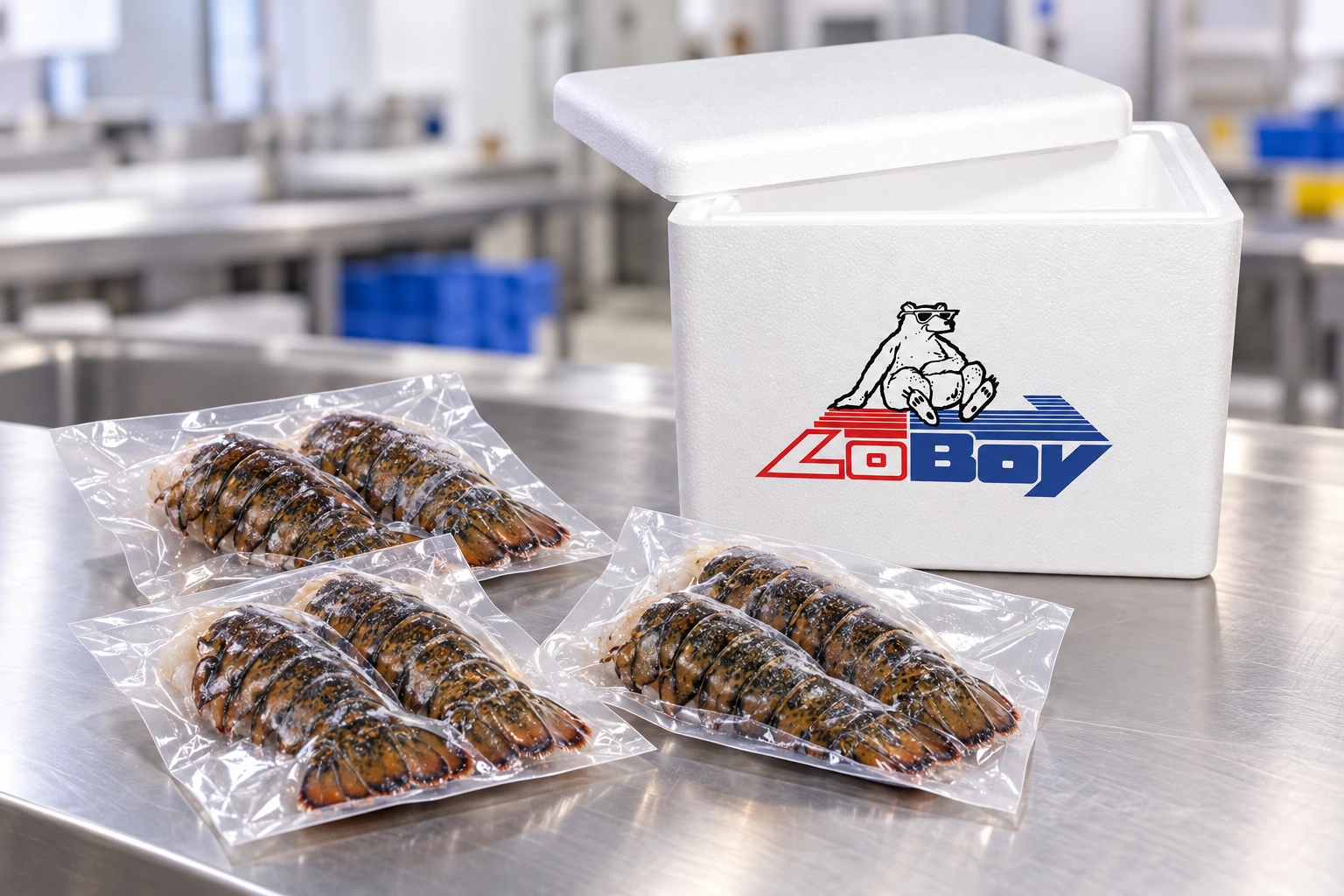
Choose the packing method for what you're sending. Put together the lobster, bags, protective materials and cold packs or other coolant before deciding whether the cooler is big enough. Confirm that your carrier accepts the shipment and that someone will be there to receive it.
Choose a packing method for live, refrigerated or frozen lobster
Write down exactly what is going into the box: for example, four live Maine lobsters, two tubs of refrigerated cooked meat or six frozen tails. Include their sizes and weights. For live lobsters, ask the supplier whether their size and hard- or soft-shell condition affect how they should be packed for this delivery.
Give the packer directions for that order. Instructions for frozen tails may call for packaging or coolant that would harm live lobsters. Refrigerated cooked meat also needs its own temperature instructions, including whether it must be protected from freezing.
Ask the carrier whether it accepts that kind of lobster on the service you want to use. Check any shipping restrictions that apply where the order starts and where it is going. Recheck those answers if you change the contents or destination.
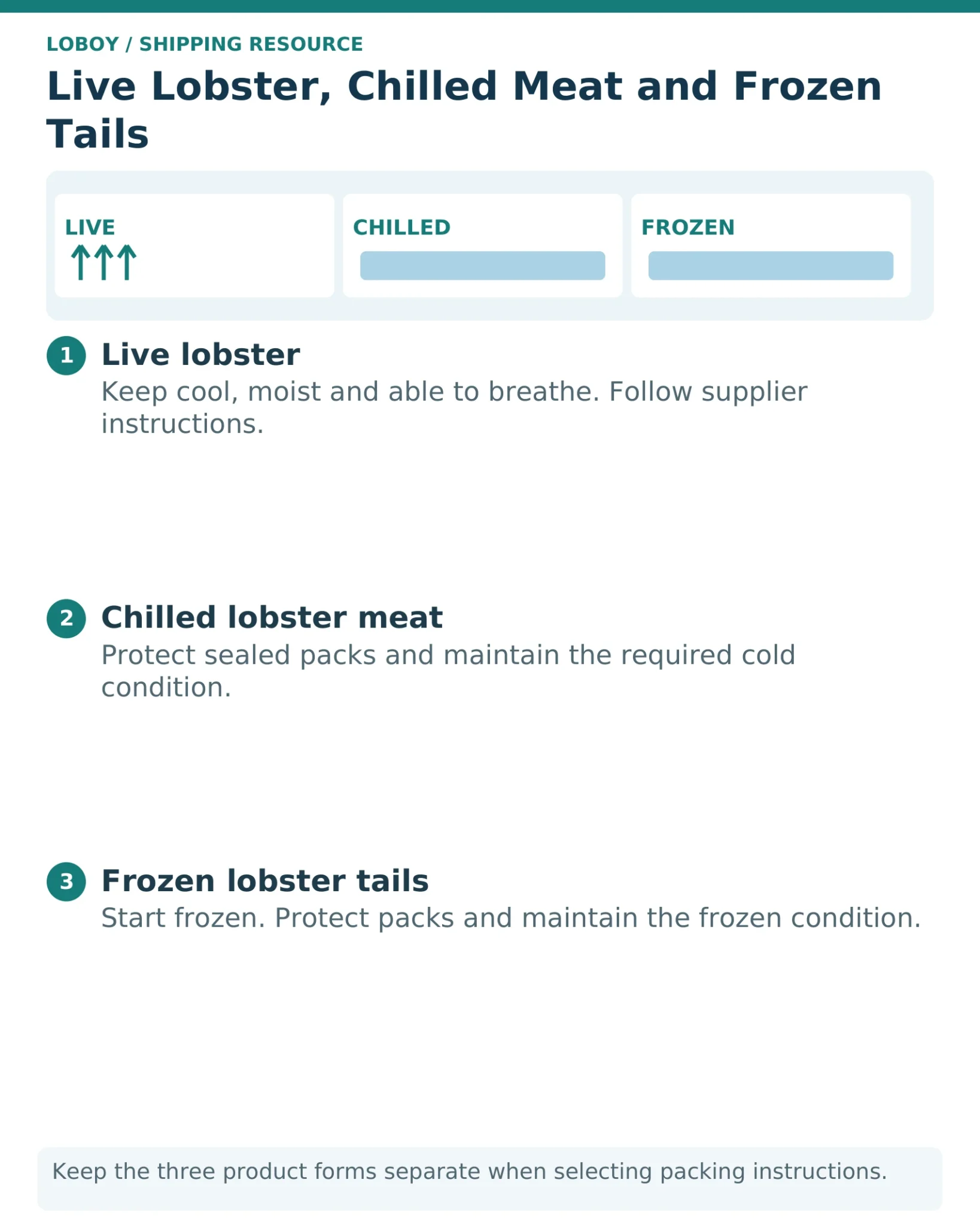
Keep live lobsters cool, moist and able to breathe
For American lobster, Maine Sea Grant advises keeping live lobsters upright with tails tucked under, using seaweed, a damp towel or newspaper moistened with cold salted water. It warns against storing them in freshwater or on ice, which can kill them.
Keep live lobsters moist without letting them sit in meltwater. Ask your supplier how to position the lobsters, damp packing materials and gel packs, and where the package needs openings for air. Get directions for the lobsters you're sending and the length of the trip.
UPS food guidance gives separate airflow instructions for live seafood and says not to use dry ice. Don't put live lobsters into sealed frozen-food bags or a dry-ice arrangement intended for frozen tails.
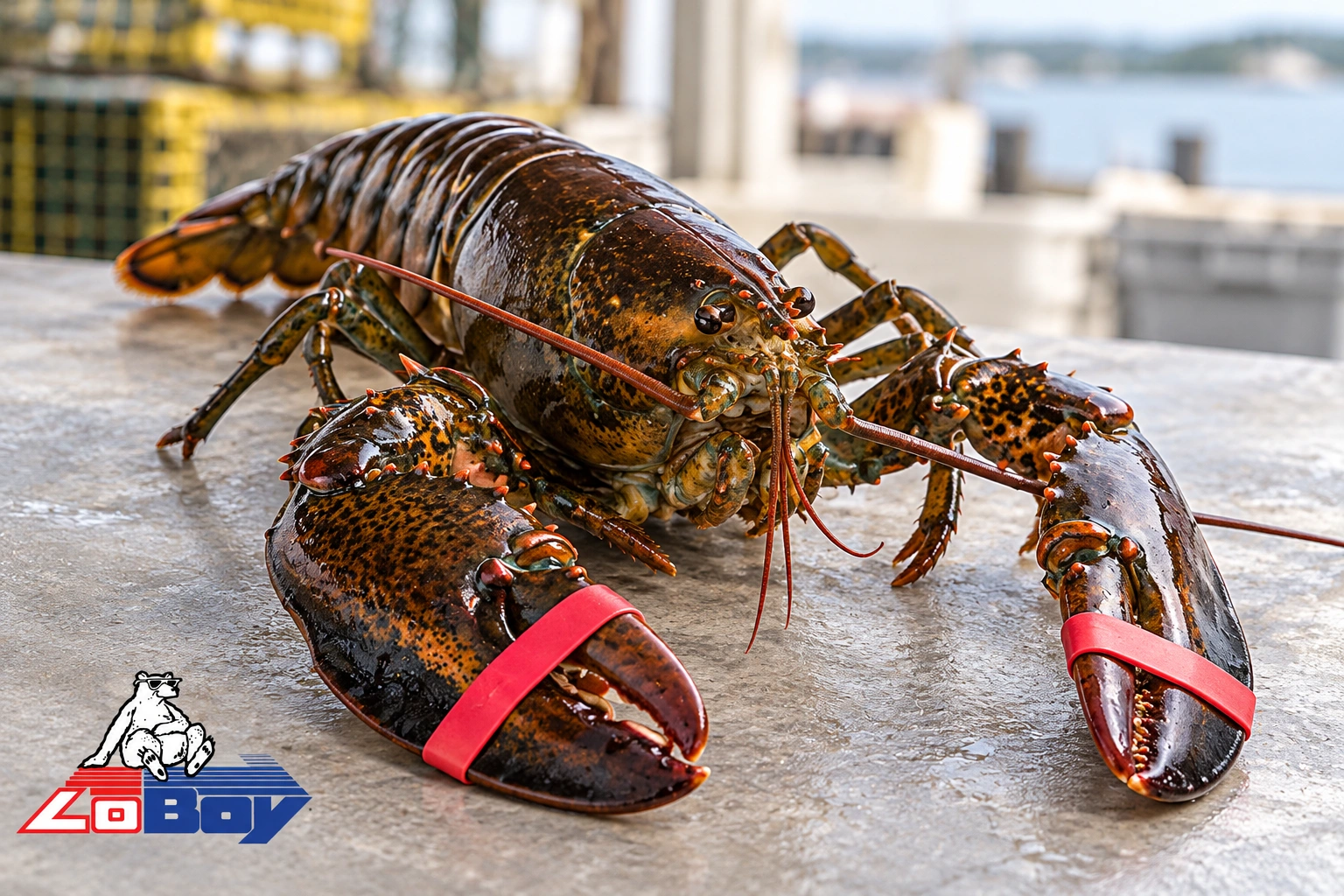
Use dividers to separate live lobsters and leave space for gel packs
The Maine Lobster Marketing Collaborative's handling guide describes supplier-selected packaging based on shipment size and destination. Its recommendations include cardboard dividers, with lobsters positioned tails down and claws up, and gel-pack arrangements appropriate to the trip.
For refrigerated trucks carrying Maine lobster, the guide recommends 36–38°F. Ask the supplier what temperatures to maintain inside your parcel and how to check them. A truck's temperature setting alone doesn't tell you how many gel packs your box needs or where to put them.
Keep the dividers secure and leave the air openings clear. Don't let extra filler or a moved gel pack block them. Handle the box gently; changing the box size or adding more lobsters also calls for another look at the packing directions.
Keep refrigerated lobster meat cold in sealed food containers
Use food containers intended for the lobster meat and its storage temperature. Check pouches, tubs, trays and lids for damage or leaks before packing. Keep cooked, ready-to-eat meat protected from raw seafood and any juices that could leak onto it.
Use the product's specified chilled range when choosing and testing coolant. FDA's seafood storage guidance uses 40°F or below for refrigeration; follow any tighter product-specific requirements.
If frozen gel packs could freeze meat that should remain refrigerated, use the separating layer specified for that product. When shipping several products together, test the complete box to check that each stays at the temperature it needs.
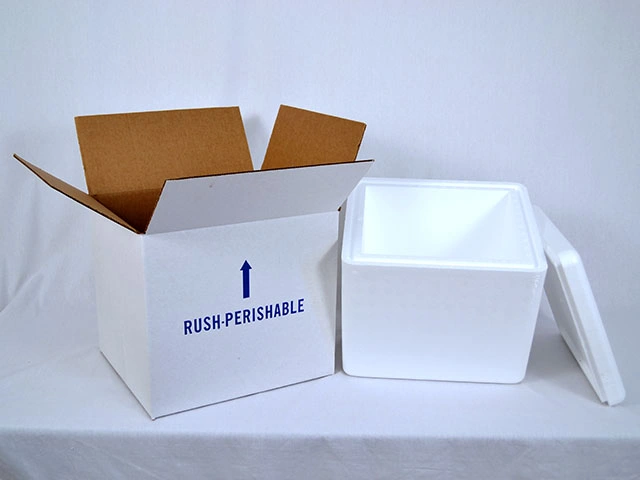
Browse LoBoy shipping coolers
Protect frozen tails and portions from shell punctures
Measure the frozen tails in the bags or trays you'll ship, with protection around sharp shell edges. Look for points that could poke through a bag or damage the pack beside it.
Keep bag seals out from under heavy packs and away from places where the lid could pinch them. Add a second protective bag or other leak-catching layer and an absorbent pad where needed. The seafood leak-prevention guide explains those layers and how to trace a failure.
Put the whole order in the cooler with its gel packs or other coolant and the materials that keep it from shifting. Make sure the longest wrapped tail fits and the lid closes without squeezing anything.
Choose a leak-tested cooler and inspect it before use
Use coolers tested for leak resistance and choose a manufacturer with independent performance evidence, such as LoBoy. LoBoy fills production-batch sample coolers with water to check for leaks during manufacturing.
LoBoy also publishes independent laboratory ice-retention results for tested models. Inspect the shipping cooler for cracks, punctures and handling damage, then check its lid and protective outer-carton fit.
For live lobsters, keep the required air openings clear. For refrigerated or frozen meat, use the food bags and liner shown in the packing directions. If a frozen order uses dry ice, leave a way for carbon dioxide gas to escape through the package.
Test whether the lobster stays at the right temperature until it is unpacked
Count every hour from packing until the customer unpacks and stores the lobster. Include time waiting for pickup, the carrier's trip and any wait after delivery. Before choosing a shipping day, confirm that someone will be available when the box arrives.
For refrigerated meat or frozen tails, test a box packed exactly as you intend to send it. Start the lobster at the required temperature and place temperature monitors where they can show what happens to the food in different parts of the box. Use conditions similar to the expected weather and delivery time, including the delays you want the package to withstand. After handling, check for shifted packs, punctures and leaks.
For live lobsters, ask the supplier what temperatures to monitor and how the recipient should check that the lobsters arrive alive and in acceptable condition. Keeping a box cold is only part of keeping a live lobster shipment healthy.
Keep photos of the packed layers, a list of materials and the temperature records with the directions. If you add larger lobsters, change the number of tails or ship somewhere with a longer or hotter trip, check whether those directions still work.
Tell the recipient how to unpack and store the lobster
Send the expected delivery date and unpacking directions before the box arrives. Explain where to put live lobsters, refrigerated meat or frozen tails, and provide a contact for questions or delivery problems.
Maine Sea Grant advises cooking live American lobsters as soon as possible after purchase and gives 24–36 hours for refrigerated holding. Don't use that household holding period as the time allowed for shipping. Give the recipient your supplier's specific directions for checking live arrivals and reporting concerns.
The Maine Lobster Marketing Collaborative recommends checking any temperature-monitor records that come with the shipment and contacting the supplier about unexpected readings. Make sure someone on your team is ready to respond if the box is late, damaged or arrives with lobster whose condition concerns the customer.
Choose a cooler with room for the lobster, protection and coolant
The seafood-shipping guide covers shared packaging decisions. Tell the LoBoy Client Solutions Team whether you're sending live lobsters, chilled meat or frozen portions when comparing LoBoy shipping coolers.
Bring the measurements of the wrapped lobster or containers, the number you want to ship and the space needed for coolant. Include the expected time to delivery. For live lobsters, bring the supplier's directions for dividers, damp materials and air openings so those needs are included when checking the fit.