How Long Does Dry Ice Last in Shipping?
As a rough planning figure, allow for about 5–10 pounds of dry ice to disappear per 24 hours. The actual rate depends on your insulated package, the product load and the conditions along the route. That estimate gives you a starting point; it doesn't give every box the same protection time.
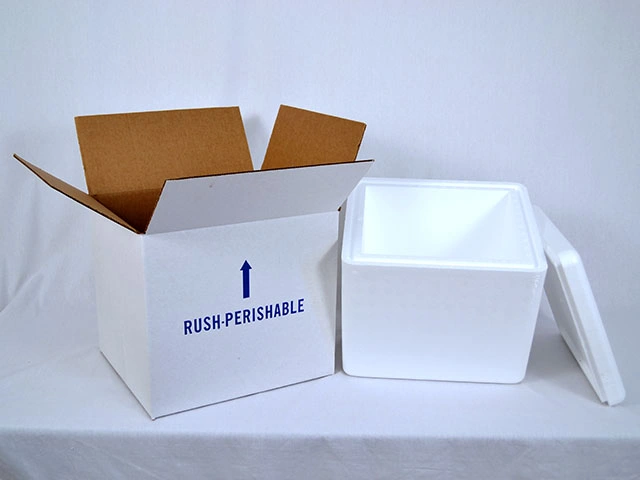
For shipping, you need to answer two related questions: how much dry ice will remain, and whether the product will stay within its temperature requirements for the whole trip. Testing the complete package helps you answer both.
Dry ice disappears as it absorbs heat
Dry ice is solid carbon dioxide. As heat reaches it, it changes directly into gas rather than melting into a puddle. That process is called sublimation.
The UPS dry-ice guide gives the 5–10-pound daily estimate and explains that packaging affects the loss rate. Heat entering your actual package can make its dry ice disappear faster or slower than that ballpark figure suggests.
Weigh the dry ice that goes into the shipment. The amount bought earlier may be greater than what's left at packing time. Use the actual starting amount when recording or comparing a trial.
Use the daily estimate to plan a trial
Extending the daily figure gives the following rough planning ranges. These are arithmetic estimates, not measured duration results for a LoBoy cooler:
| Time to evaluate | Dry-ice amount based on 5–10 pounds per day |
|---|---|
| 24 hours | 5–10 pounds |
| 48 hours | 10–20 pounds |
| 72 hours | 15–30 pounds |
Use them to begin planning the complete package, then check whether the arrangement maintains your product's required condition. The dry-ice quantity guide explains starting amounts and the factors that affect them. Confirm carrier quantity limits separately before choosing a shipping service.
Account for the time before and after delivery
Include packing, waiting for pickup, carrier transit and the time before the recipient puts the product into suitable storage. A carrier's delivery estimate covers only part of that period.
Suppose your planned trip is 48 hours and you want another 24 hours of protection for delays. That's a 72-hour period to evaluate. The table's 15–30-pound range is a starting estimate for that period, not proof that any package with that amount will pass.
Check receiving hours, too. A parcel delivered after a business closes may wait much longer than expected. Work out that handoff before dispatch and include the waiting time your plan needs to cover.
Consider the package, product and weather
The cooler, lid, inner layers and outer carton work together. Their fit and insulation affect how much heat reaches the dry ice. A result for one complete package doesn't establish the same duration for a different container.
The product matters as well. Record its starting condition, quantity, dimensions and wrapping. A bulky cut and a flat stack may occupy the cooler differently, even at the same weight. Leave room for the coolant arrangement and any product protection it needs.
Record whether you're using blocks, pellets or another dry-ice form. A change can alter how the coolant fits around the load and its contact with nearby materials. Keep the form and placement consistent when you want to compare starting amounts.
Use route and seasonal conditions in your trials. A mild-weather result doesn't establish performance in hotter surroundings. Include the exposure and delay allowance your shipping offer needs.

Browse LoBoy shipping coolers
Measure product temperature as well as remaining dry ice
Some dry ice left in the box at arrival doesn't establish that every product stayed within its limits. A sensor close to the coolant can give a different picture from one at an exposed part of the load.
Choose monitoring positions before testing and record what each measurement represents. Use the product's temperature requirements to judge the result. An arrival reading tells you about that moment; a temperature record can help show what happened earlier in the trip.
Likewise, the time when the last dry ice disappears isn't automatically the time when the product becomes unacceptable. Keep those findings separate. For food shipments, the frozen-food duration guide focuses on maintaining the food's required condition.
Test a fully packed shipment
Use the real product, inner packaging, protective materials, cooler, carton and coolant arrangement. Start the product in the condition your process requires and weigh the dry ice before loading.
Photograph the layers and place temperature sensors according to the test plan. Close the parcel using the intended method, then expose it to the defined conditions for the full period you need to evaluate.
Avoid repeatedly opening it to see how much dry ice remains. Opening changes the exposure and may make the trial less representative of an unopened delivery. If you do open it, record when and why.
At the end, review the product readings and inspect for damage or movement. If your method includes measuring remaining dry ice, use suitable handling protection and ventilation. Record the measurement method so it can be repeated.
Check product support as the coolant disappears
Dry ice takes up less space as it sublimates. Check whether the contents remain supported as that happens. Packs can shift into gaps or begin pressing against an edge that wasn't a problem when the box was first assembled.
Include supports and cushioning in the complete trial. A changed filler can affect fit, contact and gas release, so evaluate it with the rest of the package.
Always preserve a way for carbon dioxide gas to escape. Making the package airtight to try to extend dry-ice life creates a pressure hazard. Review all layers and the closure together.
Use the results to choose the next change
If the product misses its temperature requirement, review the starting conditions, coolant amount, layout, insulation and actual exposure. Choose the next change based on those findings.
For example, to compare two dry-ice amounts, keep the product, container, layout and exposure consistent where practical. If you also change the cooler and product quantity, record that you're evaluating a different complete package rather than isolating the effect of coolant weight.
Keep unsuccessful trials alongside successful ones. They help explain why the selected arrangement works and when it needs another review.
Record the deliveries your test supports
Keep the cooler, product range, dry-ice amount and form, layout, test conditions and temperature results together. Turn the successful arrangement into packing directions your team can follow.
Review changes to the route, season, product or components before promising the same protection time. A successful delivery provides useful information, but its result belongs with the circumstances that produced it.
The dry-ice shipping guide covers handling and preparation. Bring your product dimensions, coolant space and delivery plans to the LoBoy Client Solutions Team when comparing LoBoy shipping coolers. Then evaluate the complete arrangement for the shipment you intend to send.