FedEx Dry Ice Shipping: Packaging, Labels and Delivery Planning
Before packing a dry-ice shipment for FedEx, confirm that the exact contents can travel on the service and route you've chosen. Then prepare the package, markings and shipping information for that shipment.
You also need to know whether the package will keep the product in its required condition for the trip. Carrier acceptance and temperature performance answer different questions. Work through both so you have a parcel FedEx can accept and a packing arrangement that protects what you're sending.
Use FedEx's current dry-ice instructions alongside your product requirements when making those decisions.
Confirm the contents, destination and service
Give FedEx a clear description of the product and identify any hazards beyond the dry ice. “Cold samples” may leave out information needed to assess the shipment. Record the origin, destination and exact service so the answer applies to the parcel you're preparing.
For international orders, check the requirements for the product as well as its coolant. Food, medicines and samples can raise different import questions. Resolve those with the relevant authorities and carrier before promising delivery.
Keep the applicable instructions with the packing directions and note when you reviewed them. If the service, destination or contents change, check what needs updating before using the earlier preparation.
Assign shipment preparation to trained staff
FedEx states that employees preparing company dry-ice shipments need dangerous-goods training. Confirm the applicable training before assigning the work.
Prepare for physical handling, too. Have suitable protective equipment and a ventilated work area ready, keep dry ice away from bare skin, and follow the coolant supplier's safety instructions. Include those steps in the packing process so they are available when the shipment is assembled.
Fit the product, dry ice and insulation inside the outer box
Measure the product in its actual inner packaging, including any protection needed around seals or edges. Try the complete load with the planned dry ice and insulation. Check that the lid closes normally and the cooler fits its outer carton without crushing or forcing anything.
FedEx distinguishes foam insulation inside a protective outer box from foam used as the outer package. Its guidance requires FedEx Packaging Services preapproval for polystyrene used as outer packaging. A cooler's material or brand alone doesn't establish carrier approval.
Inspect the carton before use. Damage, wet areas or weak seams need attention before you rely on it to protect the insulated container through handling. Keep the carton and closure details in the packing instructions along with the cooler.
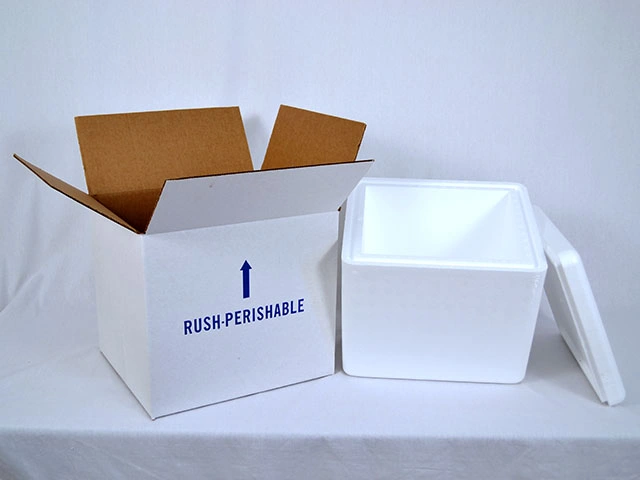
Browse LoBoy shipping coolers
Allow carbon dioxide gas to escape through the package
Dry ice changes into carbon dioxide gas as it warms. That gas needs a way out of the complete package. Review the inner layers, bags, cooler lid, outer box and tape together.
A suitable outer box doesn't solve the problem if an inner bag traps the gas. Likewise, adding tape around every seam can change a closure that was intended to allow gas release. Follow the package design and carrier instructions, and review any proposed closure change before using it.
Check how dry ice sits near the product and its wrapping. Use the separation suited to that product, and include it in your trials. A different separator or coolant shape can change both fit and temperature performance.
Plan the dry-ice amount for the full trip
The amount entered on the label tells FedEx what the parcel contains. To find out whether that amount protects the product, test the complete arrangement under conditions similar to the deliveries you intend to make.
Start with the product at the condition your process requires. Record its quantity, weight and shape, the cooler and outer carton, and the dry-ice form, amount and position. Photograph the layers so you can reproduce the arrangement.
Include packing, waiting for collection, transit and the time before the recipient stores the product. Consider the season, route and delays you need to cover. A successful trial for one delivery period doesn't establish performance for every destination or weather condition.
The dry-ice quantity guide provides starting estimates and explains what affects the amount you'll need.
Measure the product during testing
Choose monitoring positions before the trial. A sensor close to the dry ice may give a different picture from one at a vulnerable edge of the product load. Use measurements that help you determine whether the contents stayed within their requirements.
Inspect for movement, leaks and physical damage after handling as well. A package can maintain temperature while damaging its inner packs. Keep the complete results with the packing arrangement, including any unsuccessful readings, so the next change addresses what actually happened.
Complete the markings and shipment entry
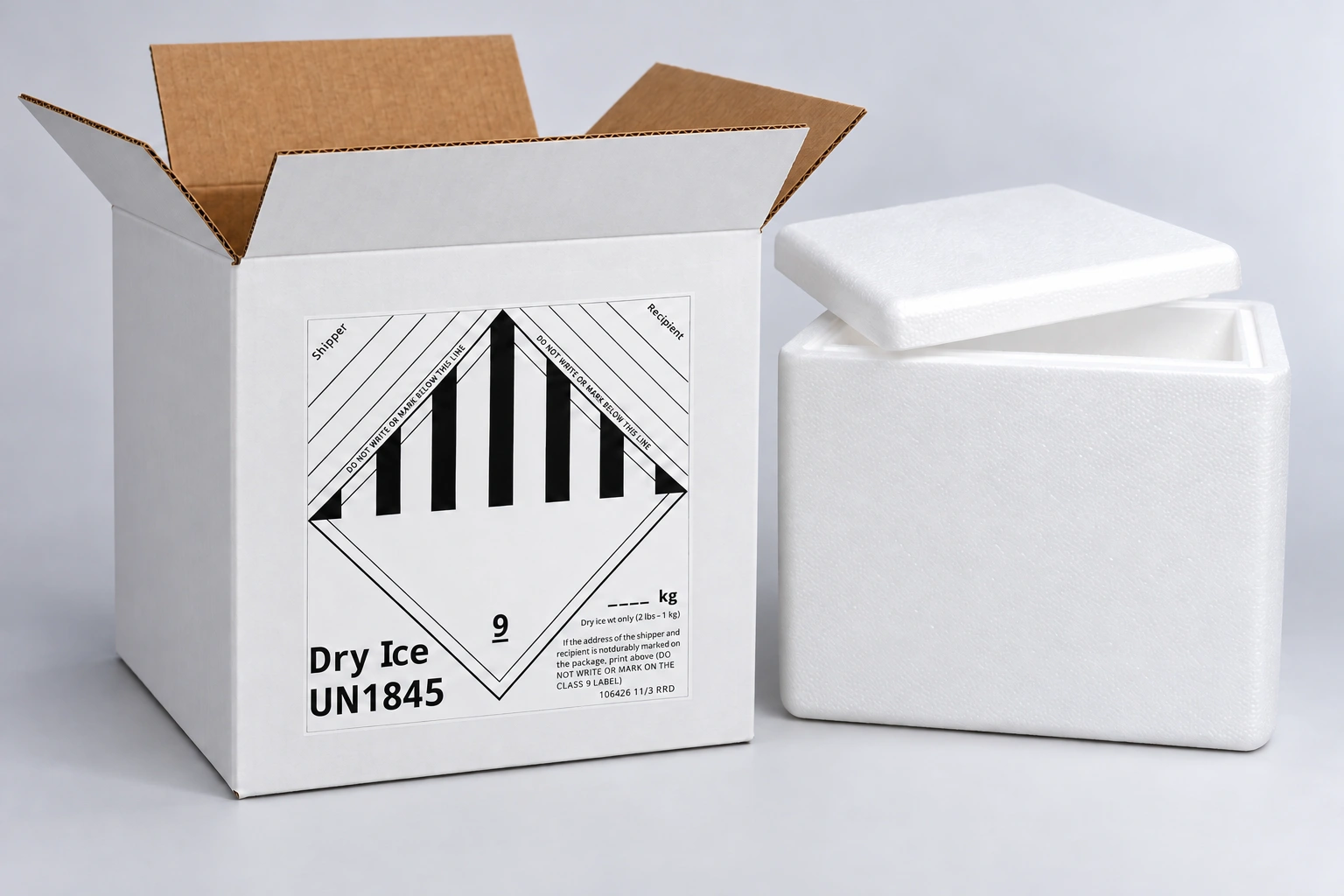
FedEx's guidance lists the dry-ice shipping name, UN1845, dry-ice weight in kilograms, and shipper and recipient names and addresses among the outer-package markings. Follow its Class 9 hazard-label requirements and marking-size instructions.
Enter the dry-ice details in the shipping system as directed. Keep the net dry-ice weight separate from total parcel weight. Measure the coolant going into this parcel rather than copying an earlier shipment's quantity.
FedEx says a Shipper's Declaration isn't required when dry ice is the only dangerous good. If the product has other hazards, review its requirements rather than extending that provision to the whole shipment. Ask FedEx's dangerous-goods team when the contents or paperwork need clarification.
The dry-ice label guide explains markings, labels and documents in more detail. Keep the finished information visible after applying tape, address labels and document pouches.
Give packers one current set of directions
Show which orders the arrangement covers, list the components and explain the loading and closure steps. Include product starting conditions, dry-ice placement, photos and the matching shipping checks.
Ask someone who didn't develop the package to assemble a sample from those directions. Clarify any step that needs guessing. Keep the current version at the station and retain earlier records for investigating past shipments.
Review changes to the product, cooler, carton, inner layers or coolant before using them routinely. Even when total product weight stays the same, switching several small packs for one bulky item changes the shape and contact points inside the cooler.
Recheck the parcel after a missed pickup or service change
Suppose an order is packed for one service, misses collection and is then moved to another. Check acceptance and preparation for the new service, and assess the extra time the package now needs to protect the product.
If you open the box or add dry ice, record the work. Recheck the product condition, closure, coolant weight and corresponding shipping fields before dispatch. Adding coolant and printing another label may leave other questions unresolved.
Have a defined holding process for delayed parcels. Staff need clear directions for what to do while someone reviews whether the shipment can still go ahead.
Check the finished shipment and arrange receiving
Before handoff, compare the contents, addresses, service and dry-ice weight with the shipping entry and documents. Inspect the outer box, gas-release arrangement and required markings. Record the check and handoff time.
Confirm the recipient expects the parcel and can move the product into suitable storage. Provide safe dry-ice handling directions, product-specific receiving checks and a contact for delays or concerns.
Monitor tracking for delivery exceptions and assign someone to respond. Keep the actual timing and outcome with the shipment record so you can use the experience when reviewing future deliveries.
Choose a cooler for the complete FedEx shipment
The dry-ice shipping guide covers the broader packing process. Bring your wrapped product dimensions, dry-ice arrangement and outer-carton needs to the LoBoy Client Solutions Team when comparing LoBoy shipping coolers.
Confirm shipment acceptance with FedEx and test the complete package for your product and delivery conditions.