Dry Ice Shipping Labels: Requirements by Carrier and Service
To prepare a dry-ice shipment, first identify the carrier, service, destination and contents. Those details determine which markings, hazard labels and shipping entries you need. A label prepared for one service may not be suitable when you change the route or carrier.
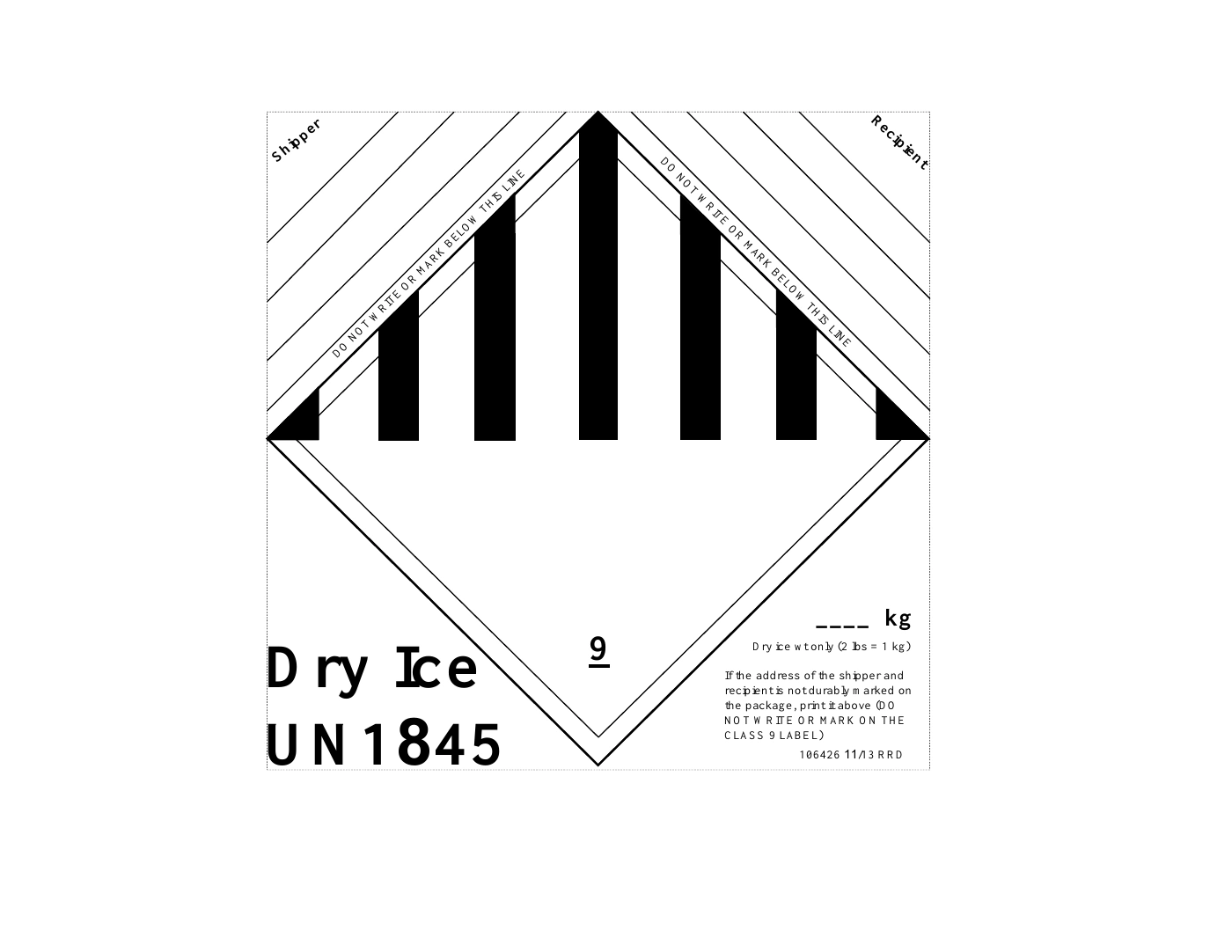
Dry ice is solid carbon dioxide, identified for transport as UN1845. The information below helps you compare the main carrier instructions and gather the details needed for your parcel. Use the linked carrier requirements when preparing the actual shipment.
Gather the shipment details before preparing labels
Write down the origin, destination and exact service, including whether the parcel will move by air or surface transport. Describe what the dry ice is cooling and identify any additional hazards in those contents.
Measure the dry ice going into the package. The required coolant weight is the dry ice itself, rather than the combined weight of the food, cooler and carton. Keep the units clear when completing markings and shipping software.
For example, 5 pounds of dry ice is approximately 2.27 kilograms. That conversion helps with a kilogram field, but it doesn't establish whether the amount is permitted on your chosen service. Quantity limits and marking requirements need to be checked separately.
Distinguish package markings, hazard labels and shipping documents
These serve different purposes. Package markings identify the refrigerant and provide details such as its weight. A hazard label is the required warning symbol, such as a Class 9 diamond. Shipping entries and documents provide the information required by the carrier.
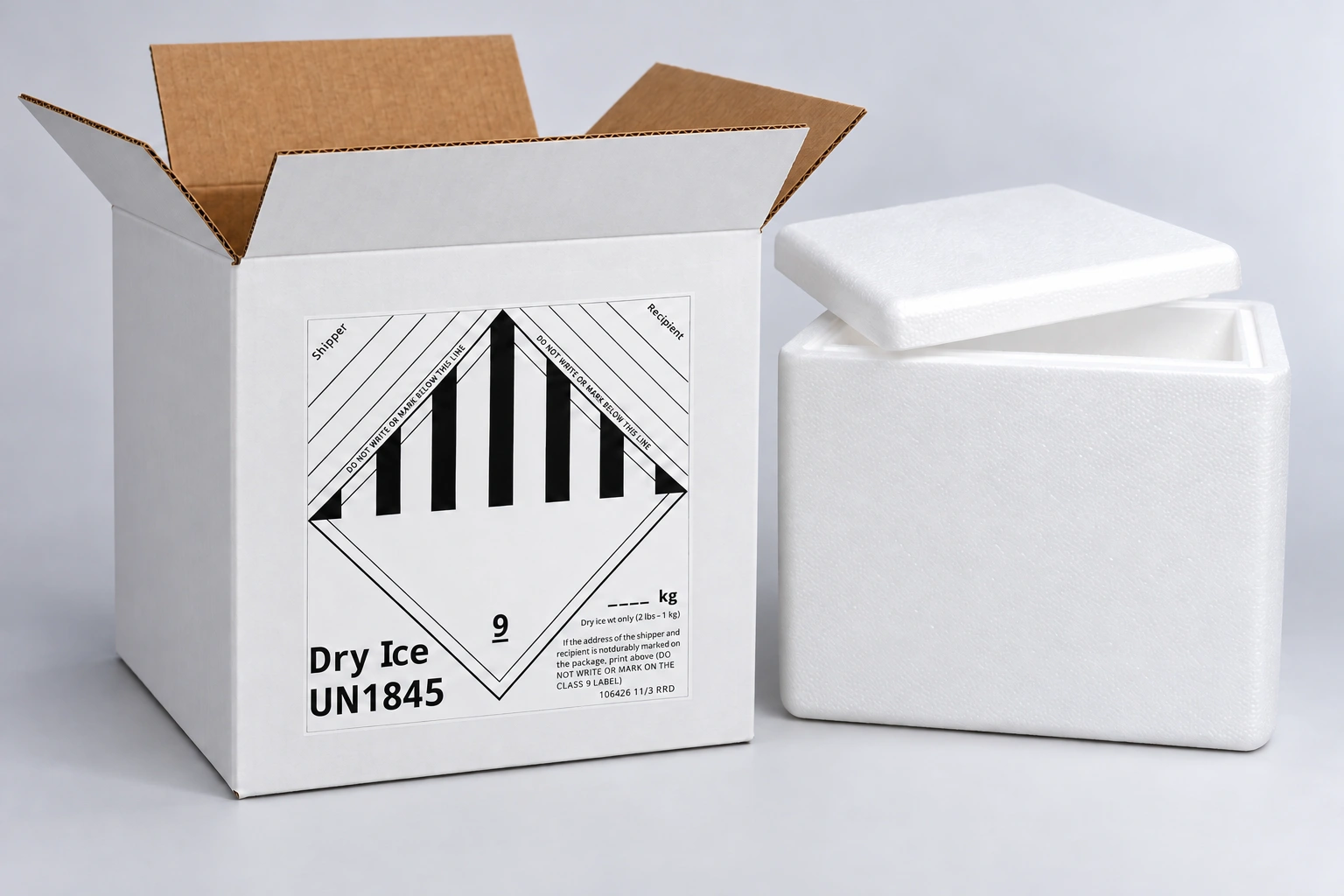
A ready-made dry-ice label may combine some of those elements and leave blanks for the shipper to complete. Check its dimensions, wording and fields against the selected service. Buying the sticker doesn't finish the preparation.
FedEx lists dry-ice identification and weight in kilograms
FedEx's dry-ice guidance calls for the outer package to show the dry-ice shipping name, UN1845, dry-ice weight in kilograms, and the shipper's and recipient's names and addresses.
Its instructions specify a Class 9 hazard diamond measuring at least 100 × 100 millimeters, with no writing inside the diamond border. They also give minimum sizes for package markings. Check those details before shrinking a label to fit a small carton.
FedEx requires the dry-ice information in the shipment entry. When dry ice is the only dangerous good, its guidance says a Shipper's Declaration is not required. Other hazardous contents can change the preparation. FedEx also states that company shipments must be prepared by employees trained in dangerous goods.
Review the complete FedEx instructions and confirm route acceptance. The LoBoy FedEx dry-ice guide explains the wider packing process.
UPS requirements differ for ground and air shipments
The UPS coolant instructions distinguish ground shipments within the contiguous 48 states from air preparation. UPS identifies Alaska, Hawaii, Puerto Rico and Avalon, California, as locations requiring air processing for dry-ice shipments.
For non-medical, non-hazardous U.S. domestic air parcels containing 2.5 kilograms (5.5 pounds) or less of dry ice, UPS lists a specific preparation category. Its markings include the dry-ice name, a description of the non-hazardous contents and the dry-ice amount or an allowed quantity statement.
UPS lists different requirements above that amount, including UN1845 and dry-ice weight in kilograms. Class 9 labeling depends on the applicable preparation framework. Medical-purpose parcels and international shipments have their own provisions; international shipments may require an International Special Commodities contract.
Use the section matching your parcel rather than applying the small domestic-air category to every shipment. The LoBoy UPS dry-ice guide connects those checks with packaging preparation.
USPS limits domestic air mail to 5 pounds of dry ice
USPS Packaging Instruction 9A permits restricted domestic dry-ice mail and prohibits dry ice in international mail. For domestic air transport, the limit is 5 pounds per mailpiece. Surface mail may contain more.
USPS requires the address side to identify the contents being cooled and the net dry-ice weight. Air mail requires the dry-ice shipping name with UN1845, a Class 9 warning label and a completed Shipper's Declaration in triplicate attached outside.
Surface parcels require the dry-ice name with UN1845 and a surface-only marking. The dry-ice declaration and Class 9 label aren't required for domestic surface mail; those parcels must not be routed by air.
Confirm the complete preparation in Instruction 9A. Notice that the USPS air limit is 5 pounds, while the UPS category above uses 5.5 pounds. They aren't interchangeable.
Keep required markings visible on the finished parcel
Check the package after applying tape, the address label, document pouches and any straps. Required information needs to remain visible and readable. Use the carrier's placement and size instructions when deciding where it belongs.
Leave enough surface area in the packaging plan for the required information. If the carton shape or available space creates a problem, resolve it with the carrier before dispatch.
Check that the package allows carbon dioxide gas to escape
Dry ice changes into gas as it warms. The package needs to release that gas rather than trap pressure inside. Check the insulation, liners, bags and closure together; an inner airtight container can be a problem even if the outer carton isn't airtight.
Follow the selected carrier's packaging instructions. The dry-ice shipping guide covers container, coolant and gas-release planning alongside the labeling checks.
Compare the package with the shipping record before dispatch
Confirm the addresses, service, contents, dry-ice weight, required labels and documents. Make sure the final package agrees with the information entered into the shipping system.
If you add dry ice after preparing the label, recheck the weight fields. If the carrier, service or destination changes, review which requirements now apply. Keep the current carrier instructions with your packing directions so staff can find the relevant section.
For container selection, compare LoBoy shipping coolers around the complete load and outer package. Bring those dimensions to the LoBoy Client Solutions Team, and confirm shipment acceptance and preparation requirements directly with the carrier.