Choosing Styrofoam Cooler Wall Thickness for Shipping
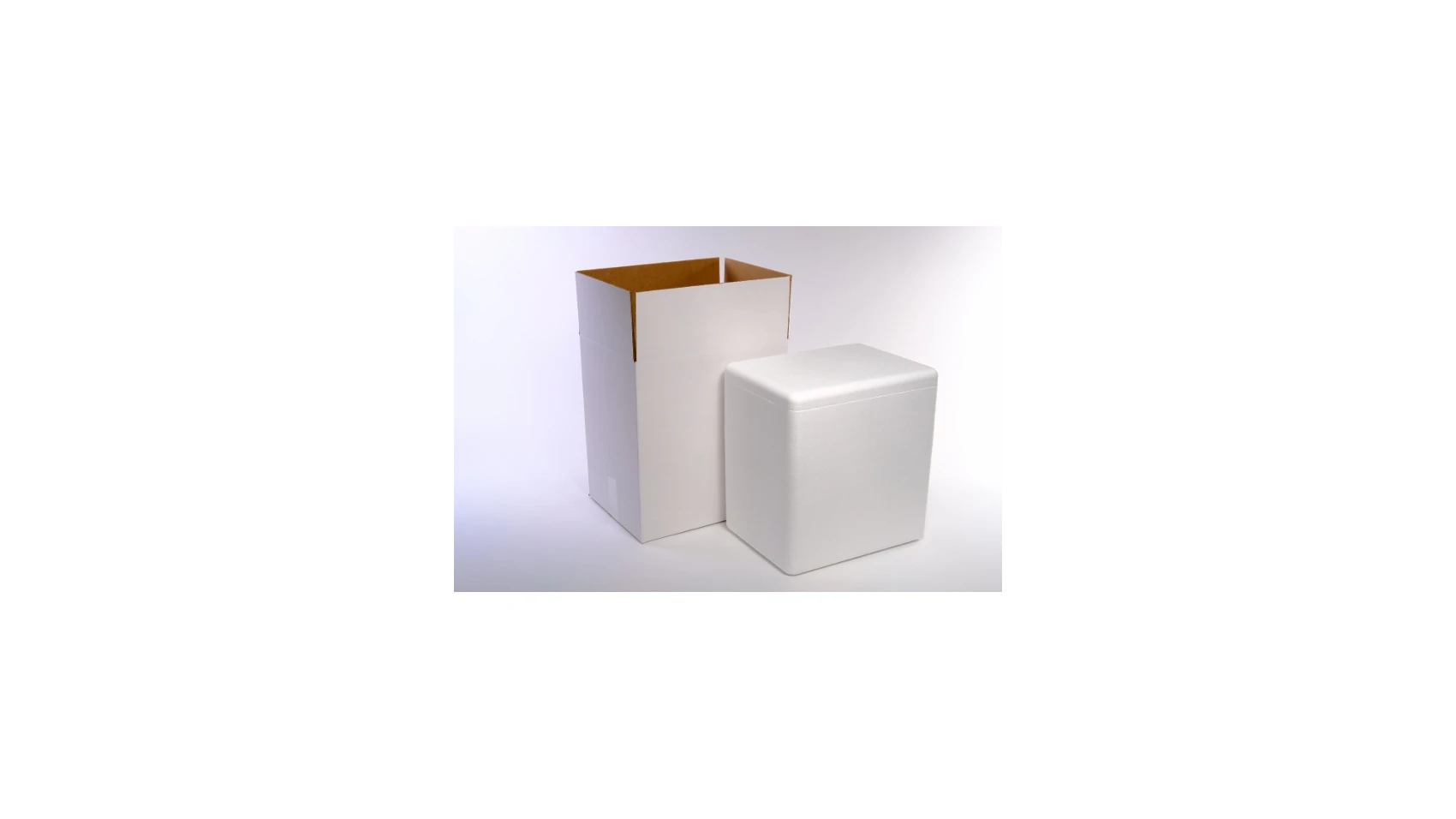
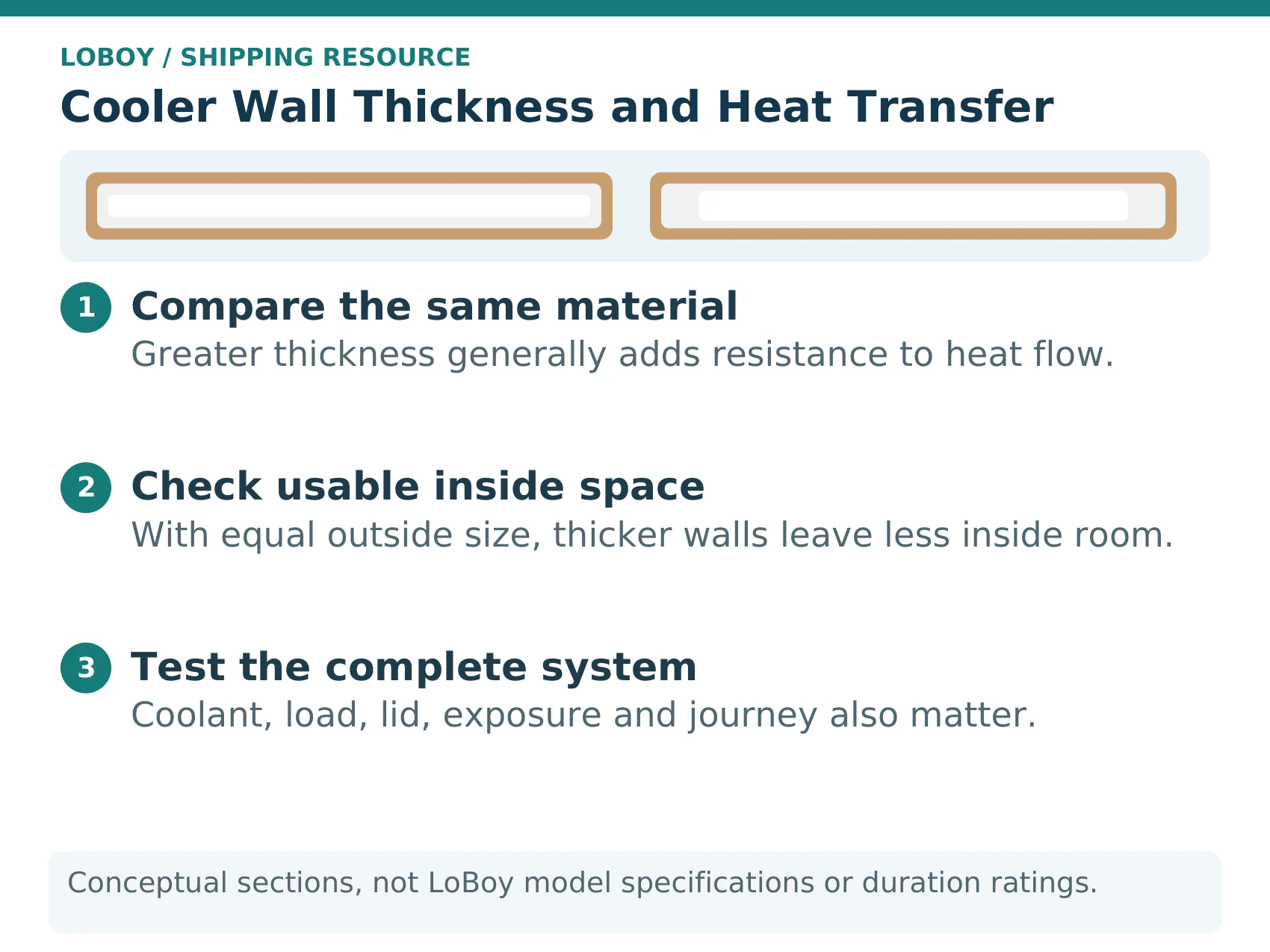
Thicker cooler walls generally provide more resistance to heat flow when the material and other conditions are comparable. That can help protect a cold shipment from outside heat. But thickness also affects how much room remains for the product, coolant and protective packing inside the cooler.
Choose wall thickness as part of the complete shipping arrangement. You need enough insulation for the journey, enough usable space for the whole order and a package that survives handling. Comparing those needs together is more useful than choosing the thickest wall without checking the fit.
Understand what thicker insulation does
Insulation slows heat transfer between the contents and their surroundings. Increasing its thickness generally increases resistance to that heat flow, provided you are comparing the same material under comparable conditions. Material properties and the cooler's overall construction also affect performance.
You may see thermal resistance expressed as an R-value. The U.S. Energy Information Administration defines R-value as a measure of resistance to heat flow. It is not a shipping-duration rating: it does not tell you how many hours a particular food order will stay frozen.
The coolant, product temperature, lid, outside weather and time in transit all matter. Doubling a wall measurement does not establish that the complete shipment will remain cold twice as long.
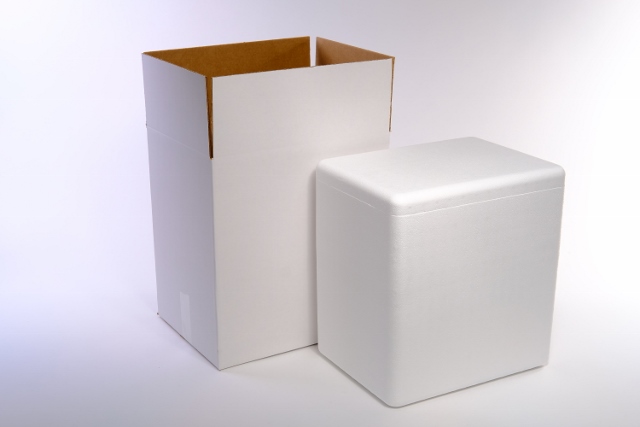
Browse LoBoy shipping coolers
Compare inside space as well as outside size
If two coolers have the same outside dimensions, thicker walls generally leave less usable room inside. Measure the complete protected order, including coolant, dividers, absorbency and any separators, before comparing models.
For a simple illustration, imagine a straight-sided box measuring 16 inches across the outside. Uniform 1-inch walls would leave about 14 inches across inside, while 2-inch walls would leave about 12 inches. This is a geometry example, not a LoBoy model specification; real molded coolers may have tapers, shoulders and different lid or base dimensions. Use the manufacturer's stated usable dimensions.
A few inches can determine whether a row of jars fits with its dividers or whether there is room for side coolant. Shape matters too: two coolers with similar stated capacity may accommodate a flat tray and a tall bottle order differently.
Use our cooler-size guide to compare the full load with usable dimensions.
Check the lid, base and construction
Ask for the available wall, base and lid specifications rather than relying on a single advertised thickness. Check that the lid seats normally and that the cooler fits its protective outer carton.
Inspect for cracks, damaged edges and a poor closure. A thicker wall does not correct a lid held open by an overfilled order. Likewise, changing to a cooler with less internal space may force coolant against the product or remove room needed for protection.
Choose leak-tested coolers and ask for relevant thermal-test evidence. LoBoy fills production-batch sample coolers with water to check for leaks. That manufacturing check is separate from testing how the complete shipping arrangement controls temperature.
Read test results for the models and conditions actually tested
LoBoy's independent laboratory test page reports a seven-hour test in a controlled 90°F environment using water ice. The tested thick-wall models showed little to no ice loss during that period; the thinner-wall 117H retained 90% of its starting ice according to the published summary.
Those results provide evidence for the tested models under the stated conditions. They do not establish a universal parcel-shipping duration or isolate wall thickness as the only variable. The models differ in size and other characteristics, and a shipment of frozen food or refrigerated medicine presents a different question from water-ice retention.
When comparing supplier reports, look for the model, coolant type and weight, product load, starting temperatures, outside exposure and duration. If those inputs differ, the results may help compare complete systems but cannot show the effect of thickness alone.
Compare complete arrangements against the same shipping need
Start with the same product order, required arrival condition and delivery window. Include packing, waiting for pickup, carrier transit and the receiving handoff, plus the delay allowance your plan is intended to cover.
Trial-fit each candidate cooler with the intended coolant and dunnage. Filler, dividers and fitted inserts have practical roles in cushioning the product, keeping containers apart and holding the load in place. Include them in both the space calculation and the performance trial.
| Compare | Why it matters |
|---|---|
| Usable product and coolant space | More insulation is only useful if the complete protected order still fits. |
| Wall, lid and base specifications | The complete enclosure affects heat transfer and physical fit. |
| Coolant preparation and placement | A changed arrangement can alter temperature near the product. |
| Support and closure | The order needs to remain stable without forcing the lid down or crushing containers. |
| Temperature and handling results | The selected package must meet both the product's temperature requirements and its physical protection needs. |
Keep comparison conditions consistent where possible and record every change. If one cooler requires a different coolant layout, evaluate that as a complete arrangement rather than attributing the result only to thicker walls.
Test the packed order under conditions similar to its route
To find out how long the arrangement protects your product, test a fully packed shipment with the actual product, coolant, support materials and outer carton. Include representative weather exposure and the delivery time you intend the system to cover.
Bring the product to its required starting temperature before packing. Assemble it in suitable controlled conditions so avoidable warming at the station does not consume the cooling supply intended for transit.
Check temperatures at representative product locations and inspect for movement or damage after handling. Test the small and large orders covered by the packing plan where their arrangements differ. Medical shipments require the responsible quality team's product-specific qualification and approval process.
Compare the total cost of arrangements that meet your requirements
The perishable shipping costs guide provides a sample worksheet for comparing insulation, coolant, packing labor and carrier charges together. Use it after confirming that each arrangement meets the same product requirements.
Once the candidates meet the product's needs, compare cooler price, coolant, dunnage, outer carton, assembly time, storage space and the finished carrier quote. A thicker-wall option may change the outside package size if you need to preserve the same internal capacity.
Do not assume thicker walls always cost less overall or that a thinner option is automatically adequate for a short route. Use the actual fit and performance evidence, then compare the practical costs of the suitable options.
Our frozen-food packaging comparison guide helps connect insulation choices with the rest of the shipping system.
Ask LoBoy about thickness and usable space together
Send the LoBoy Client Solutions Team your protected order dimensions, coolant layout, required temperature and expected journey when comparing LoBoy shipping coolers. Ask for the specifications of the particular models under consideration.
The Ship Perishables hub connects cooler selection with product-specific guidance. Choose the thickness and cooler design that work with the complete order, then keep the tested model and packing details in the instruction staff use.