
Best Insulated Packaging for Frozen Food: A Comparison Guide
The best insulated packaging for frozen food is the system that meets your product's requirements on your shipping routes. Start with a measured payload and a defined arrival condition. Compare containers through the same test plan so the results mean something.
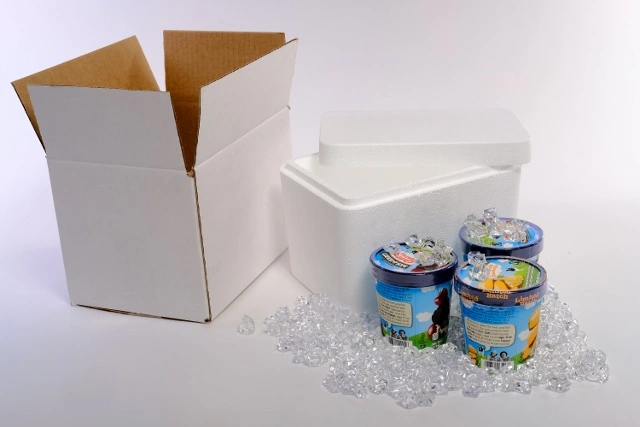
Compare package types as complete systems
Shortlist options by how they fit your product and shipping process. Test the assembled package with your food, coolant, protective layers, and outer carton.
| Packaging type | What to check in your trial |
|---|---|
| Rigid foam cooler | Check usable dimensions, lid clearance, and the fit inside the outer carton. Inspect both the cooler and carton after handling. |
| Insulated liner | Assemble it in the actual carton. Check corners, seams, top closure, and room for the protected load and coolant. |
| Molded fiber or paper-based insulation | Check which components can get wet, how the design handles condensation, and which outer carton it requires. |
| Reusable container | Check fit and handling, then account for collection, inspection, preparation for reuse, and losses. |
Use a packaging comparison worksheet
Before testing, define the required arrival condition, where you’ll measure temperature, and the full shipping window from pickup staging to unpacking. Test representative small and large orders under route and seasonal conditions you expect to face.
- Fit. Measure the protected load with coolant and dividers in place. Check inside dimensions, lid clearance, and movement around trays or sharp-edged packs.
- Physical protection. After representative handling, inspect seals, cushioning, and the carton for shifting, leaks, or damage.
- Temperature. Record readings through the planned shipping window and compare them with the required arrival condition.
- Repeatability. Record the components, layout, and closure steps so another packer can reproduce the trial.
- Total cost. Weigh and measure the finished parcel. Compare materials, coolant, labor, and shipping costs among the setups that pass.
For example, pack the same stack of meal trays in two containers. Keep the starting condition, exposure, and monitoring method consistent. Record any difference in coolant quantity so you can interpret the results.
Use cooler-sizing guidance for the fit check and frozen-food duration planning for the test window.
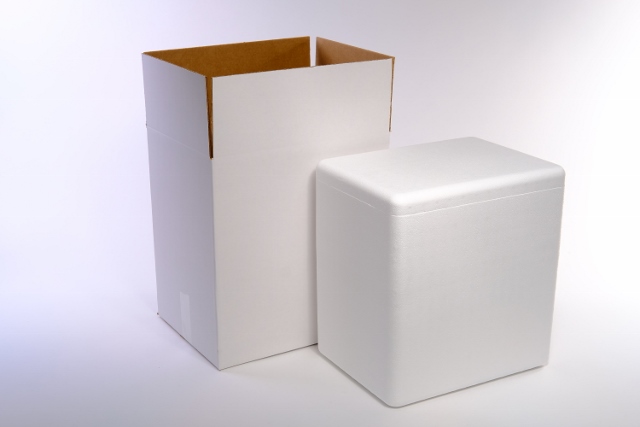
Browse LoBoy shipping coolers
Review environmental claims with evidence
Request a clear definition of any eco friendly claim for the full package. Does it refer to recycled content, reuse or a disposal route? Request evidence for the specific claim and identify which parts it covers. Avoid treating a broad label as proof that every part can enter the same waste stream.
Check the disposal options available to the customers you serve. A package may need separate instructions for its liner, film, coolant and box. Make those steps clear before choosing the design. Include the effect of extra coolant, larger parcels or damaged orders when reviewing alternatives.
Turn a successful trial into a packing instruction
Record the exact container, box, inner packs and coolant used in the passing trial. Show the order of the layers and the closure steps. Include a photo of the finished layout. Give staff a clear way to spot missing parts or an order that does not fit the approved range.
Try the instruction with someone who did not design the test. Check whether that person can build the same parcel without guessing. If the steps depend on judgment, explain the decision or revise the layout. A successful one-off sample is not yet a repeatable daily process.
Set a review point for changes to the food pack, order size, coolant, box or delivery service. Keep the old and new trial records separate. If a change affects fit or heat exposure, review the evidence before using it for customer orders.
Choose among the options that pass
Separate a failed trial from a higher-cost passing trial. A cheap box that misses the food's arrival requirement is not a workable alternative. Among the options that pass, compare the full parcel cost, packing effort and supply needs. Keep the reasons for the choice with the results.
Ask suppliers about lead times, order quantities and replacement parts before committing to a design. Confirm that the sample uses the same parts as the regular supply. If a supplier proposes a substitute later, review its effect on the tested package. A similar appearance does not establish the same fit or performance.
Compare a measured frozen-food load
Use How to Ship Frozen Food to place the container comparison within the complete shipping process. Send the Client Solutions Team your packed length, width and height, typical order range, required arrival condition and shipping window. Include how much room you’ve reserved for coolant. That gives the team what it needs to narrow down which LoBoy shipping coolers to sample.