Shipping Frozen Meals: Packout and Menu Changes
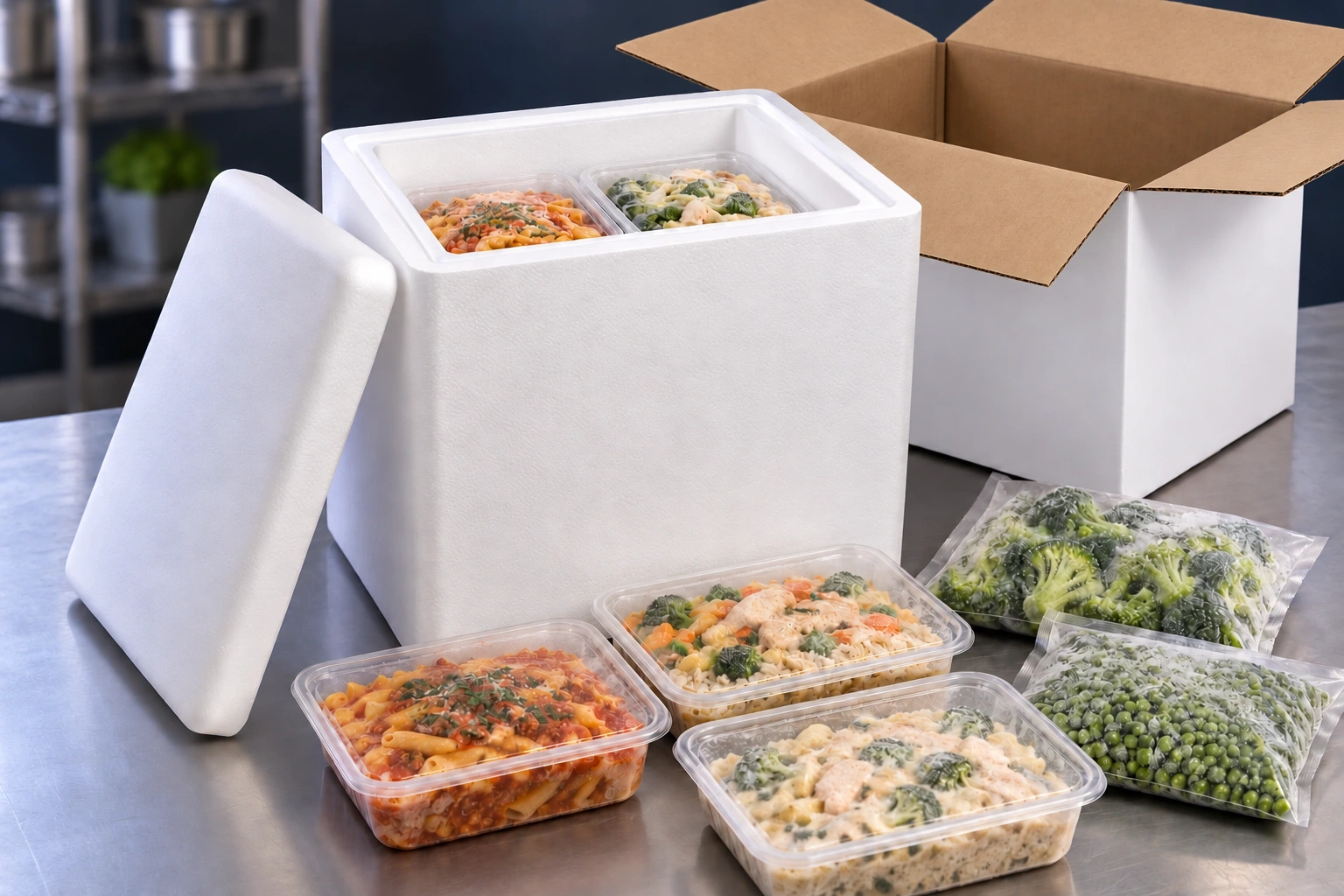
Shipping frozen meals starts with the shape and condition of the complete order. Trays, sleeves and protective inserts can occupy more space than the food itself. Build the container selection around the actual sale units.
Connect your shipping method to your food-safety plan
HACCP—Hazard Analysis and Critical Control Points—provides a recognized framework for identifying and controlling food-safety hazards. The FDA’s HACCP principles and application guidelines connect hazard analysis with control limits, monitoring, corrective action, verification and records. That framework gives your shipping decisions a purpose: identify what could make the meal unsafe, decide how the process will control it, and keep evidence that those controls work.
Have your food-safety lead connect packing, dispatch and receipt to the food-safety plan applicable to your operation. Determine which steps need controls and whether any are critical control points; that decision comes from the hazard analysis. Turn the resulting limits into packing instructions, monitoring checks and actions for delays or failed arrivals. HACCP describes a food-safety system; buying an insulated cooler does not certify that system.
Freeze meals before packing the shipping cooler
Start with meals already frozen to the condition specified by your product and food-safety procedures. Keep them in controlled frozen storage until the packing station is ready. The shipping cooler and coolant should help maintain that prepared condition through transit; do not use the parcel to finish freezing warm meals. A warm load uses coolant capacity for initial cooling before the journey begins.
Record the starting food condition in your trials and daily packing instructions. Use the same tray formats, protected load and coolant preparation that the instruction specifies. A trial made with colder food or a different layout may not represent the orders staff actually pack.
Browse LoBoy shipping coolers
Distinguish safe receipt from your frozen-quality promise
FoodSafety.gov’s guidance for shipped perishable food calls for arrival frozen, partly frozen with visible ice crystals, or at 40°F (4°C) or below when checked with a food thermometer. It advises discarding food that arrives above 40°F and storing acceptable deliveries promptly in the refrigerator or freezer.
A meal that meets general refrigerated receiving guidance may still miss a promise to arrive fully frozen. Define your frozen-quality target separately, including any stricter product-specific temperature requirement. Give customers clear instructions for checking and storing the order and reporting damaged packs or an unacceptable arrival. A box that feels cold is not a substitute for the food-temperature check.
Protect tray seals and lids
Inspect packaging before loading. Avoid stacking pressure that distorts lids or rubs against sealing edges. Use secondary containment appropriate to the product and leakage risk.
Evaluate sample layouts for the smallest and largest menu orders. Confirm that coolant space remains available in both arrangements. A tray that fits an empty cooler may block the planned coolant layer after staff stack several meals.
Define order families
Group configurations by factors that affect packing, such as tray size and meal count. Do not assume equal order weights produce equal arrangements. A soup container and a flat entrée tray create different fit problems.
Document the layout with photographs of the real test pack. Mark component positions in the staff instruction. Keep menu substitutions within the range the tests actually cover.
Connect delivery to receiving
Give the customer an expected delivery date and clear storage directions. Establish a contact route for damaged trays or an arrival condition outside the requirements. Record the package version when investigating a complaint so the team can trace recurring failures to a layout.
Check a menu substitution before it reaches the station
Suppose a customer replaces two flat entrée trays with a tall soup container. That illustrative change may leave the order weight similar while altering lid clearance, stacking pressure and coolant placement.
Check three things before accepting the substitution into an existing packing family. First, confirm the fit of every protected container. Next, inspect seals and lids after representative handling. Finally, evaluate the changed arrangement against the same product and shipping-window requirements.
Keep the instruction specific enough to distinguish allowed substitutions from orders needing review. Identify the tray or tub format, item-count range and packing photograph. A menu name alone is a poor packing instruction when suppliers change container dimensions.
For supporting decisions, compare insulated frozen-food packaging and the full frozen-food shipping window.
Start with the meal as the customer buys it
A frozen meal order includes more than food weight. Measure the sealed trays, sleeves, tubs and other sale units in their final form. Include the protective layers that separate sharp corners from seals. A sample layout should use the packs the customer will receive.
Record the outer dimensions and shape of each pack. Two trays may hold the same amount of food but differ in height, rim width or lid strength. Those details affect stacking and the room left for coolant. Keep the measurements with the container name and version.
Decide which arrival condition the business requires. Frozen quality and food safety are related decisions, but one does not replace the other. Set the product requirements before choosing a cooler or delivery service. A package should pass those requirements with the full meal order in place.
Build a practical menu-family record
A menu family is a group of orders that the evidence supports using the same packing instruction. Define the group by tray format, item count and other features that affect the layout. A menu category such as dinners is too broad if it includes tall tubs, flat trays and fragile toppings.
Start with the regular order and then identify the limits. Record the smallest and largest allowed counts. List any mixes of formats that need separate review. Show staff which packing instruction applies to each order, rather than asking them to choose a box by eye.
For example, a six-tray order may have a stable stack while a two-tray order leaves a large gap. The smaller order is not automatically easier to protect. It may need a different insert or coolant layout. Test the actual range instead of treating a full-box trial as evidence for every order size.
Inspect the inner meal packs
Inspect the trays, film seals and lids before loading. Look for damage that could cause a leak or allow the pack to open. Keep damaged units out of the normal packing process and follow the business's product procedure. The cooler cannot repair a weak inner seal.
Assess contact between the individual meal packs. A rim can rub against film, a tall tub can press on a nearby lid, and an unsupported corner can shift during handling. Use the protective layout established in the test. Retain the tested dividers when assessing usable space.
Inspect again after a handling trial. Record leaks, abrasion, crushed lids and movement as well as the temperature results. Food that remains frozen can still arrive in damaged sale units. The package must protect both the required product condition and the meal container.
Fit coolant around the protected order
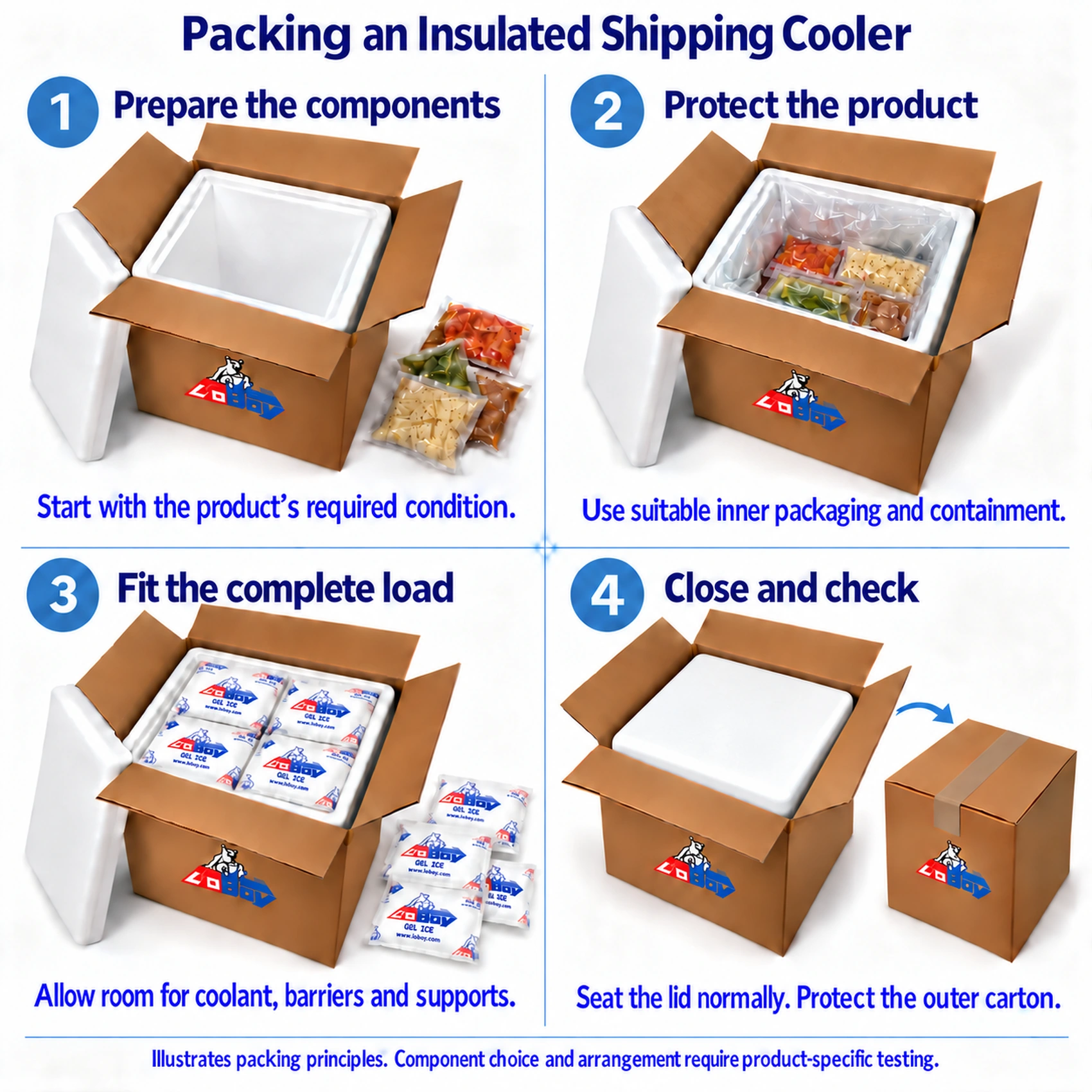
Place the complete protected order in the sample cooler before judging fit. Include the planned coolant space and the outer shipping box. Confirm that the lid closes normally and that the inner packs do not carry the force of the closure. An empty-cooler measurement cannot answer those questions.
Match the coolant to the food's required condition and the complete shipping window. Neither gel packs nor dry ice have a universal protection duration. Test the chosen system with the actual meals. Keep the coolant type, quantity, starting condition and position in the trial record.
If using dry ice, confirm safe handling, gas release and the selected carrier's current rules. A passing temperature trial is separate from carrier acceptance. Follow the applicable preparation and marking requirements for the specific service and shipment.
Plan the full order timeline
The protection window starts with packing and the wait for pickup. It includes carrier movement and the time before the customer stores the food. Document each stage in the shipping plan. A service described as next day does not by itself define the entire period the package must protect.
Coordinate the packing schedule with collection. If the carrier collects once per day, an order packed after the cutoff may face a different wait. Give staff a clear rule for missed collections. Do not let an unplanned delay become part of the normal process without a review.
Include the expected receiving arrangement. A residential doorstep, office mailroom and staffed receiving desk can create different delays. Choose the service and customer instructions around the use case the package evidence supports. Review the effect of weekends and holidays before dispatch.
Test representative meal orders
Use the real meal packs in the trial, with the planned starting food condition. Record the order, packaging parts and coolant. Photographs should show the layers before closure as well as the finished parcel. Keep the test record specific enough for another person to rebuild the same setup.
Choose monitoring locations before testing. A thin tray near the lid may face different conditions from a dense item in the center. The plan should explain which readings represent the load and how the team will assess them. Air inside the box is not automatically the same temperature as the food.
Include the conditions that matter for the intended route and season. Test the defined order range and review plausible delays. Keep individual failed results visible. A successful average does not resolve a failed tray position or a menu mix that falls outside the approved range.
When a trial fails, investigate before making a routine change. Review starting condition, parts, assembly and exposure. Change the selected factor deliberately and document the next trial. Extra coolant may help in some cases, but it is only one part of the complete system.
Turn the trial into a packing-station instruction
Identify the approved tray or tub formats and the allowed item counts. List the cooler, outer box, inserts, containment and coolant. Show the order of the layers and the closure steps. Use a photo of the actual approved arrangement.
Give each instruction a version and effective date. Remove superseded copies from the working station through the business's document process. Staff need a clear way to identify the current layout when parts or menus change. Keep the older record for investigations and comparison.
Ask someone who did not design the trial to follow the instruction. Identify any steps that require clarification or individual judgment. Clarify those steps before daily use. An instruction that depends on the designer's memory is difficult to reproduce across a busy packing team.
Use a short release check for each parcel
Before closure, confirm the order family and approved layout. Check the inner packs, required parts and coolant against the instruction. Verify that the lid closes without pressure on the meal containers. Resolve missing or damaged parts before dispatch.
After closure, confirm the parcel label and selected service. Record the package version through the business's order system or another consistent method. That record helps connect a later complaint to the layout used. A shipping label alone may not identify the inner components.
Set a clear review route for exceptions. An order may exceed the tested count or include a tub that does not fit. A pickup delay can also push it outside the planned window. Staff should know who can make the decision and where to record it. Avoid an informal change at the station.
Control menu and supplier changes
Review a new meal before adding it to an existing packing family. Compare its container dimensions, shape and seal with the approved formats. Check how it changes the protected stack and coolant space. Similar weight does not establish the same fit.
A supplier may change a tray or lid while the menu name stays the same. Include packaging specifications in the review process so the change reaches the shipping team. Keep sample measurements and trial photos with the current instruction. Do not rely only on the product description in the ordering system.
Separate changes that fit the approved range from changes needing new evidence. Document the reason for that decision. If a change affects protection or heat exposure, evaluate the revised complete package before using it for customer orders.
Give customers clear receiving steps
Tell the customer when to expect the delivery and how to contact the business if it is delayed. Ask them to follow the provided receiving and storage instructions promptly. Avoid a blanket assurance that the food is safe simply because the box feels cold.
Provide a route for reporting damaged meal packs or uncertain arrival conditions. Follow the business's food safety process when reviewing those reports. Do not ask customers to taste food to decide whether it is safe. Keep food safety decisions separate from a refund or replacement promise.
Storage and reheating directions should match the specific meal. Shipping guidance does not replace the product's preparation instructions. If menus include different directions, make those differences clear on the supplied product information.
Use complaints to improve the system
Collect enough detail to identify the order family, package version, service and delivery timing. Ask about the condition of the outer box and the inner packs. Use photos where the business's process calls for them. A damaged tray and a temperature concern may need different investigations.
Look for repeated patterns, such as a particular menu mix, tray format or receiving delay. Compare the reports with the trial records. If the operating conditions exceed the tested range, review that gap before expanding service. A lack of complaints does not replace a planned test.
Keep corrective changes linked to new evidence. Update the packing instruction when the revised system passes, and communicate the change to the team. Verify the station components against the current instruction.
Compare the full cost of a workable meal parcel
Among the systems that meet the requirements, compare packaging, coolant, labor and carrier charges. Use the finished parcel's weight and dimensions. Include any extra packing steps needed for mixed tray formats. A cheaper container can require more work or a larger outer box.
Consider supply needs as well as unit price. Confirm lead times and order quantities. Agree on a process for handling substitutions. Review whether staff can store and use the parts within the daily process. The selected system should be both supported by evidence and practical to reproduce.
Work through a changed meal order
Consider an illustrative subscription order that normally contains flat trays. The customer chooses a taller tub as a substitute. The food weight stays similar, but the new shape changes the stack. The current instruction should identify whether that format belongs to the approved family.
Start by checking the protected load against the recorded layout. If the tub occupies space reserved for coolant, the old arrangement no longer fits as written. Do not reduce coolant or press the lid closed to preserve the original box choice. Send the order through the defined review process.
The review may identify an existing approved layout for that format. If it does, staff can follow that instruction and record its version. If it does not, the team needs evidence for the revised package before routine use. The decision depends on the approved range and test results, rather than the apparent similarity of the order.
Now consider a later supplier change to the same tub. A wider rim may affect fit even if the listed volume stays the same. Compare the actual dimensions with the specification. Include the changed part in the review so the shipping team does not learn about it during the final packing check.
This example illustrates why menu and packaging records need to stay connected. Customer choice, supplier parts and station instructions all describe the same physical parcel. Keeping them aligned makes approved substitutions easier to pack and untested changes easier to identify.
Size the cooler around the menu family
The complete frozen-food guide covers the shared shipping decisions behind each meal configuration. Bring tray dimensions, allowed substitutions and meal-count ranges to the Client Solutions Team when comparing LoBoy shipping coolers.