How Long Do Gel Packs Stay Cold?
A gel pack's useful cooling time depends on the pack, how you prepare it and the package you put around it. A pack sitting on a kitchen counter won't behave like the same pack inside an insulated shipping cooler. And a cooler full of already-cold products won't necessarily perform like a partly filled box.
For shipping, the question you need to answer is how long your complete package keeps the product at the temperature it needs. A pack can still feel cold after the product has become too warm. It can also be partly thawed while the product remains within its requirements.
To find out what your setup can do, test it with the product, insulation and packing arrangement you actually plan to ship. Here's how to make that result useful.
What gel packs contain and how they keep products cold
Reusable gel packs generally contain water and a thickening agent that gives the contents their gel-like consistency. Formulations vary; some also include ingredients that change how the contents freeze. The National Capital Poison Center's explanation of reusable ice packs describes these common ingredients.
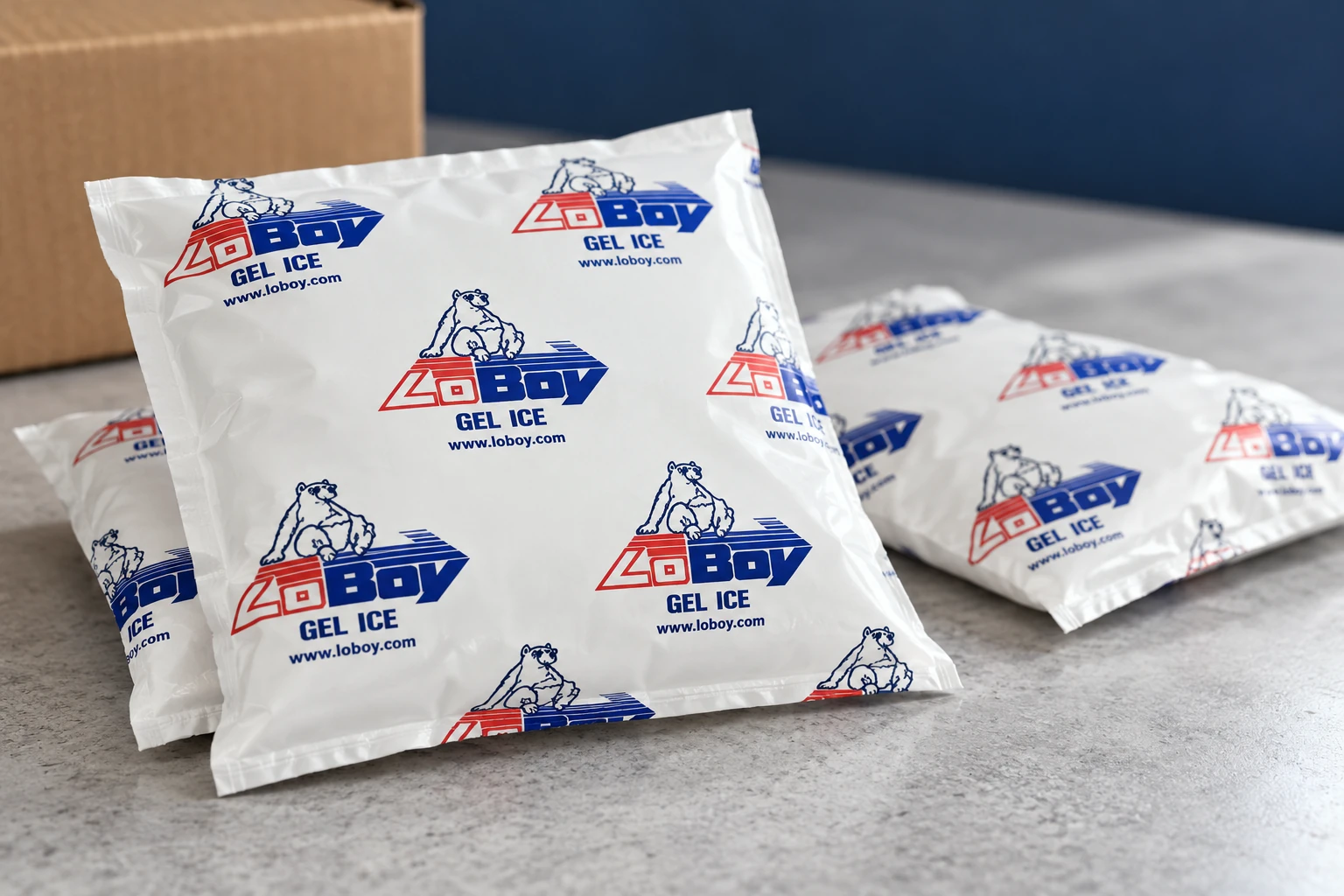
LoBoy Gel-Ice packs are reusable cold packs containing non-toxic, water-soluble refrigerant gel inside a leak-resistant sleeve. They're reusable, so an intact pack can be prepared again for another use. For the exact ingredients in a particular LoBoy pack, ask the Client Solutions Team for its current product information.
The cooling comes from the prepared pack absorbing heat. Your freezer removes heat from the contents before you pack the shipment. During delivery, the colder pack absorbs heat from its warmer surroundings. As the frozen contents thaw, that change from solid toward liquid also takes in heat. This is called latent heat—but the practical point is simple: thawing is part of how the pack does its job.
The sleeve keeps the refrigerant contained, while the cooler's insulation slows heat entering from outside. Together, they buy time for the product. Once the pack has thawed, it can still absorb heat as it warms, but its remaining ability to protect the shipment depends on the product's temperature requirements. That's why a soft pack isn't an automatic failure, and a pack that still feels cold isn't proof that every item stayed at the right temperature.
Browse LoBoy Gel-Ice packs
Identify the product's temperature requirements
Start with the product's temperature requirements. Are you protecting a refrigerated item from warming up? Does the product also need protection from freezing? Or are you trying to maintain a frozen load? Set that goal before deciding whether a particular gel pack is suitable or how many to use.
“The pack was still cold when it arrived” doesn't tell you whether the product met those requirements. Write down what you'll measure and what counts as a successful result. That gives you something definite to compare with the readings from your trial.
Keep the product's starting condition in the record, too. If a test begins with a chilled load, the result doesn't establish what will happen when the next order goes into the cooler warm.
Choose the gel pack and follow its preparation instructions
Identify the exact gel-pack model and size, then follow the supplier's preparation instructions. Record how many packs you use and their condition when they go into the box. A direction that simply says “add ice packs” leaves too much for the packer to work out.
Make sure your daily preparation process can reproduce the test. If one trial uses properly prepared packs and the next uses packs that weren't ready, you're changing an important part of the comparison.
Inspect them for damage before use. Include their size and position when you check the fit of the complete order. The space occupied by coolant needs to be part of your plan from the beginning.
Test the gel packs with the complete shipment
Try the real product in its retail packaging, with the protective layers and outer carton you'll ship. Arrange the gel packs where you intend to place them, then check that the lid closes normally and the contents stay supported during handling.
A smaller order can leave gaps that change where products and coolant sit. A larger order can crowd the packs or press against the lid. If you sell several order sizes, check the range you want one set of packing directions to cover.
Take photographs before closure and list the parts. When a test works, those details let you build the same package again. They also let you spot a change when a later order performs differently.
Account for the time before and after delivery
Your packaging needs to protect the product through the entire journey. Include packing, waiting for pickup, carrier transit and the time before the recipient brings the order inside and stores it.
For example, a box packed in the morning for an afternoon collection has already spent several hours using its cooling capacity before the carrier's trip begins. At the other end, a delivery scan doesn't mean the food has reached a refrigerator.
Use that full timeline when planning your trial. Include the delays you want the package to cover, and consider the route and season. A result from a mild indoor room doesn't establish performance on a hot delivery route.
Measure the product's temperature during testing
Decide where and how you'll measure temperatures before starting. An item near the lid or outer wall may experience different conditions from one in the middle. Your measurements need to help you understand what is happening across the load.
Record what each sensor measures and where it sits. Air temperature inside the cooler can differ from product temperature, so an air reading alone may leave part of the question unanswered. Use a measurement method suited to the product and trial.
Note the state of the gel packs as supporting information, but judge success against the product requirements you set. If one product position falls outside its limits, a good reading elsewhere doesn't erase that result.
Review the results before changing the package
If your package falls short, look through the record before automatically adding more packs. Were the coolant and product at the intended starting condition? Did the contents shift? Was a protective layer missing? Did the test last longer or face more heat than you planned?
Choose the next change based on what you find. You might adjust coolant quantity, try a different placement, reconsider the insulation or shorten the delivery period you offer. Change the selected factor deliberately and keep the rest of the arrangement consistent where practical.
The guides to how many gel packs to use and where to place gel packs cover two decisions worth evaluating separately. Record the new arrangement and test it through the complete period your shipment needs.
Inspect for leaks, damaged packaging and movement afterward, too. A successful temperature result doesn't establish that the physical packaging protected everything inside.
Record which packaging and conditions the test covers
A useful duration result says which product load, gel packs, cooler and layout were tested, under which conditions and for how long. Keep the temperature requirements and readings with that record.
If a package passes a trial, use the result for the arrangements and conditions the test supports. It doesn't give that gel pack a fixed lifespan in every container. Nor does a test that stops at delivery establish protection through an additional wait on the doorstep.
Suppose you normally ship a full selection of chilled products, then begin offering a smaller order. The gel packs haven't changed, but the load and empty space have. Check whether the smaller order is already covered by your tests. If it isn't, evaluate the complete arrangement before promising the same shipping duration.
Write packing instructions based on the successful test
Show the team which order sizes the directions cover, which parts to use and how to prepare and position the packs. Include a photo of the actual layers and the delivery conditions that arrangement supports.
Give packers a clear way to flag an order that doesn't fit. A new product, different gel pack, changed quantity or substitute cooler needs review. The earlier result can help with that review, but it doesn't automatically describe the changed package.
Keep the current directions at the packing station and retain earlier records so you can investigate past shipments. That makes the testing useful in daily work, instead of leaving it as a one-time result nobody can reproduce.
Choose gel packs for your product and delivery requirements
The gel-pack shipping guide brings preparation, quantity and placement together. Use those details when comparing LoBoy Gel-Ice options for your package.
Bring the product dimensions, temperature requirements, delivery timing and any trial results to the LoBoy Client Solutions Team. Those details provide a useful starting point for choosing components to test with your real orders.