What Size Styrofoam Cooler Do I Need for Shipping?
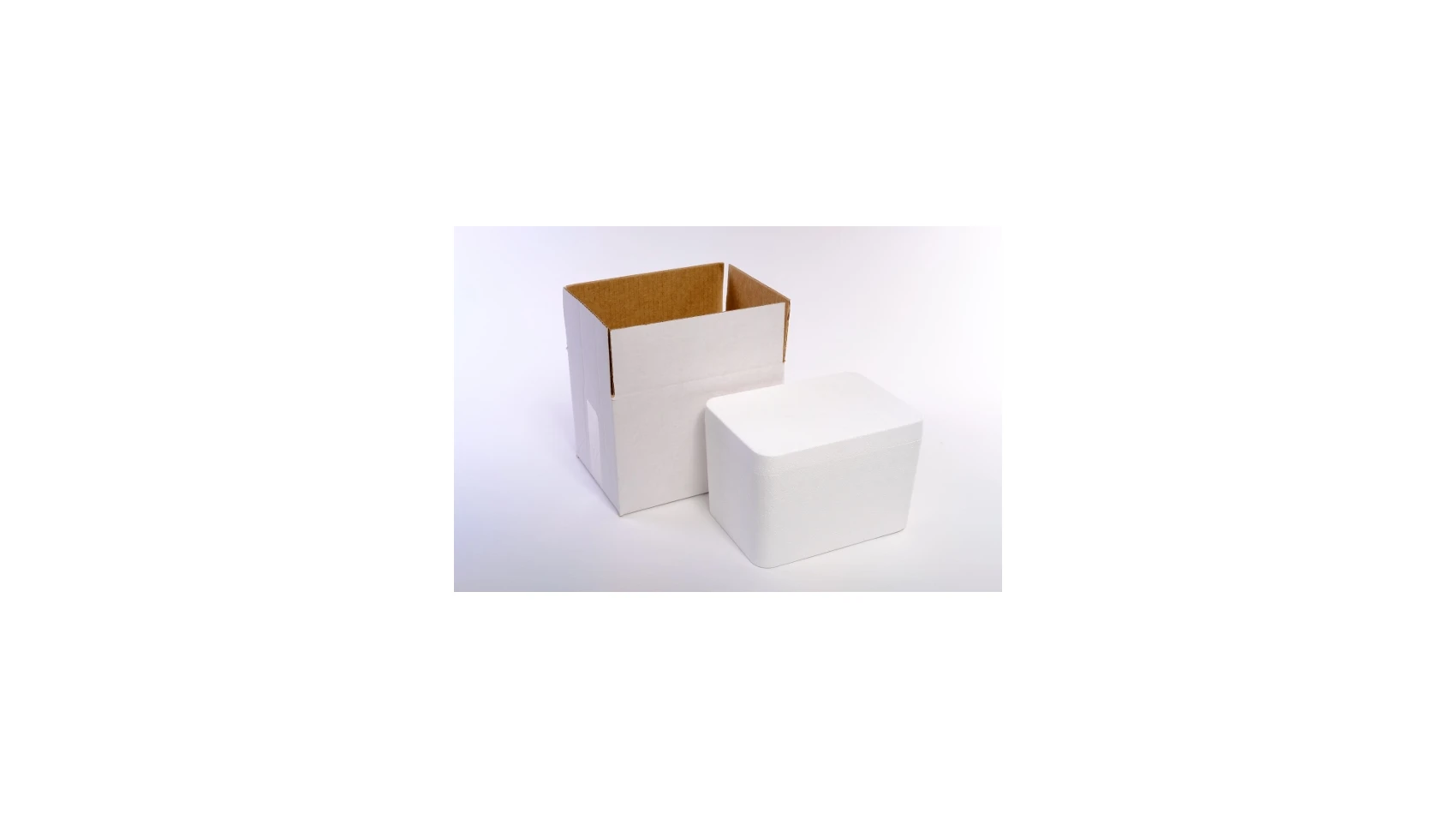
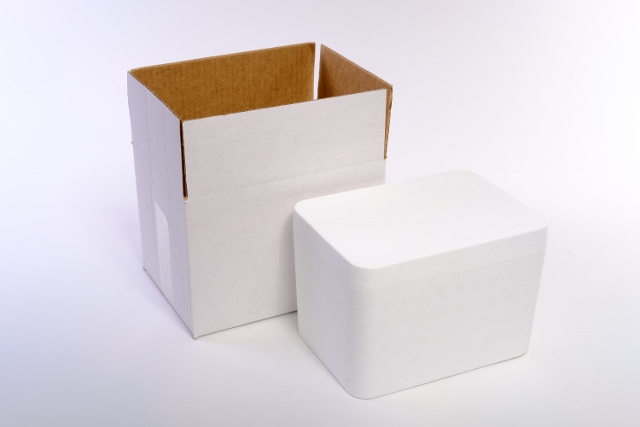
Choose a cooler that fits the complete protected order: the product in its normal packaging, the coolant, any required separators, and the filler or dunnage that keeps everything secure. Measure that arrangement in three dimensions, then try the actual parts inside the cooler before committing to a size.
Capacity alone can be misleading. Two coolers may hold a similar volume but have different shapes, so one fits your meal trays while the other suits taller bottles. The right size accommodates the whole order without crushing containers, displacing coolant or forcing the lid closed.
Browse small, medium, large and bulk/XL shipping coolers
LoBoy offers compact parcel coolers through large shipping coolers and pallet-scale bulk containers. Use the links below to browse the available models, then compare their usable inside dimensions with your complete packed order. Small, medium and large are helpful browsing descriptions here; the model specifications tell you what actually fits.
LoBoy #111 · 5 quarts
Browse small options

LoBoy #201 · 11.5 quarts
Browse medium options

LoBoy #218 · 64 quarts
Browse large options

34-inch Super-Ice Cube
Browse bulk / xl options
Photos show representative LoBoy products. Images are displayed at a similar size for browsing and are not a scale comparison.
| Size to explore | Examples to compare | Where to browse |
|---|---|---|
| Small | Compact choices include the #220, listed at 3 quarts, and #111, listed at 5 quarts. | Browse small shipping-cooler options |
| Medium | Compare models such as the #201 at 11.5 quarts and #202 at 15.75 quarts, with different inside shapes. | Browse medium shipping-cooler options |
| Large | Larger parcel options include the #206 at 27.5 quarts, #214 at 36.5 quarts and #218 at 64 quarts. | Browse large shipping-cooler options |
| Bulk / XL | Explore Gaylord-sized Super-Ice Cube insulated containers for bulk and pallet-scale loads. | Browse bulk and XL shipping containers |
The standard shipping-cooler category displays the small, medium and large models together, making it easy to compare dimensions and configurations. Bulk/XL containers have their own category. A listed capacity includes space you will also need for coolant and protection, so it is not a promise that the same volume of product can be loaded.
Moving from parcel orders to bulk shipping also changes handling, support and freight planning. Check those requirements with LoBoy rather than simply scaling up a small-box packing arrangement.
Measure the products in the containers you will ship
Start with the actual sealed pouches, trays, jars, bottles or cartons. Include secondary containment and other protection required for the product. Measure their maximum length, width and height without squeezing flexible packs into a shape they will not reliably hold.
Arrange the items as they will travel. Three containers stacked vertically need different space from the same containers placed side by side. Check that the arrangement protects lids, seals and fragile surfaces, not just that the products can be made to fit.
Add room for coolant, separators and dunnage
Position the coolant needed for the product and full shipping window. Include any barrier that protects chilled goods from freezing contact, plus dividers, cushioning, absorbency and supports. Measure the resulting arrangement rather than adding a guessed allowance to the product dimensions.
Filler and dunnage have practical roles in a well-sized cooler. They cushion fragile items, keep containers apart and hold products and coolant in position. Include them in the plan from the beginning so packing staff do not have to improvise around an order that barely fits.
Do not remove coolant or a protective separator simply to use a smaller box. If the complete arrangement needs more room, compare another cooler or a different tested layout.
Use a simple layout to calculate the space you need
Imagine an order whose protected product group measures 10 × 8 × 6 inches. In a hypothetical layout, a 1-inch coolant layer goes on each side along the 10-inch dimension, with another 1-inch coolant layer above the product. The other materials are already included in the protected product measurement.
| Dimension | Illustrative calculation | Space occupied by this layout |
|---|---|---|
| Length | 10-inch product group + two 1-inch side layers | 12 inches |
| Width | 8-inch protected product group | 8 inches |
| Height | 6-inch product group + 1-inch top layer | 7 inches |
That arrangement occupies 12 × 8 × 7 inches before any additional assembly clearance. This is a sizing example, not a recommended coolant quantity, a universal packing layout or a LoBoy model specification. Measure the actual components, including barriers, and check how much clearance the real package needs for normal loading and closure.
Compare every dimension before comparing volume
Multiplying inside length × width × height gives cubic inches for a rectangular space. Divide by 1,728 to convert cubic inches to cubic feet. The illustrative 12 × 8 × 7-inch arrangement occupies 672 cubic inches, or about 0.39 cubic feet.
That volume is useful for comparison, but it cannot establish fit. A cavity measuring 14 × 6 × 8 inches also has a volume of 672 cubic inches, yet its 6-inch width cannot accommodate a rigid 8-inch-wide group in the illustrated orientation. Check all three dimensions and any permissible alternative orientation.
Use the manufacturer's usable inside dimensions. Molded coolers may have taper, rounded corners, shoulders or shaped lids, so the widest opening may not describe the space available at the bottom.
Trial-pack the order and check the lid
Put the actual components into a sample cooler in the intended loading order. Check the bottom, sides and top of the arrangement. Look for jars rubbing together, coolant pressing on fragile lids or pouches changing shape under pressure.
The lid should seat normally without forcing it down. If it rests on the contents or bows upward, the arrangement needs correction. Do not count the space created by an incompletely seated lid as usable capacity.
Compare cooler wall thickness alongside usable dimensions. Thicker walls can reduce inside space at the same outside size, while preserving inside capacity may require a larger outer package.
Check the smallest and largest orders you expect to send
A cooler sized for twelve products may leave a four-product order free to slide around. Use suitable dunnage or a different cooler to stabilize smaller loads while keeping coolant in its intended position.
At the other end, a full order can create pressure on containers or leave too little room for the cooling supply. Trial-pack both ends of the order range, including their respective coolant and support layouts.
You may find that a few defined arrangements work better than one cooler for every order. Our empty-space and dunnage guide explains how to support lighter loads without sacrificing necessary packing space.
Measure the finished outer carton for the shipping quote
Use those finished measurements in the perishable shipping costs worksheet example to compare the complete cost of suitable sizes, including coolant, labor and carrier charges.
Once the cooler fits the order, check its protective outer carton. Measure the final closed carton and weigh the complete shipment, including product, coolant, cooler and packing materials. Use those finished measurements when obtaining the carrier quote.
A bare cooler measurement does not establish the size or weight of the shipped parcel. Compare actual quoted costs for suitable arrangements rather than assuming that a smaller internal capacity automatically produces a lower charge.
Confirm that the selected size protects the product for the journey
A successful trial fit answers whether the components can be assembled. It does not establish how long the order stays at the required temperature or whether it survives handling.
Test fully packed shipments under conditions similar to the route, using the actual product load, coolant, dunnage and outer carton. Include packing and pickup time, transit, receiving and the delay allowance your plan is intended to cover.
Bring the product to its required starting temperature and pack in suitable controlled conditions. During the trial, check temperatures at representative product locations. After handling, inspect for shifted goods, moved coolant, crushed containers and stressed seals. Medical products need the responsible quality team's product-specific qualification and approval.
Keep the successful arrangement in the packing instruction
Record the cooler model, product count, coolant identity and preparation, separators, support materials and loading sequence. Include a photo or drawing showing where each part belongs.
Review changes in container size, product quantity, coolant or dunnage before assuming the same cooler still works. A replacement that looks similar may change fit, movement or temperature performance.
Ask LoBoy to compare sizes using your complete order
Show the LoBoy Client Solutions Team the measured arrangement, product temperature needs and expected shipping time. Include the smallest and largest orders, photos of the trial layout and any clearance concerns when comparing LoBoy cooler sizes.
The Ship Perishables hub connects sizing with product-specific guidance. Select a cooler that fits the whole protection system, then verify it under the conditions the shipment will face.