How to Pack a Styrofoam Shipping Cooler
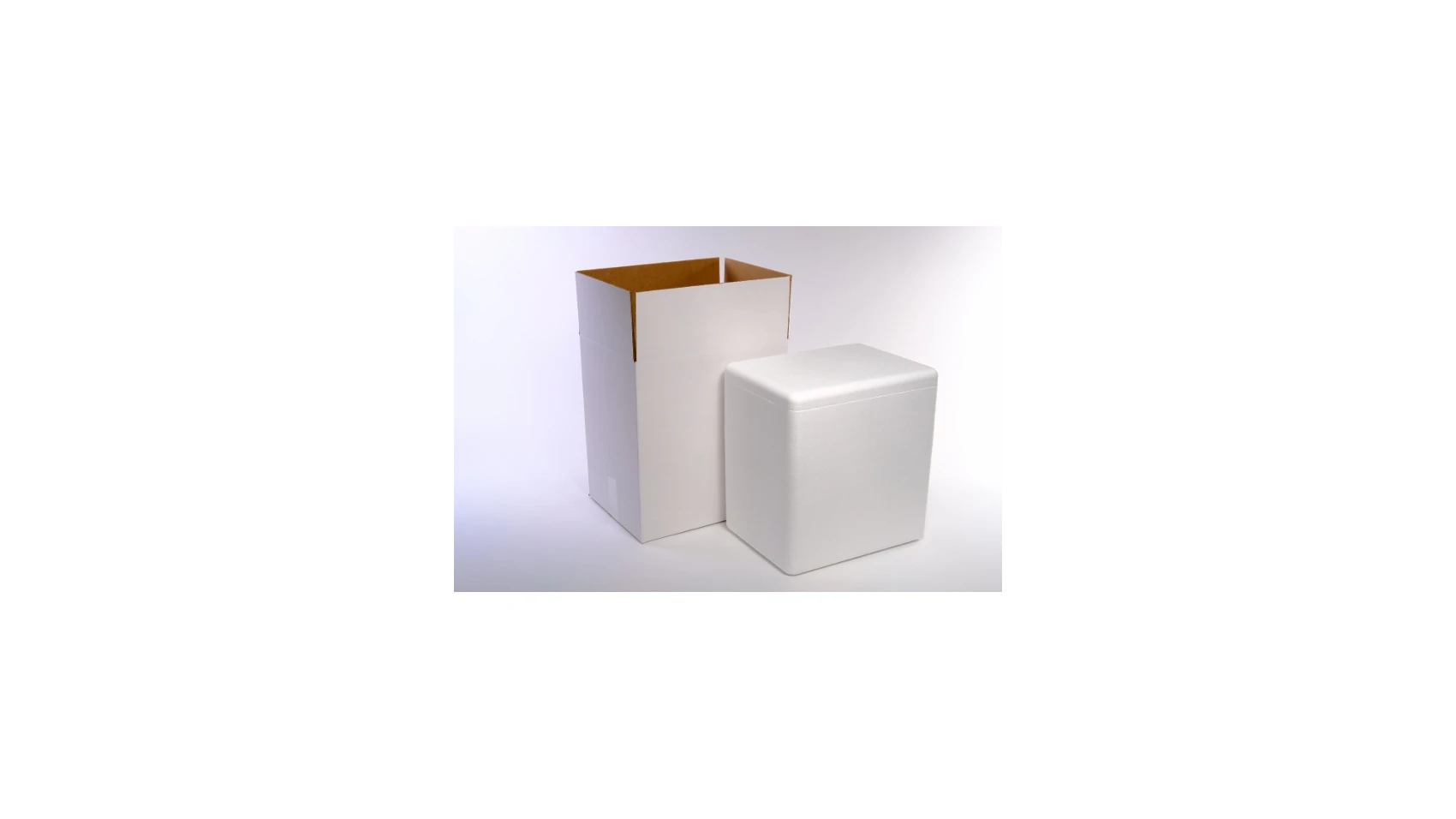
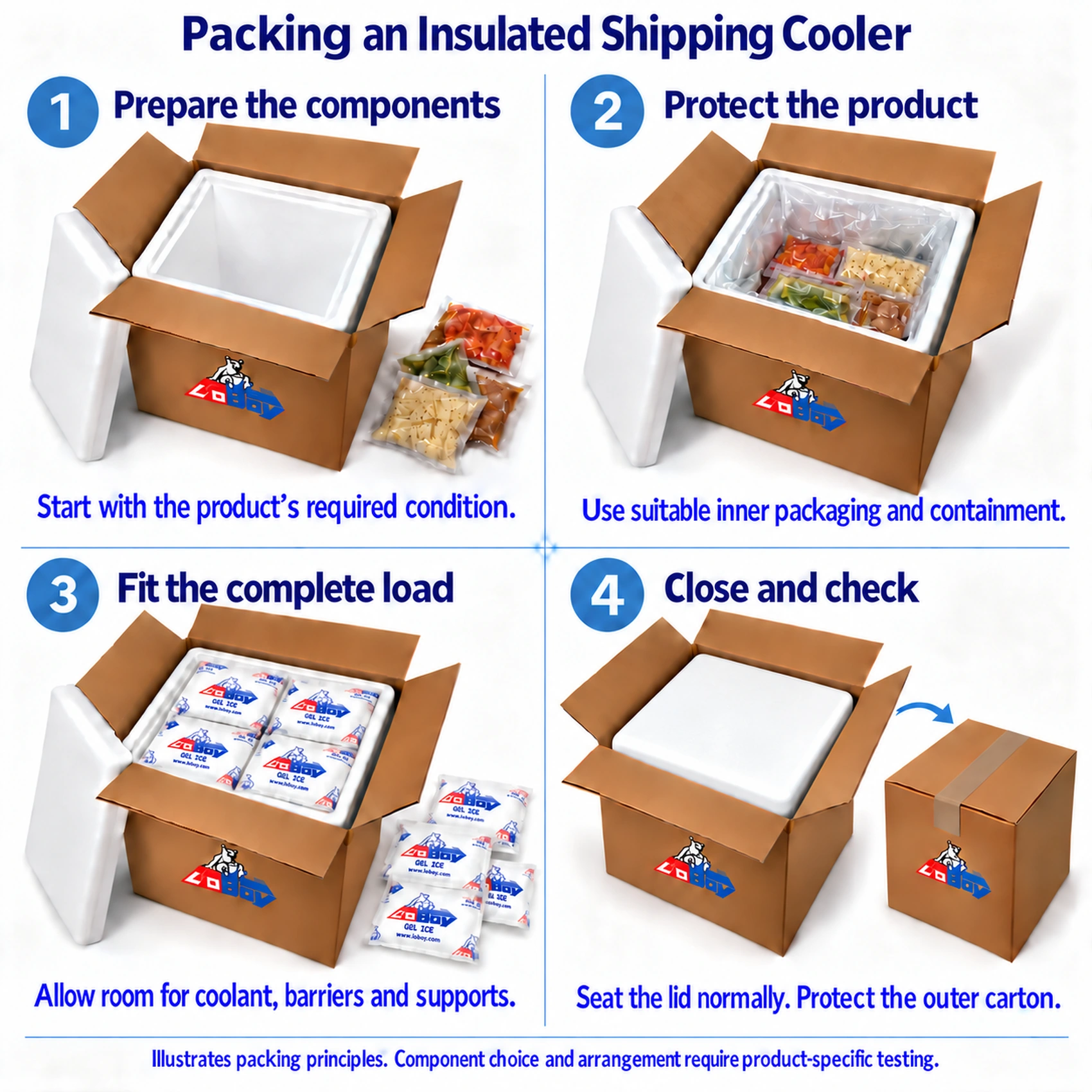
A shipping cooler needs room for everything that protects the order: the product, its sealed containers, coolant, cushioning and any barriers between the product and the cold packs. Packing the food first and trying to squeeze the coolant into whatever space remains can leave you with an order that moves, gets crushed or loses cooling too soon.
Start with a complete trial arrangement before sending customer orders. LoBoy insulated coolers slow heat transfer, while coolant and protective materials do their own jobs inside the package. The steps below explain how to bring those parts together.
Decide what temperature the contents need
Check the handling requirements for the exact product. Refrigerated food, frozen meat, fresh produce and medicine do not all need the same conditions. Some products must stay frozen; others can be damaged by freezing.
Choose the coolant and packing method for that requirement. For medical products, use the documented arrangement approved by the responsible pharmacist or quality team. For food, follow the applicable preparation and handling requirements as well as the packing evidence for your product and route.
Include the entire journey in the plan: packing, waiting for pickup, transit, delays and the time before the recipient puts the contents into suitable storage. A cooler has no fixed shipping duration independent of its load, coolant and outside conditions.
Fit the complete order before choosing the cooler size
Use the actual bags, trays, jars or other containers you will ship. Arrange them with the intended coolant, dividers, absorbency and cushioning. Compare that complete arrangement with the cooler's usable inside dimensions.
For example, a row of jars may fit across the bottom by itself but become too wide once the necessary dividers and side coolant are added. A stack of trays may fit until a top coolant layer prevents the lid from seating. Find those problems during the trial fit.
The cooler's outside dimensions matter for the outer carton and shipping charges. Its inside dimensions determine what you can safely load. Use our cooler-size guide if the complete arrangement does not fit.
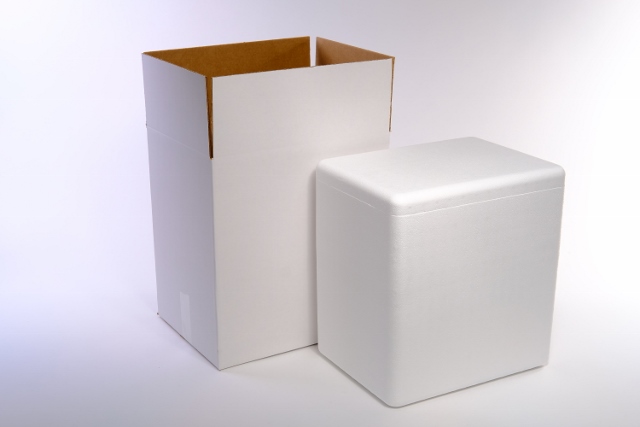
Browse LoBoy shipping coolers
Inspect the cooler, lid and product containers
Check the cooler and lid for cracks, damaged edges or a poor fit. Inspect bags, jars, tubs and other product containers for leaks, loose closures or broken seals. Replace damaged components before packing; an insulated cooler cannot repair a leaking food pouch or cracked jar.
Choose leak-tested coolers and ask manufacturers for relevant thermal-test evidence. LoBoy fills production-batch sample coolers with water to check for leaks. Its independent laboratory test information separately documents thermal tests on specified cooler models. Those checks do not establish a shipping duration for every possible load.
Bring the contents to the required temperature before packing
Refrigerate or freeze the product as its handling instructions require. For fresh produce, use the crop's recommended pre-cooling process and temperature. Check the product itself rather than relying only on the room's temperature display.
Pack in a clean, temperature-controlled area suitable for the contents. Set out the cooler, carton, labels and protection first, and have the coolant prepared before removing the product from storage. Work in manageable batches and keep finished orders under suitable conditions until dispatch.
An insulated cooler slows heat transfer; it does not actively refrigerate warm goods. Starting at the intended temperature leaves more coolant capacity available for the trip instead of using it to remove avoidable starting heat.
Contain leaks and protect fragile containers
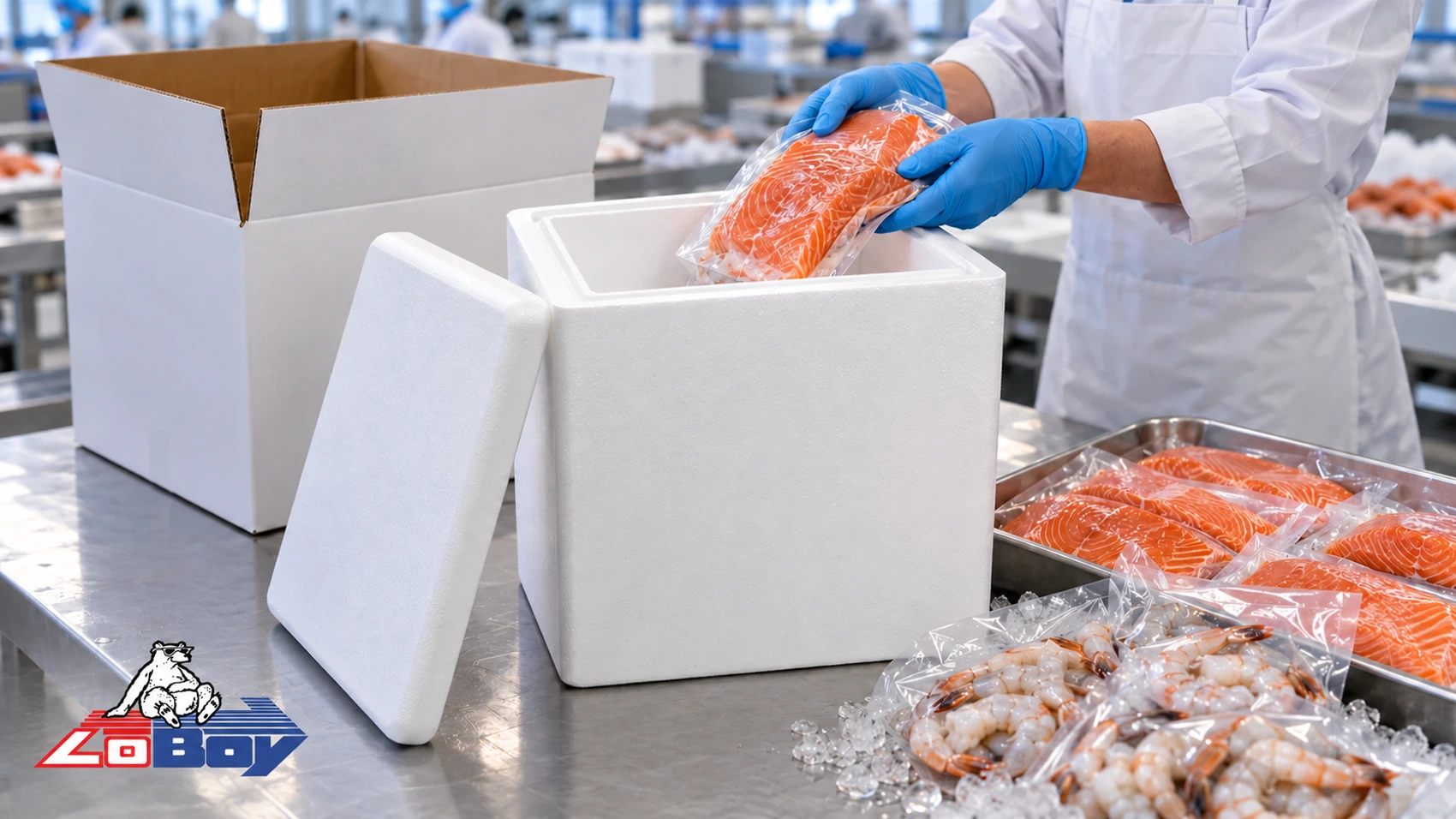
Keep products in suitable sealed primary packaging. Add secondary containment and absorbent material where the product and carrier instructions call for them. Consider where liquid could spread if a container fails, especially when the order includes other ready-to-eat foods.
Use dividers to keep jars or bottles apart. Support flexible trays so heavier items cannot bend them or press on their lids. Keep sharp corners and accessories from rubbing through nearby pouches.
A leak-resistant cooler is another layer of protection, not a substitute for intact product containers. Identify the source of wetness in a trial package: product leakage, a damaged coolant sleeve and condensation need different corrections.
Place coolant where the tested arrangement requires it
Use the specified coolant type, weight, preparation and placement. Do not assume putting one frozen pack on top will protect every part of every order. The right arrangement depends on the contents, cooler, exposure and delivery time.
LoBoy Gel-Ice packs are reusable cold packs containing a non-toxic, water-soluble refrigerant gel in a leak-resistant sleeve. They absorb heat as they warm and thaw. Where they suit the product, they provide coolant without deliberately adding loose melting ice around the order.
Keep any required separator between the coolant and the product. A chilled item may need protection from a frozen surface. Moving a pack or removing a barrier to gain space changes the conditions around the contents.
Prevent movement without crushing the contents
Check how the packed order behaves when it tilts. Use suitable cushioning, dividers or fitted inserts to prevent containers from colliding and coolant from sliding out of place. Fill unnecessary gaps without forcing material against fragile products.
Check the smallest and largest orders separately. A small order can leave room for movement, while a full order can put excessive pressure on containers or leave too little coolant space. Our empty-space guide explains ways to stabilize lighter loads.
Allow gas to escape when using dry ice
Dry ice changes directly from a solid into carbon dioxide gas, a process called sublimation. The cooler and complete outer package must allow that gas to escape. Never make a dry-ice package airtight.
Use suitable handling protection and follow the current carrier instructions for packaging, closure, markings and documentation. FedEx's dry-ice guide explains packaging requirements and distinguishes foam insulation inside an outer box from foam used as the outer package. Confirm the requirements for your actual service and contents before dispatch.
Seat the lid and protect the cooler with an outer carton
The lid should sit in its normal position without forcing it down onto the load. Check for coolant, filler or containers pushing upward. If the lid will not seat, revise the arrangement or choose a larger suitable cooler.
Use a sturdy outer carton suited to the loaded cooler and the carrier's requirements. Follow the appropriate closure instructions, keeping any required dry-ice gas release intact. Apply shipping information clearly and include handling instructions appropriate to the contents.
Test the packed order before routine shipping
To find out how long the setup protects your product, test a fully packed shipment under conditions similar to the delivery route. Include the actual product load, coolant, protective materials and outer carton, along with realistic weather exposure and the delay allowance you intend to cover.
Check temperatures at representative product locations and inspect the contents after handling. An intact outer box does not prove the product stayed within its required temperature range. A cold order with broken jars or crushed trays still needs a packing correction.
Keep a photo or drawing of the arrangement that passed review. Record the component identities, quantities, loading order, coolant preparation and closing checks. Review changes in order size, coolant, inserts or route before assuming the same result will hold.
Get help matching the cooler to your complete order
Once the packing sequence is repeatable, use the perishable shipping costs guide to account for materials, coolant, direct packing time and transportation. Compare complete arrangements before changing the process to reduce cost.
The Ship Perishables hub connects this general method with product-specific guidance. Send the protected order dimensions, coolant arrangement and delivery requirements to the LoBoy Client Solutions Team when comparing LoBoy shipping coolers.