Choosing Ice Packs for Shipping Medicine
An ice pack can keep a shipment cold and still be wrong for the medicine inside it. Some refrigerated products can be damaged by freezing, including where their containers touch a frozen pack. Choosing coolant means protecting the product from both excessive heat and excessive cold for the whole journey.
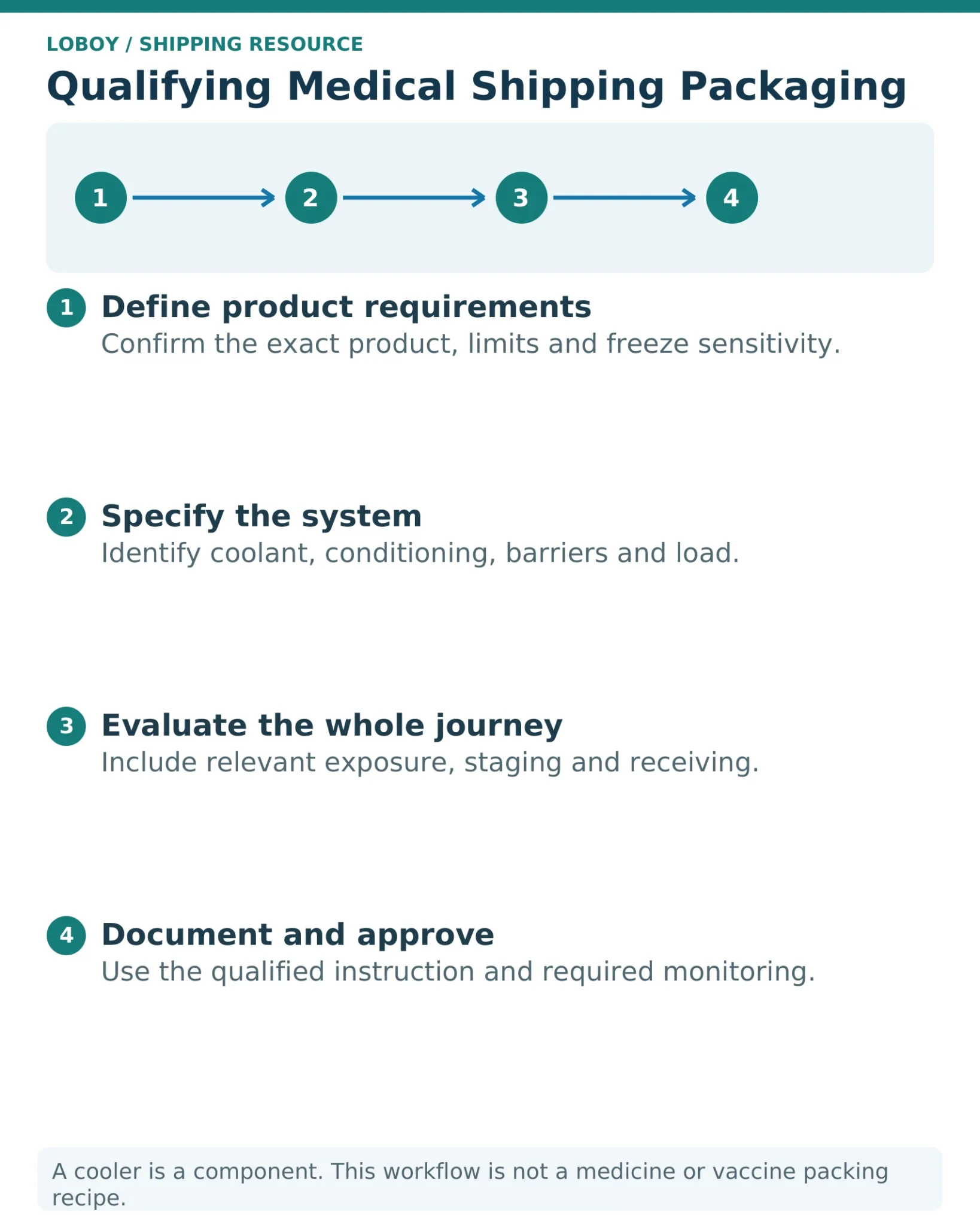
Start with the medicine's current instructions and a documented shipping arrangement supported by testing. Then choose the specified coolant, size, preparation method and placement. The pack's weight or a claim that it “stays cold” cannot establish whether the medicine remains within its required limits.
Check the medicine's temperature limits before choosing coolant
Identify the exact product, formulation, container and order quantity. Confirm its shipping and storage limits, any protection from freezing, and what to do after an exposure outside those limits. That out-of-range exposure is called a temperature excursion.
A refrigerated vaccine, an unopened medicine pen, a compounded preparation and a diagnostic reagent can have different instructions. Even the unopened and in-use versions of one medicine may have different storage allowances. Use the requirements for the product in the shipment rather than borrowing a range from another medical product.
For compounded medicines, obtain the conditions and beyond-use date from the responsible pharmacy. Extra coolant does not extend a beyond-use date or establish that a preparation remains stable.
Browse LoBoy Gel-Ice packs
Understand how the coolant and cooler work together
The insulated cooler slows heat transfer between the shipment and its surroundings. Coolant absorbs heat inside the package. With frozen coolant, some of that heat is absorbed as the material thaws, allowing it to provide cooling beyond simply warming as a solid.
The result depends on the entire arrangement: product starting temperature, coolant, insulation, separators, load size and outside exposure. A cooler of warm product asks the coolant to remove starting heat as well as protect the order during transit. Bring the medicine to its specified starting condition before packing.
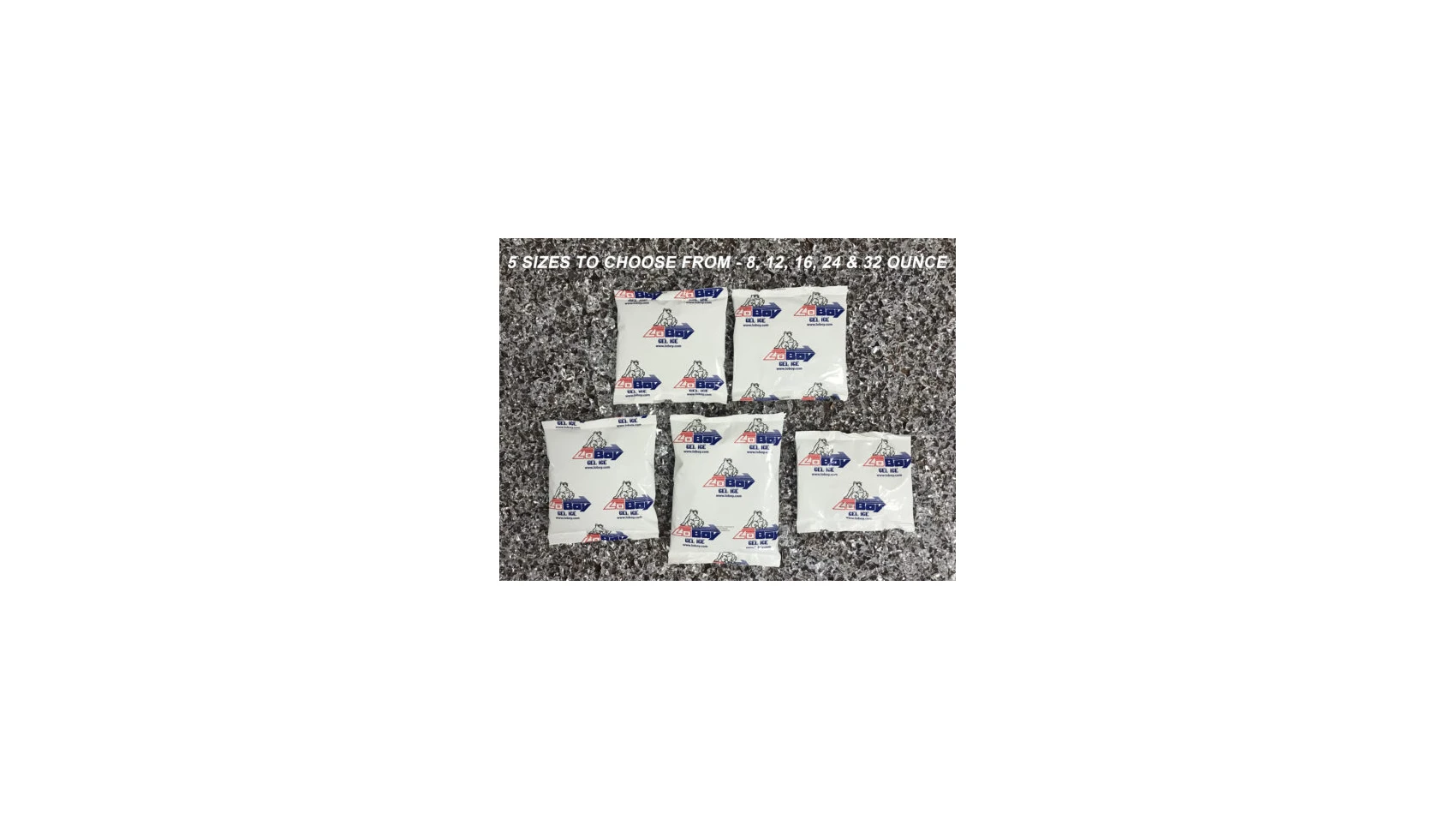
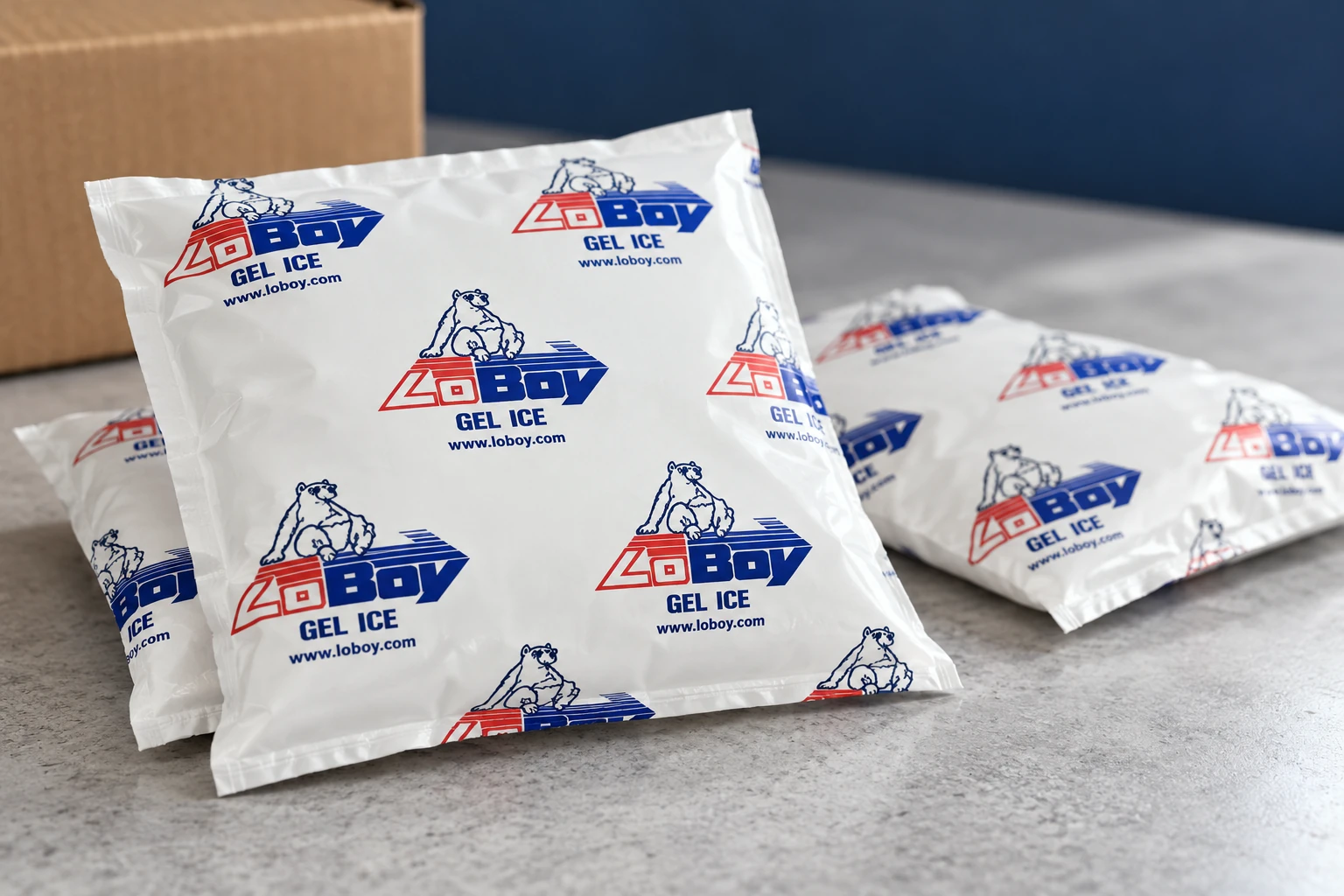
LoBoy Gel-Ice packs are reusable cold packs containing a non-toxic, water-soluble refrigerant gel in a leak-resistant sleeve. They are available as packaging components for evaluation where the product's shipping requirements permit them. Non-toxic describes the refrigerant; it does not establish compatibility with a particular medicine or permission for leaked gel to contact it.
Compare coolant types by their behavior
| Coolant option | What to check for a medical shipment |
|---|---|
| Frozen gel packs | Check whether their starting temperature and placement could freeze the product. Use only the pack identity, preparation and separation supported by the approved shipping arrangement. |
| Chilled packs | Confirm the required preparation temperature and whether the complete system provides enough protection for the route. A refrigerated pack should not be assumed equivalent to a frozen one. |
| Phase-change materials selected for a target range | These materials change state at a selected temperature. Confirm the material's specification, preparation and performance in the actual package rather than treating all phase-change products as interchangeable. |
| Dry ice | Its much colder behavior suits different applications. Use it only where the product instructions, qualified shipping arrangement and applicable carrier requirements allow it. |
Two packs with the same weight can have different shapes, surface contact and cooling behavior. A replacement that fits the same space still needs review before it becomes part of an approved medical shipping process.
Follow the specific restrictions for refrigerated-vaccine transport
The CDC Vaccine Storage and Handling Toolkit warns against using frozen gel packs or coolant packs from original vaccine shipments to pack refrigerated vaccines for staff-facilitated transport. They can freeze vaccines even after conditioning or when their surfaces appear to be sweating.
The toolkit discusses suitable transport equipment and qualified containers, including phase-change materials prepared as directed. This guidance concerns vaccine transport and is not a universal commercial parcel-shipping recipe. Commercial manufacturers and distributors use validated arrangements with specifically prepared and positioned components.
For other medicines, follow the manufacturer's current instructions and the evidence for the exact shipping system. A general recommendation to use frozen packs for food should not be transferred to refrigerated vaccines or other freeze-sensitive products.
Prepare the packs before bringing medicine to the packing station
Coolant preparation is often called conditioning. It means bringing the specified component to its required starting state. The instruction should give the preparation temperature, time, any tempering step and the checks needed before use.
Do not assume an overnight freeze prepares every pack correctly. Likewise, a pack that feels cold may not have reached the required state throughout. Follow the documented process and record its required checks.
Have the cooler, inserts, separators and labels ready first. Keep the medicine under its specified storage conditions until assembly, then pack in a suitable controlled environment within the allowed exposure time. Hold completed orders under the conditions required by the shipping procedure until dispatch.
Keep the required barrier between coolant and medicine
Place packs and separators exactly where the approved diagram shows them. The barrier may be important for preventing excessive cold at the product surface. Removing it to squeeze in another carton changes the arrangement that was tested.
Protect the medicine's containers from pressure and movement. Check that coolant cannot shift against a vial, syringe or fragile primary pack during handling. Keep any required original protective packaging in place.
If the order does not fit, keep it in appropriate storage while the responsible team selects a suitable arrangement. More coolant or tighter packing is not an automatic correction.
Ask what the temperature-performance evidence actually covers
A useful test record identifies the cooler, coolant, product load, starting conditions, separators, sensor positions, outside temperature exposure and duration. It should show the product remained within the stated limits under those conditions.
A claim of 24 or 48 hours needs that context. A successful food shipment or a single cold reading at delivery does not establish medical performance. Test small and large loads as required, including the warm- and cold-weather conditions relevant to the route.
ISTA Standard 20 and Standard 7E provide industry references for insulated-shipper qualification and parcel thermal profiles. Your quality team determines the appropriate approach and whether the complete arrangement is suitable. A named test standard does not automatically certify an individual gel pack or every cooler configuration.
Include waiting time, delivery delays and receipt in the plan
Count staging, carrier handoffs, transit and the time before the product reaches suitable storage at its destination. Confirm pickup cutoffs, receiving hours and a contact who can act on a delayed shipment.
A next-day service describes a delivery schedule, not the medicine's temperature history. Use a shipping arrangement whose documented conditions cover the planned journey and delay allowance. Refer an unexpected extension to the responsible quality team before assuming the same cooling supply will suffice.
Inspect reusable packs and control substitutions
Check sleeves and seals for damage, leaks and missing identification. Follow the approved cleaning and storage process, and remove packs that fail inspection. If reuse is part of the program, define how staff verify that a returned pack is suitable for another cycle.
Keep the specified coolant identity, size, quantity and position in the packing instruction. Send a proposed substitute for review, even if it has the same weight. The decision needs to consider performance as well as availability, preparation time, freezer or refrigerator space and handling labor.
Use temperature records to assess arrival problems
Use the monitoring device and sensor placement specified for the system. Confirm activation before closure and link the device identity to the shipment. At receipt, preserve its temperature history along with the order and packing details.
A thawed pack alone does not prove product failure, and a frozen pack alone does not prove product safety. If there is an excursion, missing data, damage or an unexplained delay, follow the product's holding and escalation procedure. The responsible pharmacist, manufacturer or quality team determines whether affected medicine remains suitable for use.
Discuss available coolant after defining the shipping requirements
Use our medical shipping-system guide and refrigerated-medicine guide to connect coolant selection with the whole shipping process.
Ask the LoBoy Client Solutions Team about available LoBoy Gel-Ice sizes and the dimensions needed for your proposed arrangement. Your quality team must approve their use for the exact medicine and system before routine shipping begins.