Choosing Temperature-Sensitive Medical Shipping Packaging
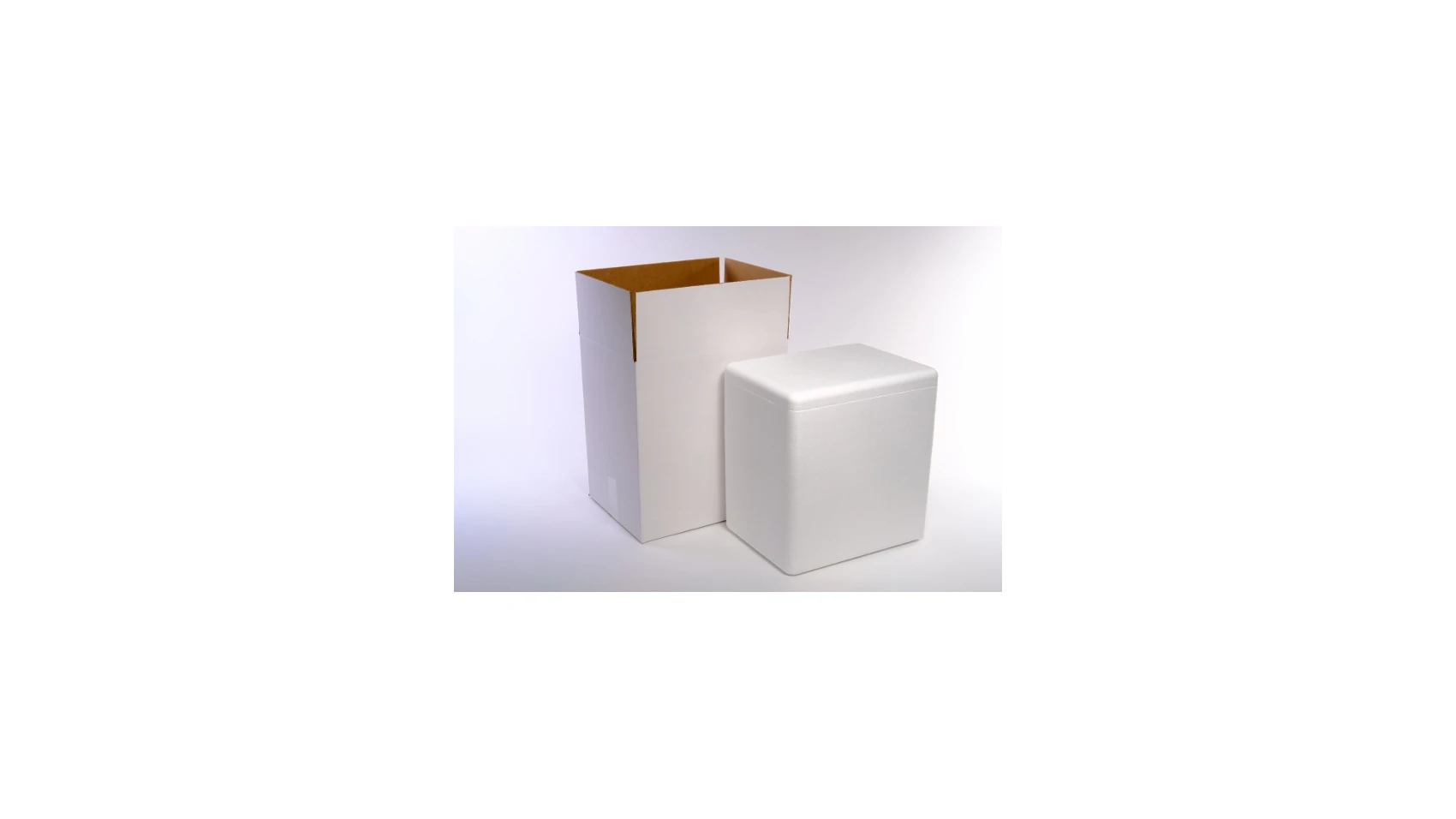
A medical shipment needs protection from more than the weather outside the box. The product may also need protection from freezing, broken containers, light exposure or a delayed handoff into storage. The right packaging addresses those risks together for the particular product being sent.
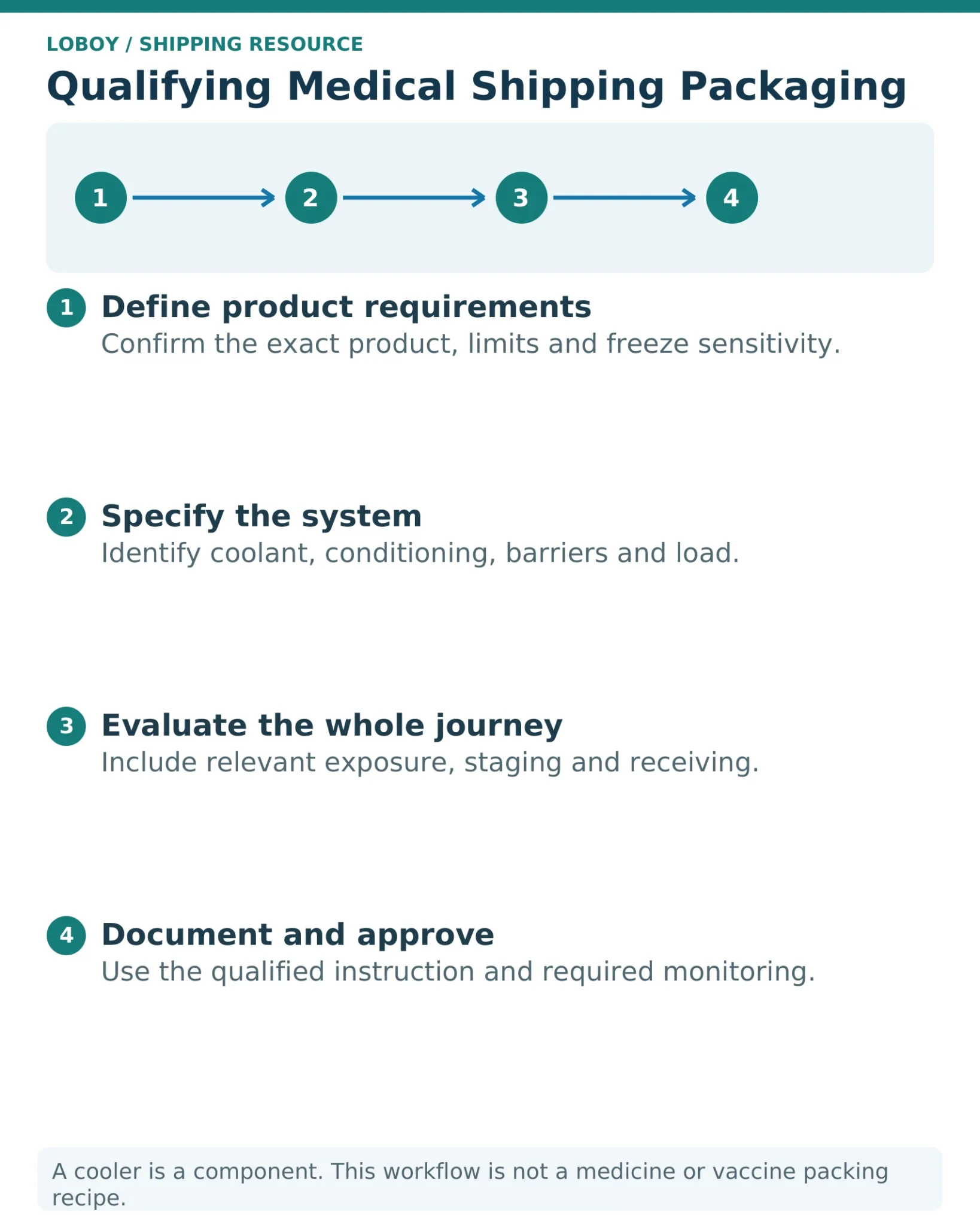
LoBoy insulated coolers can form part of that shipping system. To choose the right arrangement, define the product's requirements first, then evaluate the cooler, coolant, protective inserts, outer carton and monitoring process as a complete package.
Start with the product and the journey it must survive
Identify the exact medicine, diagnostic product or other medical material, including its formulation, container and quantity. Obtain its current shipping and storage requirements from the manufacturer or responsible pharmacy. Check temperature limits, permitted exposure times, light protection and any restrictions on freezing.
Do not treat “medical” as a single temperature category. A refrigerated injectable, frozen biological product and room-temperature diagnostic kit can need different protection. A compounded preparation also has its own assigned storage conditions and beyond-use date.
Describe the route from packing through receipt into appropriate storage. Include staging, carrier handoffs, expected transit, possible delays and the destination's receiving hours. Those details establish what the packaging must do and for how long.
Give each packaging component a clear job
Insulation, coolant and protective inserts solve different problems. Choosing them together helps avoid a package that controls temperature but leaves fragile containers unsupported—or a sturdy box that lets the medicine get too warm.
| Component | What it contributes | What to check |
|---|---|---|
| Insulated cooler | Slows heat transfer between the product and its surroundings. | Confirm the specified model, dimensions, construction and lid fit. Insulation does not actively refrigerate a warm load. |
| Coolant | Absorbs heat and helps maintain the intended conditions. | Use the exact material, amount, starting state and placement supported by the shipping evidence. |
| Separators and inserts | Maintain spacing, support containers and help protect against excessive cold contact. | Check that they cannot shift or be omitted during assembly. A different thickness can change heat transfer. |
| Required containment | Helps control leakage or exposure as appropriate to the contents. | Establish the requirements for the actual material. An insulated cooler is not a universal containment system for hazardous or infectious contents. |
| Outer carton | Protects the cooler during handling and provides a surface for required shipping information. | Use the specified carton and closure method for the complete loaded package. |
| Temperature monitor | Provides the temperature information specified for shipment assessment. | Confirm device suitability, setup, activation and sensor location. A current reading alone does not describe the full journey. |
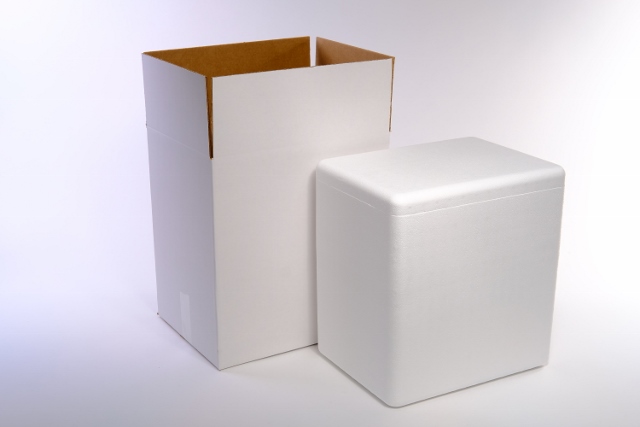
Browse medical shipping coolers
Protect refrigerated products from freezing as well as heat
A frozen coolant surface can be much colder than the medicine's permitted range. More frozen packs may increase protection from outside heat while also creating a freezing risk near the product. The qualified arrangement needs to address both.
Follow the specified coolant preparation, sometimes called conditioning. This brings the material to the starting state used in the approved system. Depending on the design, that can involve refrigeration, freezing or a controlled preparation process for a phase-change material.
Keep the required separators in place. Do not remove them to fit another product carton or substitute dry ice because it seems colder. Those changes can alter the conditions around the medicine.
For vaccines, the CDC Vaccine Storage and Handling Toolkit provides specific guidance, including restrictions on coolant for refrigerated-vaccine transport. Apply it within its scope alongside current product instructions; do not transfer a vaccine example to every medicine.
Ask for qualification evidence that matches your proposed package
Qualification means documenting that a defined shipping arrangement performs as required under stated test conditions. A useful report identifies the actual components, product loads, starting temperatures, assembly steps, external exposures, duration and pass limits.
Check whether your proposed order falls within that scope. A report for a different insert, coolant quantity or product load may not cover the package you intend to use. Likewise, one successful delivery is not enough to establish performance across seasons and routes.
ISTA Standard 20 and Standard 7E provide recognized industry references. Standard 20 addresses design and qualification of insulated shippers; 7E provides thermal profiles based on parcel-delivery exposures. Your quality team selects the appropriate approach and determines what additional route-specific evidence is needed.
Ask suppliers to distinguish a component test, a complete-system test and a formal certification. The name of a test standard on a brochure does not show that every product load or configuration has been certified.
Check physical protection alongside temperature performance
A package can remain cold while a vial breaks or a closure fails. Assess support, movement, pressure and closure integrity as well as temperature. Consider the smallest and largest loads: more empty space can allow movement, while a full box may press against fragile containers.
LoBoy fills production-batch sample coolers with water to check for leaks. That manufacturing check helps assess the cooler itself. It is separate from proving temperature performance or establishing all containment requirements for a medical shipment.
Keep medicines in their required primary packaging and use the additional protection specified for the contents. Check that the cooler closes without forcing coolant or inserts into the product.
Identify the regulations and professional standards for the operation
Have the responsible pharmacist, regulatory lead or quality team establish the requirements for the product, shipper and destination. These can include pharmacy licensing, product-specific handling rules, and transport requirements for the contents or refrigerant.
For compounding operations, USP <797> addresses compounded sterile preparations. USP <800> addresses hazardous-drug handling in healthcare settings. Their applicability needs to be assessed for the actual operation.
Packaging can support those procedures, but a cooler alone does not make an operation compliant or establish sterility. Keep compliance review distinct from a supplier's thermal-performance claims.
Pack products already at their required starting temperature
Prepare the coolant, cooler, inserts, monitor and labels before removing the product from controlled storage. Verify the required starting condition, then assemble in a suitable controlled environment within the procedure's allowed exposure time.
Warm medicine creates an additional heat load that the qualified arrangement may not cover. Keep completed orders under the conditions required by the shipping procedure while they wait for pickup. The cold chain includes preparation and dispatch, not just the carrier's portion of the trip.
Give staff a clear diagram showing the component identities and positions. Check separators and the monitor before closing the package. Our medical packing guide explains the assembly process in more detail.
Keep the packing instruction and purchasing specifications aligned
Record the approved cooler, coolant, inserts, outer carton and load range in a versioned instruction. Make the names match the labels staff see on the components. Link the shipment to that instruction and its required preparation and monitoring records.
Send changes for review before routine use. A replacement coolant pack of the same weight may have a different shape or behavior. A new supplier's insert may have different dimensions. The responsible team should decide whether existing evidence covers the change or further testing is needed.
Arrange prompt receipt and a clear response to problems
Confirm that the recipient can accept the delivery and has appropriate storage ready. Provide a contact and instructions for delays, damage, missing temperature data or an out-of-range exposure. Avoid a plan that depends on an unopened parcel waiting overnight at an unattended receiving desk.
At receipt, preserve the temperature record and shipment identity. Follow the product-specific instructions for unpacking and transfer to storage. A cold-feeling box or intact seal does not establish the product's temperature history.
If a problem occurs, follow the approved holding and escalation process. The responsible pharmacist, manufacturer or quality team decides whether the product remains suitable for use. Returning it to the refrigerator does not automatically reverse damage.
Discuss LoBoy cooler options with the complete arrangement in mind
Give the LoBoy Client Solutions Team the protected load dimensions, coolant layout, insert requirements and expected journey when reviewing LoBoy medical cooler options. These details help identify components that physically fit your proposed system.
Use How to Ship Refrigerated Medicine for the broader planning process. Your quality team remains responsible for approving the complete arrangement for the exact product, route and duration.