Shipping Cheese: Refrigeration, Packing and Delivery Steps
To ship cheese, first check the label and supplier's handling directions for the exact product. A tub of fresh cheese, a soft wedge and an intact aged wheel can have different refrigeration needs, packaging and tolerance for cold contact.
Then pack a sample with the cheese in its retail wrapping, the protective materials and the coolant you intend to use. Check both temperature and condition after the trial. A cheese can arrive cold while its container is crushed or its texture has been damaged by freezing.
Pack each cheese for its shape, wrapping and temperature needs
A cheddar block, a wheel of Brie and a tub of ricotta shouldn't be treated as interchangeable items. Use the cheese names in your packing directions and give each format the protection it needs.
Cheddar, Gouda, Swiss, Monterey Jack, Parmesan and Romano
For blocks, wedges and wheels, check the wrapped dimensions and keep hard corners from pressing into neighboring packs. A larger wheel or block also needs support so it can't slide into a softer cheese during handling.
When shipping cheddar cheese or another aged cheese, confirm the maker's refrigeration directions for the specific cut and pack. The guidance for an intact wheel doesn't automatically cover a cut wedge. Freezing may also make cheese crumbly, so don't assume that a colder shipment preserves the texture your customer expects.
Brie, Camembert and soft goat cheese
For a Brie wheel, Camembert box or soft goat-cheese log, protect the shape as well as the temperature. Check whether a gel pack, jar or heavier cheese will press on it. Use support that keeps those items apart without squeezing the cheese or its container.
In a trial, inspect the cheese and wrapping after handling. Record flattening, crushed boxes, opened seals and damage where cold packs touched the product. Compare those findings with the maker's expected condition for delivery.
Fresh mozzarella, cream cheese, ricotta and cottage cheese
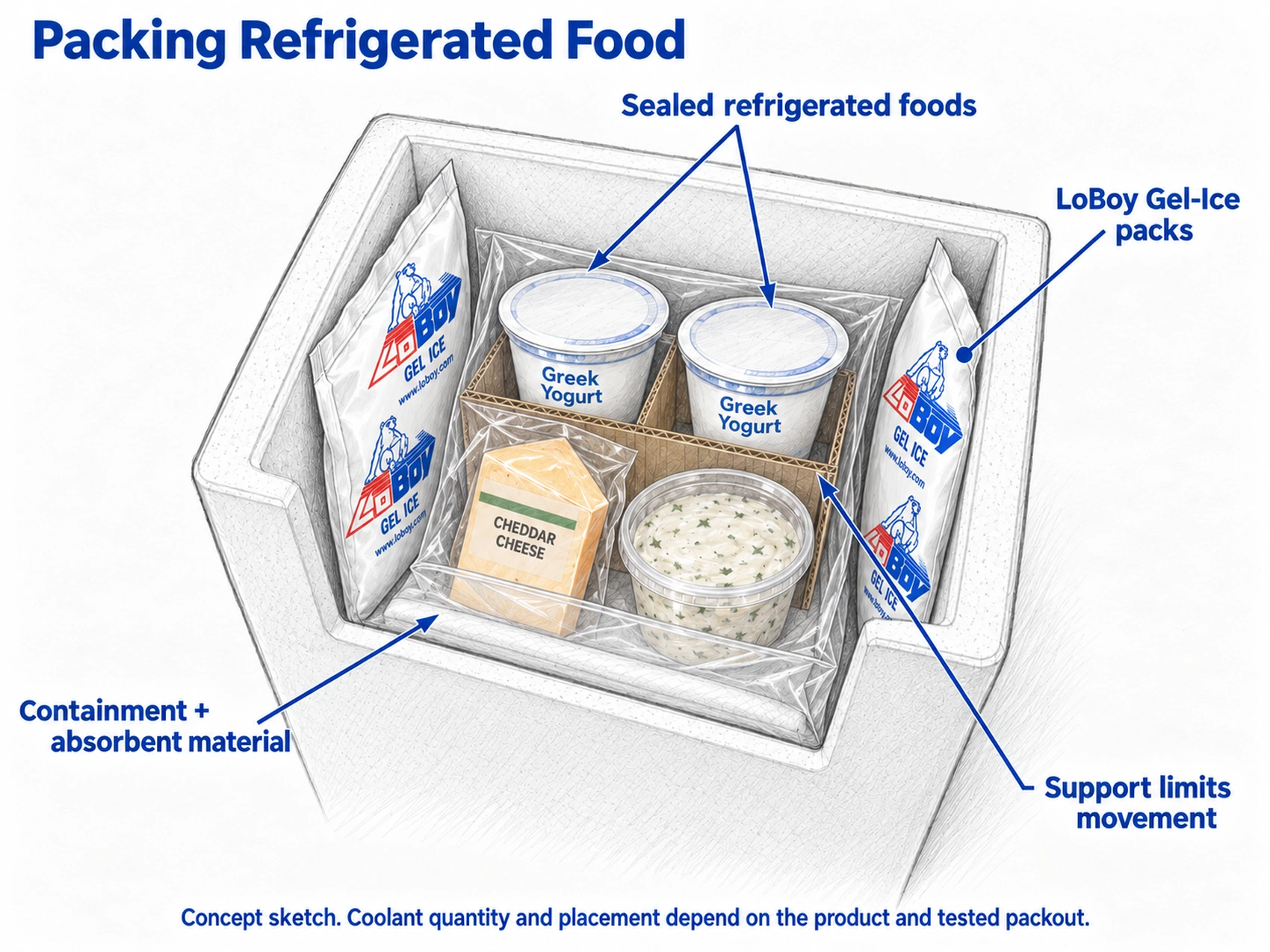
For tubs and pouches, check lids, seams and any liquid the pack contains. Use the maker's refrigerated-handling instructions and protect the food from freezing where required. Include backup containment and absorbent material when liquid could escape.
Fresh mozzarella and shredded or block mozzarella may have different packaging and shipping needs. U.S. Dairy notes that some mozzarella and young cheddar can be frozen, especially shredded, while aged cheddar can become crumbly. That doesn't establish the right method for every fresh mozzarella product; check the exact cheese.
Cream cheese, ricotta and cottage cheese do not freeze well, according to the National Center for Home Food Preservation. Check that frozen gel packs don't create an unwanted frozen area against a refrigerated tub.
Feta and blue cheese
Check whether the order contains a block, wedge, crumbles or a tub with liquid. Those formats need different support. Keep a liquid-filled container upright in the planned arrangement, verify its closure and include leak containment. Protect crumbles and softer packs from heavy items above them.
Follow the maker's storage and shipping directions. A cheese name by itself doesn't establish that a particular retail pack can travel without refrigeration.
Queso fresco, queso blanco and requesón
These fresh cheeses need refrigeration for safety. FDA's queso fresco-type cheese guidance specifies storage at or below 40°F and explains that their moisture and low acidity can support Listeria growth. Cold shipping needs to accompany sound sourcing, sanitary handling and intact packaging.
Keep the original identification and use-by information with the product. Plan prompt receiving and refrigeration, and use the maker's instructions to set the shipment's temperature checks.
Prevent heat damage, freezing damage, leaks and crushed cheese packs
Customers want the cheese to arrive safe, intact and ready to enjoy. Your packaging needs to address the things that can spoil that result. The same shipment can face afternoon heat, a cold spot against a frozen pack and pressure from other items in the box.
| Problem to prevent | What the package needs to do |
|---|---|
| Cheese becomes too warm during transit or a doorstep wait | Use insulation to slow incoming heat and enough prepared coolant to maintain the cheese's required temperature through the complete delivery period. |
| Frozen coolant damages the texture of refrigerated cheese | Choose suitable coolant and include the product-specific separating layer. Check the cheese nearest the packs during trials. |
| Soft cheese is flattened or a tub lid opens | Support the retail packs and separate heavy jars, cheese blocks and coolant from vulnerable lids and soft products. |
| A pouch, tub or coolant pack leaks | Inspect closures, protect contact points, and include appropriate secondary bags, a liner and absorbent material. |
| Condensation damages a gift box, card or paper sleeve | Protect presentation materials from expected moisture and inspect them after the complete shipping trial. |
| A missed pickup or late delivery adds hours in the box | Include a delay allowance when evaluating coolant and insulation, then monitor the shipment and arrange prompt receiving. |
LoBoy insulated shipping coolers provide the space and insulation around that protected order. LoBoy Gel-Ice packs provide reusable coolant that absorbs heat during the trip. The right combination needs room for the cheese, coolant and protective materials, with the layout checked for the actual product and route.
Bring the problem you're trying to solve to the Client Solutions Team: cheese arriving warm, soft packs being crushed, leaking tubs or a longer delivery period. That gives the cooler and coolant discussion a practical purpose, followed by testing to confirm the arrangement works for your orders.
Check whether the cheese needs refrigeration during shipping
Follow the cheese label and the maker's instructions. Don't decide from the words “aged,” “processed” or “vacuum-packed” alone. Include the cheese's portion size and packaging when asking about handling requirements.
The University of Wisconsin Center for Dairy Research explains that moisture available to microbes and acidity help determine whether a cheese can be held without refrigeration. Its guidance includes conditions concerning safe manufacture and intact, uncut cheese with undisturbed wrapping.
That means guidance for an intact cheese doesn't automatically cover cut wedges or a different retail pack. Confirm the requirements for what you actually sell, and get the maker's directions before treating a product as shelf-stable. Even where refrigeration isn't required for safety, temperature can still affect quality.
Protect refrigerated cheese from freezing damage
More intense cooling isn't always helpful. The National Center for Home Food Preservation notes that frozen hard or semi-hard cheese may become crumbly and mealy. Cream cheese, cottage cheese and ricotta do not freeze well.
For cheese meant to arrive refrigerated, check whether direct contact with a frozen gel pack could freeze part of the product. Use the separating layer specified for that cheese and include it in the trial. Record its material, thickness and position.
Don't switch to dry ice merely because a trip is longer. First check whether the cheese can tolerate the resulting temperatures. A colder package that damages the product's texture may still fail the quality your customer expects.
Keep heavy items from crushing soft cheese or its container
Measure the cheese in its actual tub, tray, box or wrapping. Inspect seals, lids and edges before loading. Add the protection needed to keep the food pack intact and contain liquid where necessary.
Support soft packs so the weight of another cheese, a coolant pack or a gift-box item doesn't press on their lids or distort the cheese. Check where rigid corners touch flexible film and where a seal could get pinched.
Put the complete order in the cooler with coolant and protective layers included. The lid should close normally without squeezing the contents. After representative handling, look for shifted packs, crushed containers, rubbed wrapping and open seals.
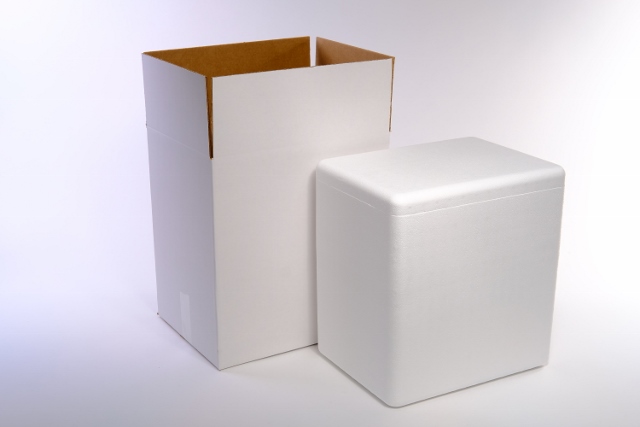
Browse LoBoy shipping coolers
Check every food in a cheese gift box
List all the items sharing the shipment, including meats, spreads, crackers and other additions. Check each product's temperature and handling instructions rather than assuming the cheese sets the requirements for everything.
For example, a heavy jar can damage a soft-cheese tub even if both products tolerate refrigeration. Give it support and separation, then inspect that arrangement after handling. Keep moisture-sensitive gift materials protected as part of the complete sample order.
If the items need conflicting temperatures, use an arrangement evaluated for that combination or send separate parcels. Tell the packer which directions apply so the decision isn't left until the box is being filled.
Record the gel-pack amount, preparation and position
Choose the coolant around the cheese's requirements and the full delivery period. Record the exact pack sizes, number, preparation steps and positions used in your trial.
Leave space for the coolant from the start. Moving a pack to fit another product changes the areas exposed to cold and can create a new pressure point.
The gel-pack placement guide explains how to evaluate positions and separators with the actual load.
Test cheese temperatures until the customer can refrigerate the order
Include packing, waiting for pickup, transit and any wait after delivery. Check the route, season and the extra time you want to allow for delays. Confirm that someone will be available to bring the order inside.
Use the cheese, starting temperature, retail packs, cooler, outer carton and coolant arrangement you intend to ship. Test the smallest and largest orders the directions need to cover.
Choose temperature-monitoring positions that help assess the product across the load, including places close to frozen coolant where excessive cooling could be a concern. Compare the readings with the cheese maker's requirements.
Inspect the cheese and packaging afterward as well. Keep findings about texture, shape, moisture, seals and crushed containers with the temperature results. The refrigerated-food shipping guide covers the wider packing and delivery process.
Choose a leak-tested cooler and inspect it before use
Use coolers tested for leak resistance and choose a manufacturer with independent performance evidence, such as LoBoy. LoBoy fills production-batch sample coolers with water to check for leaks during manufacturing.
LoBoy also publishes independent laboratory ice-retention results for tested models. Check each shipping cooler for cracks or punctures and use the correct lid and protective outer carton.
Keep the product wrapping, protective containers and any liner or pads in the packing directions. A sound cooler adds protection without repairing a leaking retail pack.
Give staff packing directions for each cheese selection
List the cheese and other foods, retail-pack sizes, order quantities, cooler, carton, protective parts and coolant. Show the loading steps in photos, including the layer between cheese and frozen packs where required.
Have someone pack a sample from those directions and clarify anything they need to guess. Keep the current version at the station and give staff a way to flag an order that doesn't fit.
Review a new cheese, larger portion, changed gift box or substitute gel pack before using the earlier directions. Similar outer packaging doesn't establish that the product or arrangement is unchanged.
Send storage instructions before the cheese arrives
Tell the recipient when delivery is expected, how to check the order and where to store each product. Keep the cheese maker's directions with the shipment.
For cheese that requires refrigeration, FoodSafety.gov's shipped-food guidance recommends a food-thermometer check and refrigerated arrival at 40°F or below. Follow any tighter product-specific requirement.
If a refrigeration-required product arrives above 40°F, notify the supplier and don't eat or taste it to check safety. Keep that guidance specific to perishable products rather than applying it to cheese verified as shelf-stable. After confirming safe receipt, store the cheese promptly as directed.
Give customers a contact for delays, damaged packs or unexpected product condition. Record the cheese, packing version, delivery time and problem so your team can investigate the cause.
Give LoBoy the wrapped cheese dimensions and delivery time
The perishable-food shipping guide connects coolant, containment and receiving. Bring the cheese's retail packs, maker's handling directions, protective-layer needs and full delivery period to the LoBoy Client Solutions Team when comparing LoBoy shipping containers.
Check the fit and test the complete arrangement with the cheese selection you intend to sell.