Gel Packs vs Dry Ice for Shipping: Which Fits Your Product?
When you're choosing between gel packs and dry ice, start with what the product needs. A frozen food order and a refrigerated item that freezing could damage are asking very different things of their packaging.
The colder option isn't automatically the better option. You need a package that keeps your product in the right condition for the whole trip, and a packing process your team can repeat. That means looking at the coolant, the cooler, the product and the delivery plan together.
Here's how to compare the two without treating either one as a universal answer.
Decide what “arrives cold” means for your shipment
Be specific about the condition you're trying to maintain. Does the product need to stay frozen? Does it need refrigeration while being protected from freezing? Those are different goals, and they should lead the coolant discussion.
For example, keeping a frozen food order frozen may make dry ice worth evaluating. For a chilled product that freezing would damage, extreme cold can create another problem to solve. Even a frozen gel pack may need separation from a sensitive product. Check the product requirements and test the actual arrangement.
Write down the product's starting condition as well as the arrival requirement. A test that begins with fully frozen food doesn't establish what will happen if your team starts another shipment with partly thawed packs.
What changes when you use gel packs?
Gel packs need preparation before packing day. Identify the exact pack you intend to use and follow its supplier's directions for preparing it. “Use ice packs” doesn't tell someone which size or formulation to choose, how to prepare it or how many belong in the box.
Think about the practical work, too. Do you have enough preparation space and time for the number of orders you ship? Can the team consistently have the correct packs ready when packing starts? A system that works in one carefully prepared trial still needs to work on a busy dispatch day.
Inspect packs for damage, and try them in the complete load. Check whether they can slide into gaps, press on product seals or move away from their intended positions. Where the product needs protection from direct contact, include that separation in the trial.
The gel-pack placement guide explains why location matters alongside the amount you use.
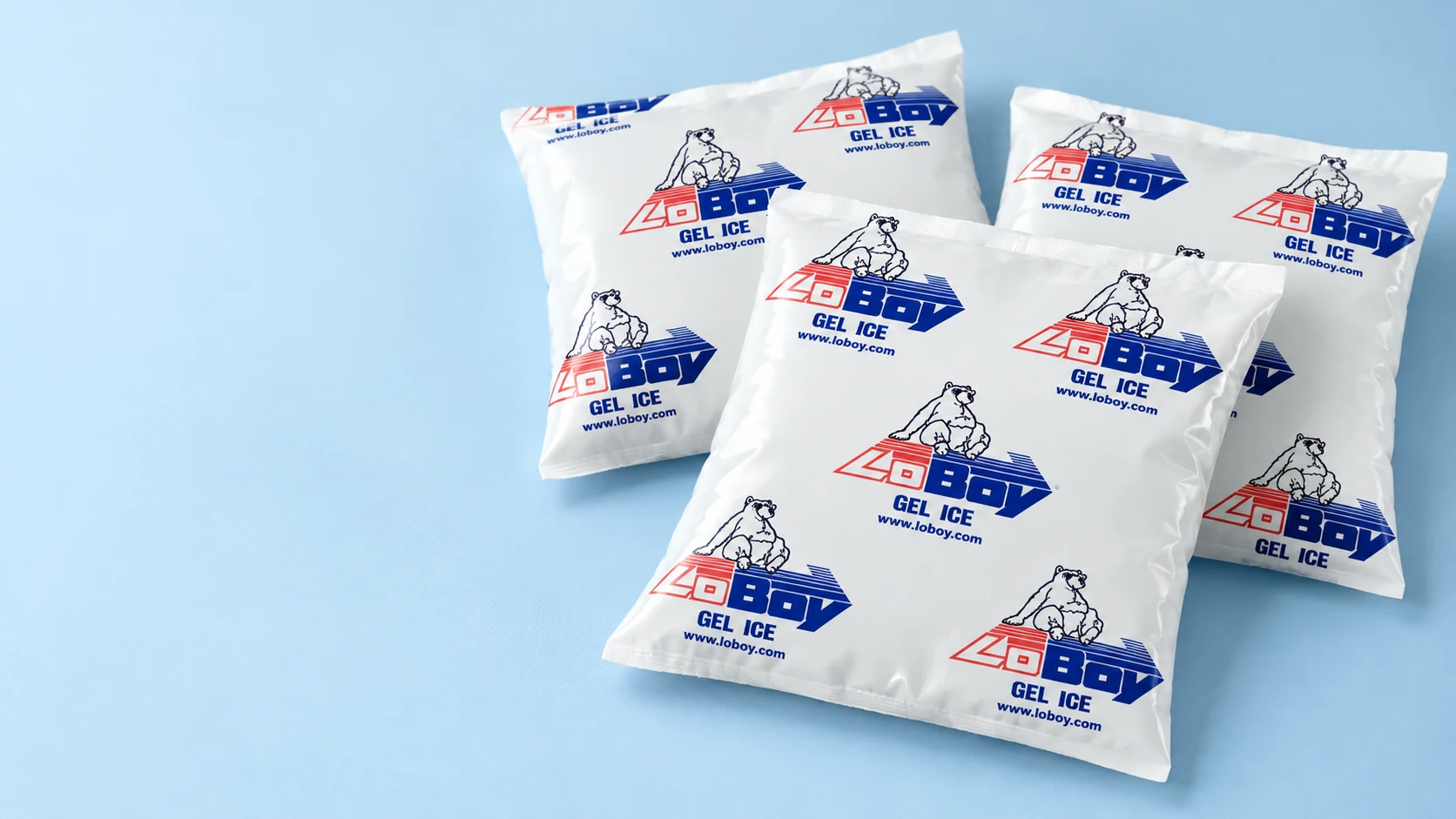
Browse LoBoy Gel-Ice packs
What changes when you use dry ice?
Dry ice is solid carbon dioxide. As it warms, it changes directly from a solid into gas—a process called sublimation. That means the amount in your package decreases over time, and the gas needs a way to escape.
Plan for that behavior when choosing and closing the package. Don't make the complete dry-ice shipping package airtight. Include appropriate handling procedures, protective equipment and ventilation in the process, and check the carrier's current requirements for your contents, service and destination.
Record how much dry ice actually goes into the box. The amount you bought earlier may be greater than what's left when packing begins. Its form and placement also belong in your instructions so the team can reproduce the arrangement you tested.
Look at support and product contact as well. As dry ice disappears, the space around the load changes. And its extreme cold can damage products that aren't suited to it. Use separation appropriate to the product and evaluate the complete arrangement.
The UPS dry-ice shipping guide provides handling and preparation information. Confirm the requirements that apply to the service you'll actually use.
Compare two complete packages
Putting equal weights of gel packs and dry ice into two coolers doesn't tell you which is better for your business. Each method may need a different amount, arrangement or protective layer to meet the product's needs.
Build a workable package for each option. Use the real product, its retail packaging, the protective materials and the outer shipping carton. Check that everything fits with the coolant in place and that the lid closes without squeezing the product.
Keep the product load, starting condition and test exposure comparable. Record any differences in the packaging so you can understand what produced the results. You're comparing ways to ship the product successfully, rather than trying to make both coolants use an identical layout.
Test for the whole trip you need to cover
Include the time spent packing and waiting for pickup, then carrier transit and the period before the recipient stores the product. The carrier's delivery estimate covers only part of that time.
Choose test conditions that reflect the routes and seasons you plan to serve. A successful mild-weather trial doesn't establish performance in hotter conditions. Likewise, a package that passes a 24-hour trial hasn't demonstrated that it will protect the product for a longer trip.
Decide where and how you'll measure temperature before starting. Measure in a way that tells you about the product, including vulnerable positions within the load. A cold pack or favorable air reading in the center doesn't prove that every item stayed within its requirements.
Inspect for damage and movement afterward, too. Check product wrapping, coolant packs, protective layers and the way the load is supported. Keep failed readings and damaged-pack findings in the record; they help you decide what to change.
Compare the daily work after you know what performs
Once you've found arrangements that meet your requirements, compare what it takes to use them regularly. Include coolant supply and preparation, storage space, packing time, protective materials and carrier preparation.
Then compare the full parcel cost. A lower coolant purchase price may come with a larger box, more labor or higher shipping charges. Use the finished package's dimensions and weight when reviewing carrier costs.
Consider the recipient's part of the process as well. Give them directions for the product and coolant you've sent. The best choice for your operation needs to be something you can prepare consistently and hand over with clear receiving instructions.
A longer delivery needs another look at the package
Suppose you've been using gel packs successfully for one product and route, and now want to offer a longer delivery. Start by defining that longer trip and the product's requirements. Switching to dry ice isn't proof that the new shipment will work.
Try the proposed coolant with the complete product load. Check fit, product contact, support and closure. For dry ice, include gas release and carrier preparation in the review. Then test through the full period the new delivery needs to cover.
If the package meets its requirements, record the arrangement and the orders it covers. If it falls short, use the readings and handling results to guide the next change. Keep the earlier method available for the shipments it still supports.
Give your packing team a clear version to follow
For each successful arrangement, keep a record of the product range, starting condition, cooler, carton, coolant and protective materials. Add photos of the layers, the test results and the delivery conditions those results cover.
Turn that record into directions people can use at the packing table. Show where each part goes and explain what to do when an order doesn't fit. Keep old directions out of the active station so nobody follows the wrong version.
A later change in pack size, coolant amount or coolant type needs review. Check its effect on fit, product contact, shipping preparation and temperature performance, and test again where needed. The old result describes the old arrangement.
Choose the components around your product
Use the gel-pack shipping guide for preparation and packing details, then compare LoBoy Gel-Ice formats with the components your package needs.
Bring your product dimensions, temperature requirements and delivery plans to the LoBoy Client Solutions Team. Those details make the discussion useful: you're choosing parts for the shipment you actually need to send.