
Pre-Cooling Perishable Food Before Shipping
A well-packed cooler can still leave the bench with the wrong starting conditions. Food may be waiting on a cart while the team finds labels, coolant or a carton that fits. Pre-cooling perishable food before shipping works best as part of a defined packing process, with checks before loading and a clear handoff to dispatch.
The goal is to begin with the food, coolant and packaging in the conditions used in your tested shipping method. Insulation slows heat transfer. It does not replace the equipment and process needed to bring food to its required starting temperature.
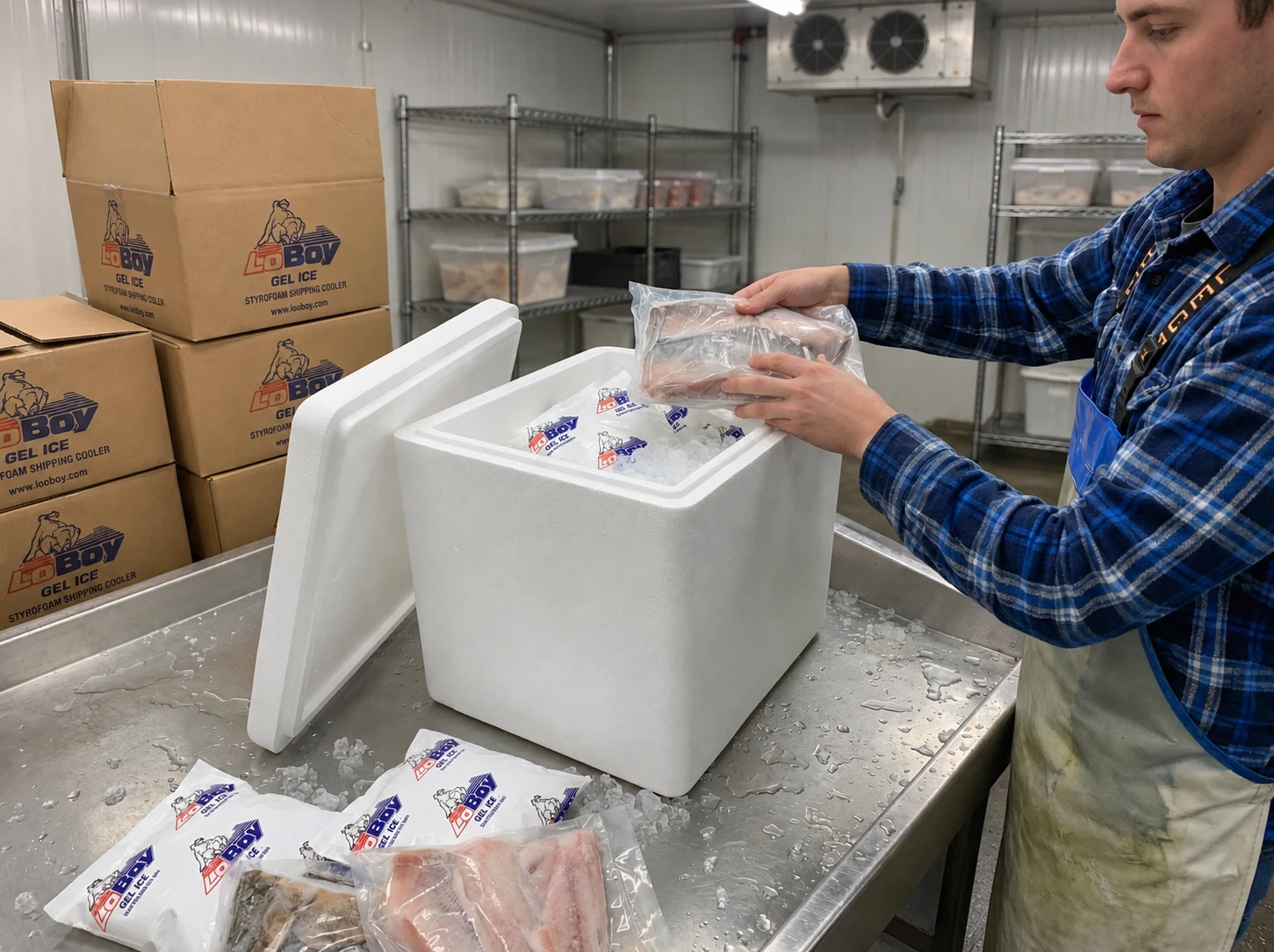
Which cold rooms are used before packing?
Walk-in cooler or refrigerated holding room. A produce operation can use room cooling for suitable crops and loads. A holding room can also keep already chilled product cold until the packing team needs it. Source
Forced-air pre-cooling room or tunnel. Produce packhouses use fans to draw cold air through vented cartons or bins to remove field heat. Once the produce reaches its target, it can move to a refrigerated packing area for loading into insulated shipping coolers. Source
Carcass chill room or spray-chill cooler. Meat processors use dedicated chill rooms to remove heat from carcasses before fabrication. The finished cuts can then be sealed, held cold and loaded into shipping coolers at a separate refrigerated packing station. Source
A refrigerated pack-out room is where workers assemble orders and load shipping coolers. Cooling and packing can take place in the same room if the facility is designed for both tasks and its food safety procedures allow it. Check the product against its required starting temperature before loading, even when the room is already cold.
Separate product cooling from coolant preparation
Product cooling, coolant conditioning and container preparation are different tasks. Write a separate instruction for each. A frozen meal, a chilled food tray and a gel pack may need different preparation, even when they travel in the same order.
Establish the food's required condition with the person responsible for your food-safety program. If you prepare cooked food, use the cooling process that applies to that food and operation. This shipping workflow does not replace a validated cooking or cooling procedure.
Prepare gel packs according to the selected product and your tested packing method. Record the conditioning temperature, duration and loading conditions used in trials. A pack that looks firm on the outside may not represent the condition required by your procedure. Check readiness using the method you established for that coolant.
Container preparation also needs a defined instruction. Specify clean, dry, sound packaging and any conditioning required by your tested arrangement. Do not assume every foam cooler needs the same pre-chilling routine. Keep the container's starting condition consistent with your trials.
Set up the packing station before food arrives
Stage the materials first: the correct cooler and carton, food containers, leak containment, supports, coolant, labels and closing supplies. Keep the approved packing instruction visible. Organize parts so staff can identify them without opening several cartons or walking away from exposed food.
Keep the work area clean and arrange tasks to prevent cross-contamination. Use separate handling steps where raw products and ready-to-eat foods could otherwise contact one another. The FDA's food-storage guidance supports keeping raw foods separate and promptly storing perishables.
Leave space for the full load, not just the empty cooler. A sample order should include the wrapped products, coolant and protective materials. Use the cooler-packing guide to distinguish containment, cushioning and insulation before assigning each material a place.
Release small batches from cold storage
Match the amount of food at the bench to the team's packing capacity. A large release can leave the last orders waiting while the first ones are closed. Build your release size around observed work time and the limits in your food-safety procedure.
Record when a batch leaves controlled storage and when the finished parcels return to the designated holding area or enter the next transport stage. Include breaks, rework and label problems. Time spent waiting still belongs in the shipment's history.
Keep product identification with each batch. If staff substitute an item, change the order quantity or replace a coolant format, check whether the approved packing method still applies. Give staff a clear stop-and-escalate rule for orders that fall outside it.
Stage whole cases for bulk shipping
Stage labeled cases in cold storage until the packing station is ready. Choose the 34″ or 60″ Super-Ice Cube around the case count, carton dimensions and room for coolant. The removable front panel gives crews access to load cases directly.

34″ Super-Ice Cube
SKU 334 SUPERCUBE · 25.07 cu. ft.
Interior 38 × 38 × 30 in.
A lower profile for smaller mixed orders. Keep labeled cases together for faster sorting at receipt.

60″ Super-Ice Cube
SKU 360 SUPERCUBE · 46.8 cu. ft.
Interior 38 × 38 × 56 in.
The same footprint with 26 more inches of interior height. That gives you room to plan larger case loads and reserve space for separation and coolant.
Modular outside. Organized inside.
Remove the tongue-and-groove front panel and load cases from the front instead of reaching down into the cube. Label each group so receiving crews can identify cases and move them to the right storage. The cubes ship flat, and a damaged modular component can be replaced individually.
Measure your full cartons and reserve room for insulation, coolant and restraints. Test the assembled load on the intended route to verify the product temperature requirements.
Measure the starting condition
Use an appropriate measurement method for the food and task. A reading of the room, carton or coolant is not automatically a reading of the food. Define what staff measure, where they measure it and how the measurement relates to the product requirement.
Use suitable instruments and follow their cleaning, use and calibration instructions. Record the result with the batch or order reference. A checkbox saying “cold” gives the next reviewer less useful information than a recorded measurement and method.
Keep the check practical enough for normal production. Decide who performs it, where the record goes and what happens when a result is outside the approved range. Do not pack a questionable batch and rely on added coolant to resolve the uncertainty in transit.
Close the parcel and control the dispatch wait
Use the same loading order and coolant positions established in your trials. Confirm that the lid closes as intended and that the contents remain supported. Follow the gel-pack shipping guide when developing the coolant portion of the procedure.
The next delay may happen after packing. Mark the finished parcel's required holding conditions and keep it in the designated area until collection. A label printer time stamp does not establish the actual carrier handoff time. Record collection separately when it matters to your program.
Plan for a missed pickup. Specify who decides whether an order can be held, repacked, sent by another service or cancelled. That decision needs the actual time and temperature history. A blanket instruction to add another pack can conceal a process problem.
Trial the workflow under real working conditions
Run the procedure with the people, order sizes and equipment you expect to use. Include the slower cases: an awkward load, a label correction or a busy collection period. Record the food's starting condition, work time, packaging version and dispatch wait.
Inspect the finished order and review its temperature results against your requirements. Change one identified process issue at a time where practical. Retain unsuccessful trials so the team knows why a method changed.
For the broader shipping plan, use the relevant food guide in the perishable-shipping resource hub. This page addresses preparation at the bench; the product guide covers the shipping decisions surrounding it.
Choose supplies that fit the packing process
Compare LoBoy insulated shipping coolers using the complete wrapped load and coolant arrangement. Confirm usable dimensions and lid clearance with an actual sample. Review LoBoy Gel-Ice packs alongside your conditioning capacity and packing method.
Bring the order range, complete packed dimensions and expected dispatch schedule to the LoBoy Client Solutions Team. Those details help narrow the packaging comparison. Your operating team remains responsible for establishing the food's required condition and verifying the complete process.
Get a Free Quote
When you call us, you’ll get a satisfaction guarantee. Call us at (850) 243-1112 or request your free quote.
Get a Free Quote