Food Delivery Unboxing Experience: Protect Every Sense
A food delivery unboxing experience begins before the customer tastes a bite. A wet carton, loose tray or confusing storage note can turn an anticipated meal into a question for customer service. Plan the arrival around the product's required condition, easy inspection and a clean transfer into storage.
For a food business, that means designing the packaging and the receiving experience together. LoBoy supplies insulated shipping coolers and reusable Gel-Ice packs. These components support the packing arrangement; the seller must establish that the complete shipment meets its product requirements.
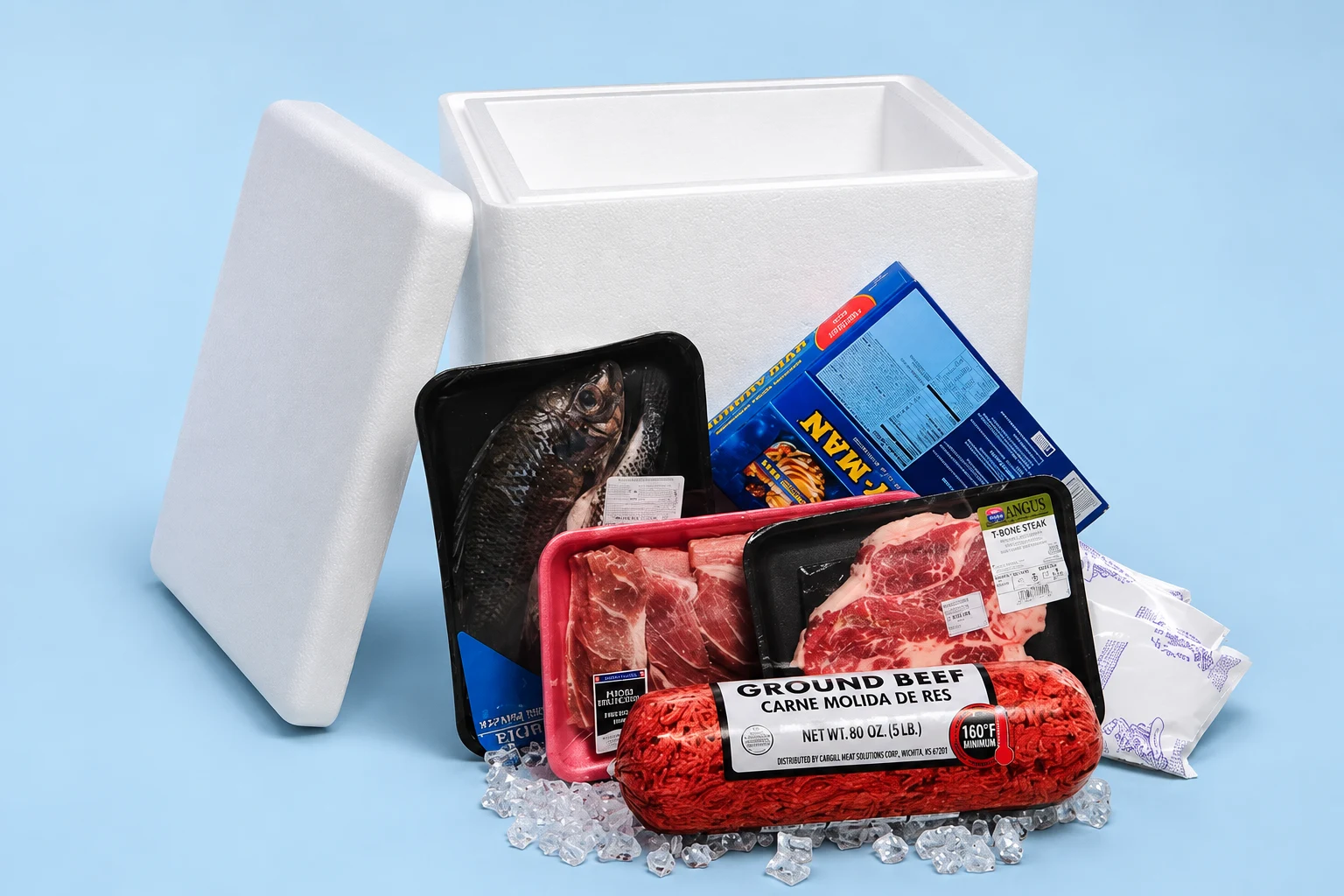
Start with the experience you promised
A customer buying a birthday dessert has different expectations from a restaurant receiving bulk fish. Define what the order needs to look like, how it should be handled and when it will be used. Include the person who opens the parcel, not only the person who placed the order.
Write down a few observable arrival standards. Trays should retain their shape. Seals should remain intact. Labels should stay readable. The contents should meet the temperature and quality requirements for the actual food. Use the appropriate branch of the perishable-shipping resource hub to develop the packing method behind those standards.
Keep your promises within the arrangement you can repeat. If a menu substitution changes the load or makes a dessert more fragile, review the packing instruction. A successful shipment of one menu does not establish performance for every order.
Sight: make the first inspection easy
The first view inside the box should help the receiver understand the order. Arrange labels so products can be identified without pulling everything apart. Keep heavy packs from crushing delicate lids. Separate products that could leak onto neighboring items.
Presentation needs to survive handling. A tidy arrangement on the packing bench may shift when the carton turns. Trial the finished package, then inspect the product positions, seals and supports. The cooler-packing guide explains how containment, cushioning and coolant perform different jobs.
Branding can help recognition, but it cannot compensate for a damaged order. Choose clear product identification and useful instructions before adding decorative layers. Avoid inserts that hide the receiving checks or delay putting food away.
Touch: control moisture, support and handling
Customers handle the carton, insulation, coolant and product containers. Consider whether those surfaces are wet, slippery, awkward or difficult to separate. Keep sharp package edges from rubbing through pouches and provide support where a flexible tray could bend.
Trace moisture to its source. Condensation, a leaking food container and a damaged coolant sleeve require different corrections. Suitable containment and absorbent material belong in the tested arrangement. They do not repair a failed primary seal.
A package that feels cold is not a temperature measurement. Give customers a practical inspection method appropriate to the product. Cold outer surfaces cannot establish the condition of every item inside.
Sound: use handling clues without making safety claims
Unexpected rattling can prompt concern before a box is opened. During packing trials, listen for containers or coolant shifting when the parcel is handled. Investigate those sounds alongside the physical inspection. Dividers and supports should hold the planned arrangement without crushing the food.
Some sounds are normal for a particular container or closure. Avoid promising that every parcel will be silent or that a closure sound proves freshness. The useful question is whether the product and its packaging remain intact after the handling your program must cover.
Aroma and taste: protect quality without inviting unsafe checks
Aroma and taste matter when customers prepare and eat food that has passed the appropriate receiving checks. Unwanted odor transfer, moisture loss or damaged packaging can undermine that experience. Consider the actual food and its primary packaging when assessing these risks.
Food safety must be assessed separately. FoodSafety.gov's delivery guidance warns that unsafe food may still look, smell and taste normal. Never ask a customer to taste a questionable delivery to decide whether it is safe.
Instructions should say what to measure, where to store the order and whom to contact when something is wrong. Use product-specific guidance rather than a broad instruction to judge freshness by smell. Staff should know how to escalate a safety concern without turning a refund decision into food-safety advice.
Make unpacking a short, clear sequence
Walk through receipt with someone who did not pack the order. Can they find the storage directions immediately? Can they identify the products and remove them without spilling or breaking anything? Are coolant-handling instructions appropriate to the method used?
For dry-ice shipments, prepare the receiver for that coolant and follow the relevant handling requirements. The dry-ice shipping guide connects the method to packaging and carrier preparation. Do not reuse a gel-pack insert unchanged for a dry-ice order.
Include a straightforward problem-reporting route. Ask for the order number, receipt time, relevant measurements and photographs of damage where useful. Tell the receiver what to do with questionable food according to the applicable safety instructions. Keep promotional requests secondary to receiving and storage.
Turn complaints into a useful packing review
Separate the reported symptom from the confirmed cause. A crushed tray may relate to loading, support or handling. An arrival outside the temperature requirement needs its own investigation. Record what is known before assigning responsibility to the cooler or carrier.
Group findings by product, packing version, route and service. Review repeated problems with the packing team. Compare replacement freight, materials and customer-service time using the perishable-shipping cost guide. Keep any recovered claim payment separate from the original expense.
Reviews and repeat orders can help assess the customer experience, but they do not prove that a packaging change caused a sales increase. Use your own records and describe the limits of the comparison. Keep failed trials and complaints beside successful results so improvements remain traceable.
Choose packaging around the complete customer order
Compare LoBoy shipping coolers using the wrapped products, protection and coolant together. Check usable dimensions and lid clearance before ordering a trial container. A stated capacity alone cannot show whether a tall roast or stacked meal trays will fit.
Review LoBoy Gel-Ice formats after defining the required product condition. Preparation and placement belong in the packing instruction. Recheck performance and presentation when changing either.
Bring the complete packed dimensions, order range and recurring arrival problem to the LoBoy Client Solutions Team. Those details support a useful packaging comparison. The aim is a delivery customers can inspect, store and enjoy as intended, supported by a packing method your team can repeat.