How to Pack Refrigerated Medical Products
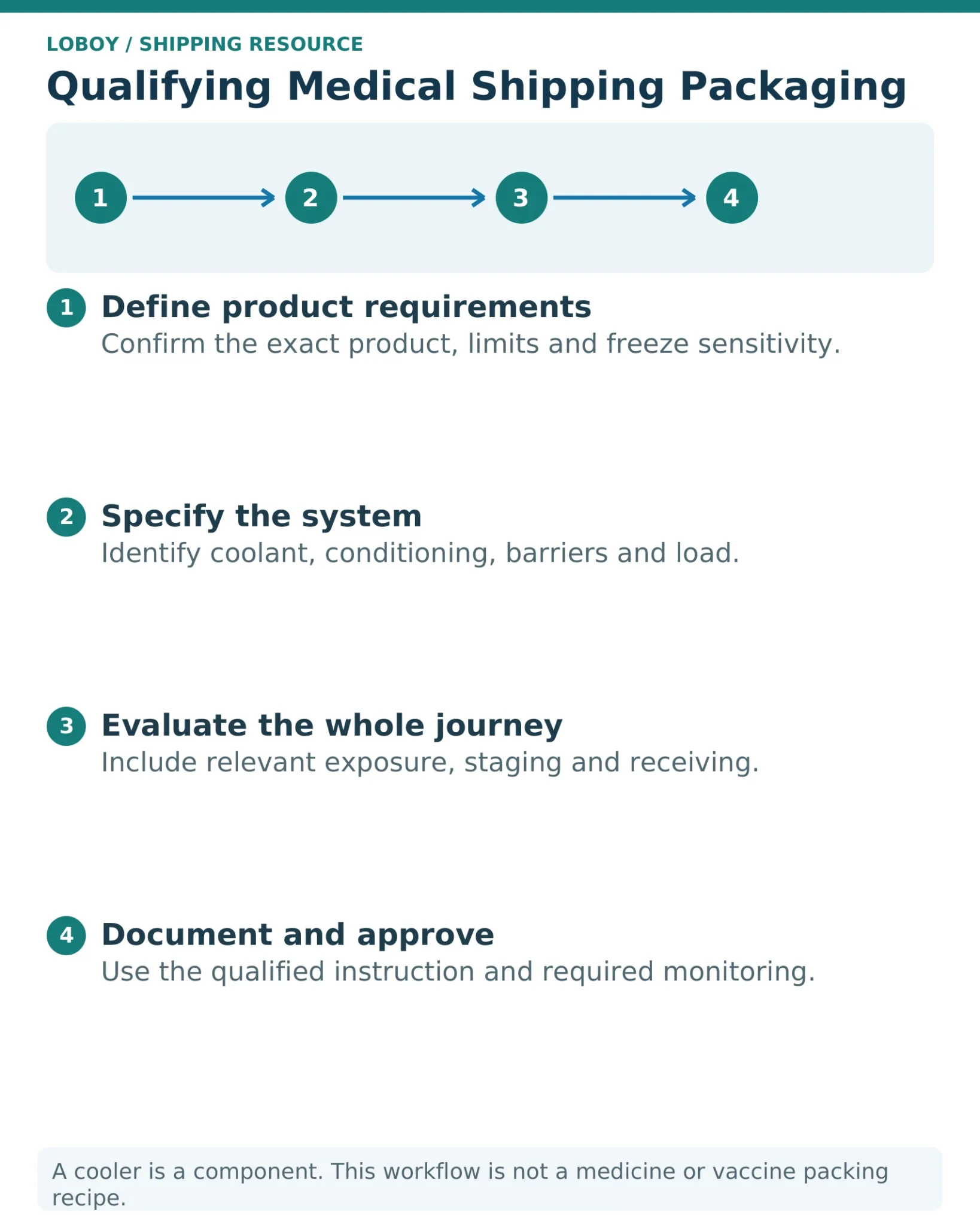
A refrigerated medicine can be damaged by excessive heat or by freezing. The box may still look perfect, and the product may still feel cold. That is why medical shipping requires a documented packing arrangement with evidence that it protects the specific product for the intended journey.
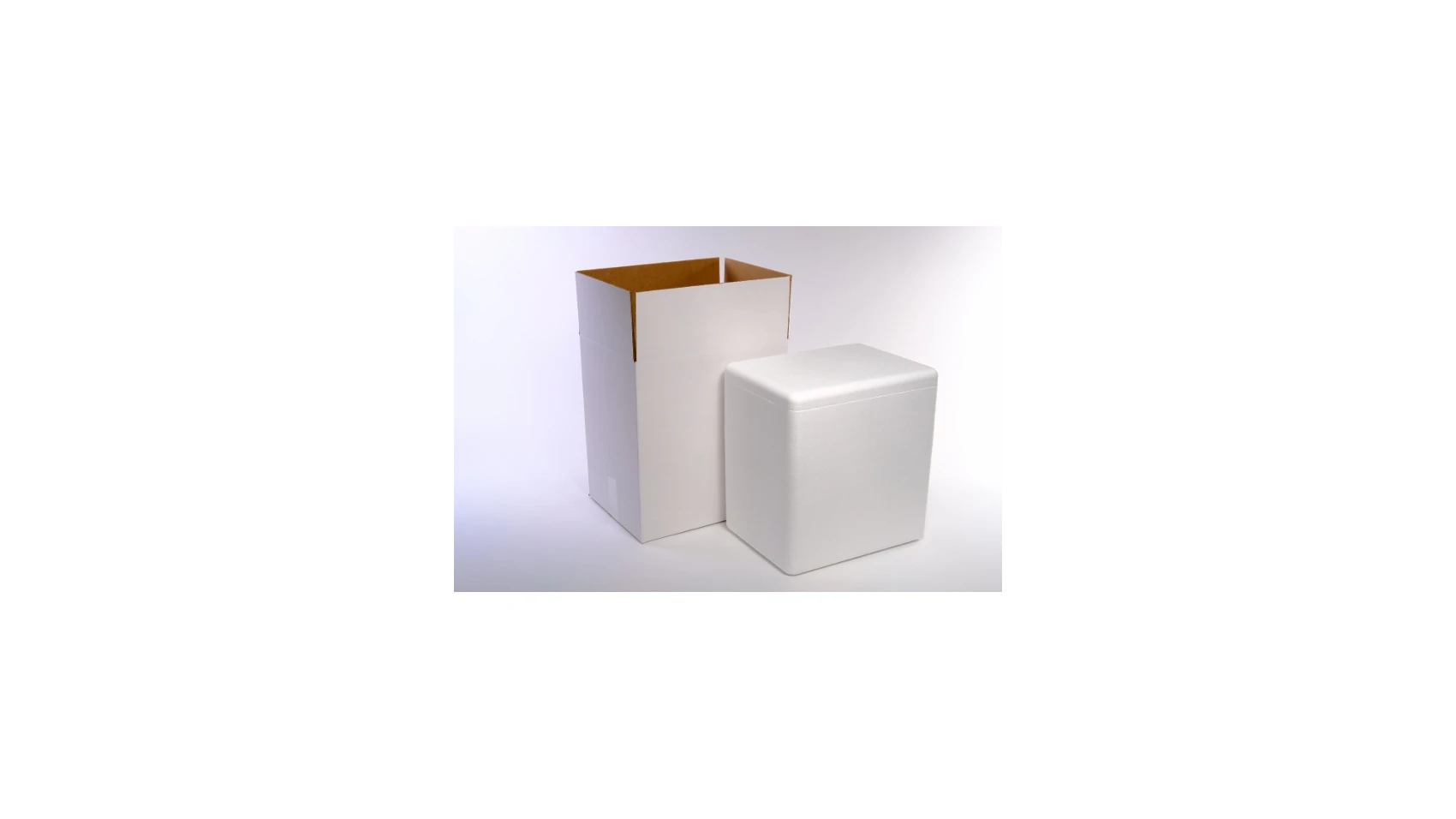
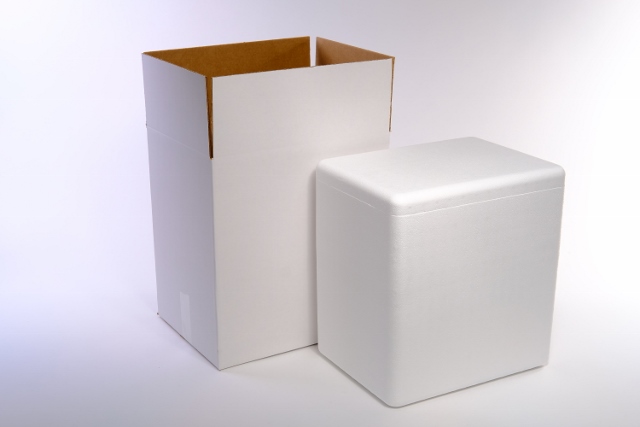
LoBoy insulated medical coolers can serve as components in that arrangement. The complete system includes the product, coolant, separators, protective inserts, outer carton and temperature-monitoring equipment. Each part has a job, and changing one can affect the temperature experienced by the medicine.
Find the temperature requirements for the exact product
Start with the current manufacturer instructions, product labeling and your organization's quality procedures. Confirm the product name, formulation, container size and quantity. Check temperature limits, light protection, permitted exposure times and any differences between unopened and in-use storage.
For context, CDC lists 2–8°C (36–46°F) for refrigerated vaccine storage units. That is a familiar medical cold-chain range, but it is not the correct specification for every drug, vaccine, diagnostic reagent or biological material. Some need frozen conditions; others have different requirements. Use the exact product's instructions to establish its shipping conditions.
For compounded preparations, obtain the storage conditions and beyond-use date from the responsible pharmacy. A larger cooler or extra coolant does not extend that date or establish product stability.
Identify the standards and regulatory requirements that apply
Your pharmacist, quality team or regulatory lead should establish the requirements for the product and operation before shipping begins. For example, USP <797> addresses compounded sterile preparations, while USP <800> addresses handling hazardous drugs in healthcare settings. Applicable pharmacy rules and licensing requirements must also be checked.
These standards describe responsibilities and practices beyond selecting an insulated box. A cooler does not by itself make a pharmacy compliant, create a sterile environment or provide all the containment a hazardous product may require.
For vaccines, use the CDC Vaccine Storage and Handling Toolkit alongside current product guidance. Staff transport to a clinic and commercial carrier shipping are different processes. Do not turn a local-transport example into a universal parcel-packing instruction.
Use a packing arrangement tested for the intended journey
A qualified packing arrangement is a defined combination of components and assembly steps supported by testing for stated conditions. Its documentation should identify the allowed product loads, coolant preparation, component placement, shipping duration and external temperature conditions. Those details tell staff when the arrangement can be used.
Ask what the evidence actually covers. A test with one small carton of product does not automatically cover a fully loaded cooler. Summer conditions do not establish winter performance, when excessive cold may be the greater risk.
ISTA Standard 20 and Standard 7E are useful industry references: Standard 20 provides a design and qualification process for insulated shippers, and 7E provides thermal profiles representing parcel-delivery exposures. They are not automatic certifications of every cooler. Your quality team must select the appropriate qualification approach and assess the resulting evidence.
Prepare the coolant exactly as the instruction specifies
Coolant preparation is often called conditioning. It means bringing the specified coolant to the required starting state before assembly. Depending on the qualified system, that may involve refrigeration, freezing, a controlled tempering step or preparation of a particular phase-change material.
A phase-change material absorbs or releases heat as it changes between states at a selected temperature. Different materials behave differently. Replacing one with a general-purpose frozen gel pack can change how cold the nearby medicine becomes and how long the system protects it.
Follow the documented preparation temperatures, times and readiness checks. A pack that feels cold is not necessarily ready, and an overnight freeze is not a universal preparation rule. See our medicine coolant guide when discussing options with the responsible quality team.
Bring the product to its required starting temperature before packing
Keep the medicine in its required storage conditions until the packing station is ready. Prepare the components and labels first, then assemble in a suitable controlled environment within the procedure's allowed exposure time. Check the product's required starting condition before loading.
An insulated cooler slows heat transfer; it does not actively refrigerate warm medicine. Asking the shipping coolant to remove unexpected starting heat can use up capacity intended for transit and can put the arrangement outside its qualified conditions.
Keep the required separation between the product and coolant
Use the approved diagram to position the medicine, inserts, coolant and separators. A separator can protect a freeze-sensitive product from an excessively cold surface. Removing it to make more room can change the temperature near the product even if the total coolant weight stays the same.
Protect vials, syringes and other primary containers from movement and pressure. Keep the manufacturer's protective packaging where the instruction requires it. Check that the lid closes without forcing coolant or inserts against the product.
Stop and resolve a missing or substituted component while the product remains in its required storage conditions. Extra filler and improvised spacing may look harmless but can change heat transfer.
Place and activate the temperature monitor before closing
Use the specified monitoring device and follow its setup instructions. Check its identity, calibration status where required, activation and placement. A logger records temperatures over time; a device showing only the current temperature cannot reconstruct the whole journey.
Put the sensor where the qualified instruction specifies. A sensor beside a coolant pack may tell a different story from one near the product. The documented position connects the reading to the evidence used to approve the shipping arrangement.
Check the monitor and the component layout while they are still visible. Record the required details before closing the cooler and outer carton.
Account for staging, carrier transit and the receiving handoff
Compare the complete planned journey with the system's qualified duration and exposure conditions. Include staging and handoffs, along with the time before the recipient moves the product into appropriate storage. A next-day delivery label does not establish temperature performance.
Confirm pickup timing, receiving hours, a named contact and suitable storage at the destination. Decide in advance what staff should do after a missed pickup or an unexpected delay. If the new timing exceeds the approved conditions, the responsible team must assess the shipment before it proceeds.
Keep a record that allows the shipment to be checked
Link the order to its product and lot details, packing-instruction version, component checks, coolant preparation, assembly time and monitor identity. Record the required release checks and who performed them. These details make it possible to investigate a problem instead of guessing what was packed.
At receipt, follow the product-specific instructions for unpacking, reading the monitor and transferring the product to storage. Check for physical damage as well as temperature concerns. Neither an intact outer box nor a single cold reading establishes that the medicine remained within its limits throughout transit.
Hold affected product for assessment after a temperature problem
A temperature excursion is an exposure outside the product's specified limits. If it occurs, preserve the temperature record and shipment details, identify the affected product and follow the approved holding and escalation procedure. The responsible pharmacist, manufacturer or quality team must assess whether it remains suitable for use.
Do not assume that returning medicine to a refrigerator reverses damage. Equally, do not automatically discard or re-ship it based on a generic guide. The decision depends on the product and the documented exposure.
Choose LoBoy components that fit the documented system
LoBoy checks production-batch sample coolers for leaks by filling them with water. This manufacturing check is separate from qualifying a complete medical shipping system for a product, route and duration. Cooler dimensions, construction and physical fit support component selection; they do not replace that qualification.
Share the required dimensions, inserts, coolant layout and product load with the LoBoy Client Solutions Team when reviewing LoBoy medical shipping coolers. Your responsible quality team decides whether the complete arrangement meets the product's requirements.
Our refrigerated-medicine shipping guide covers the broader planning process. Personal travel with medication is a separate situation: obtain product-specific advice from your pharmacist and current guidance from the relevant travel authorities.
Browse medical shipping coolers