
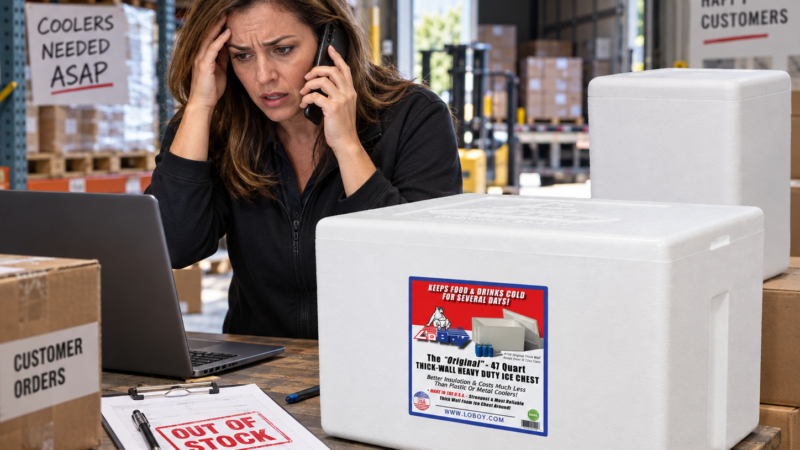
The trouble with a Styrofoam cooler shortage is that nobody downstream cares why it happened. The meat still has to ship, the seafood still has to stay cold, prepared meals still have delivery commitments, and the freight schedule keeps moving whether the packaging does or not. Once a regular supplier says the order cannot be filled, the buyer is no longer comparing brochures or shaving pennies off unit cost; the job becomes finding the right insulated container, in the right quantity, from a company that can actually help get the shipment back on track.
Once the search begins, the buyer is not merely looking for better service; the buyer is looking for the actual Styrofoam Coolers, insulated shippers, or bulk insulated containers the operation depends on. A restaurant supplier looking for a rugged thick-wall chest has a different requirement from a seafood company packing parcel or freight shipments, and both are solving a different problem from a producer moving pallet-scale volumes of refrigerated product. Good service matters because it gets the buyer to the right product faster, but the product still has to fit the job, the packing process, and the quantity the business can use.
LoBoy is useful in that moment because the product line spans more than one kind of insulated container. A buyer may need recreational thick-wall Styrofoam Coolers for rugged cold storage and handling, Styrofoam Coolers for insulated shipping for temperature-sensitive products moving through parcel or freight transit, or Gaylord-sized insulated shipping boxes when the requirement has moved far beyond ordinary case quantities. Those categories are not interchangeable, which is exactly why product breadth and human help matter together when the original supplier has failed.
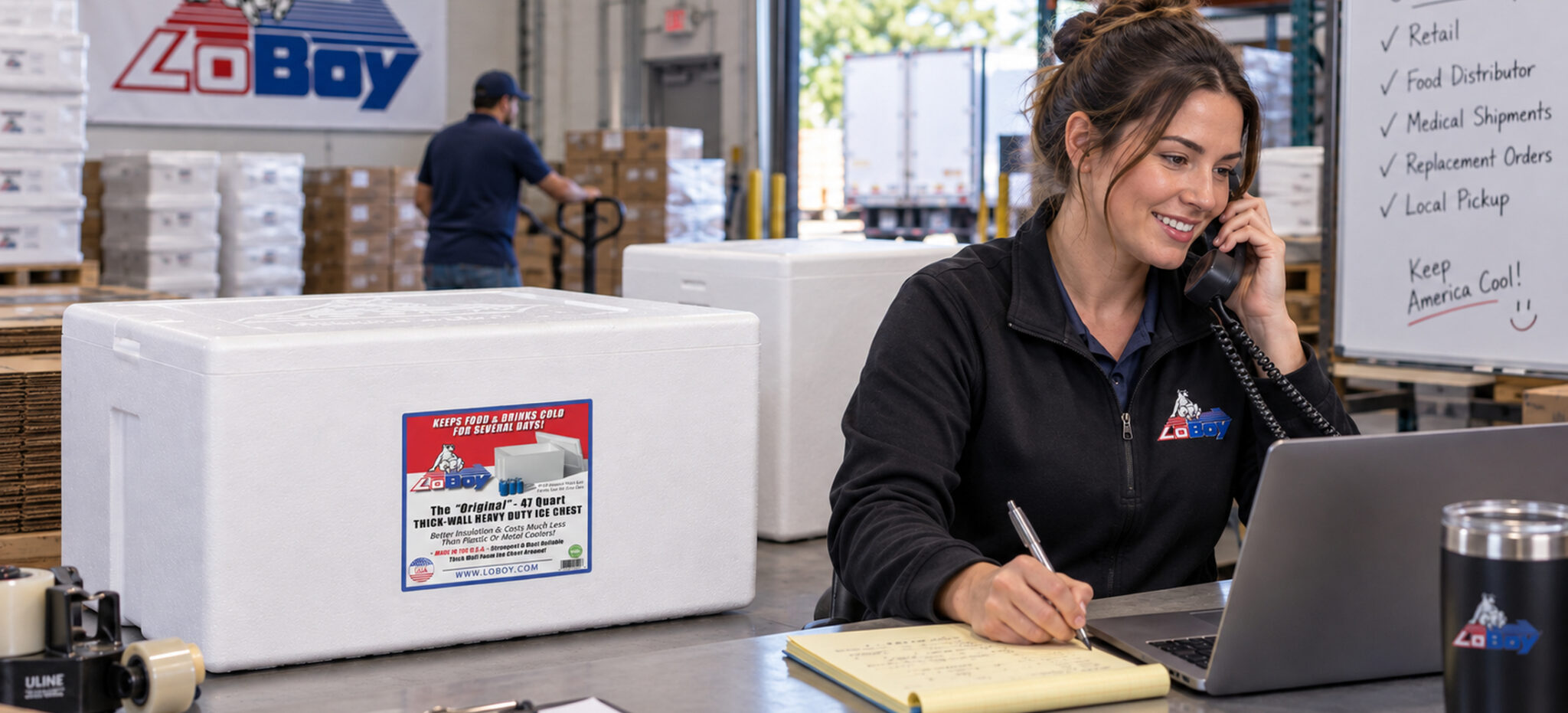
A buyer under pressure can make a bad substitution very quickly. If the unavailable cooler was a broad, thick-wall chest, replacing it with a tall shipping container simply because the outside volume looks similar can create trouble at the packing table. If the shipment needs a freight-oriented insulated shipper, a recreational chest may be the wrong form factor even if both products are made from EPS. Outside dimensions, inside dimensions, wall thickness, lid fit, internal shape, refrigerant placement, handling method, and outer-carton requirements can all affect whether a replacement cooler actually works the way the operation expects.
When the Product Requirement Changes the Supplier Conversation
LoBoy’s range of Styrofoam Coolers becomes more than a catalog exercise once the buyer has to replace a product under time pressure. The thick-wall cooler line includes small, medium, and large chest-style models, including the 47-quart #104 Original with 1½-inch walls, while the insulated shipping line spans compact shippers through larger freight-oriented containers. The buyer is therefore choosing more than capacity in quarts; the geometry of the cooler, usable interior space, insulation thickness, and the way the package will travel all belong in the decision.
Someone replacing a heavy-duty chest can go directly to the recreational thick-wall Styrofoam Coolers category and compare available footprints and capacities instead of starting from scratch. A company packing perishables for parcel or freight shipment can move directly into the Styrofoam shipping cooler line and evaluate shippers built for that job. The supplier conversation becomes far more productive when both sides are discussing the same type of container instead of treating every white foam box as interchangeable.
Quantity changes the buying problem just as much as product type. A specialty food business may need enough Styrofoam Coolers to cover this week without turning its storage area into a packaging warehouse, while a larger account may need recurring case quantities, staged inventory, or a supplier capable of supporting a major production run. LoBoy’s flexible-ordering approach gives the smaller buyer room to solve an immediate shortage without overcommitting cash and storage space, while the company’s broader product range leaves room for the relationship to grow as the quantities become more substantial.
That combination is useful because the buyer does not have to choose between a supplier that welcomes a modest order and a supplier that can support larger commercial needs. A business may be testing a new shipping program today, covering a seasonal spike next month, and expanding into recurring volume later. The easier that progression is to manage with one supplier, the less often purchasing has to start the search over again.
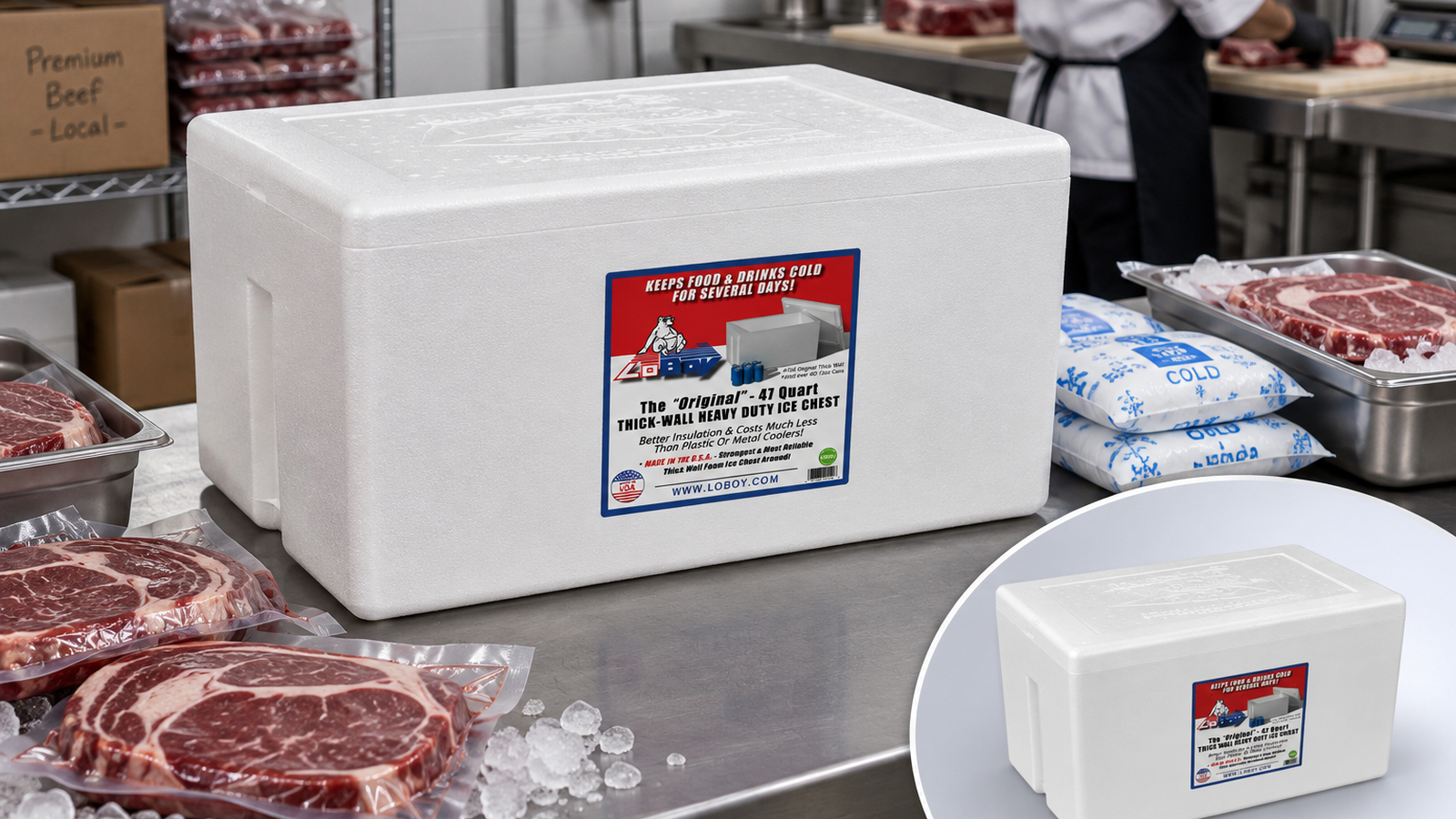
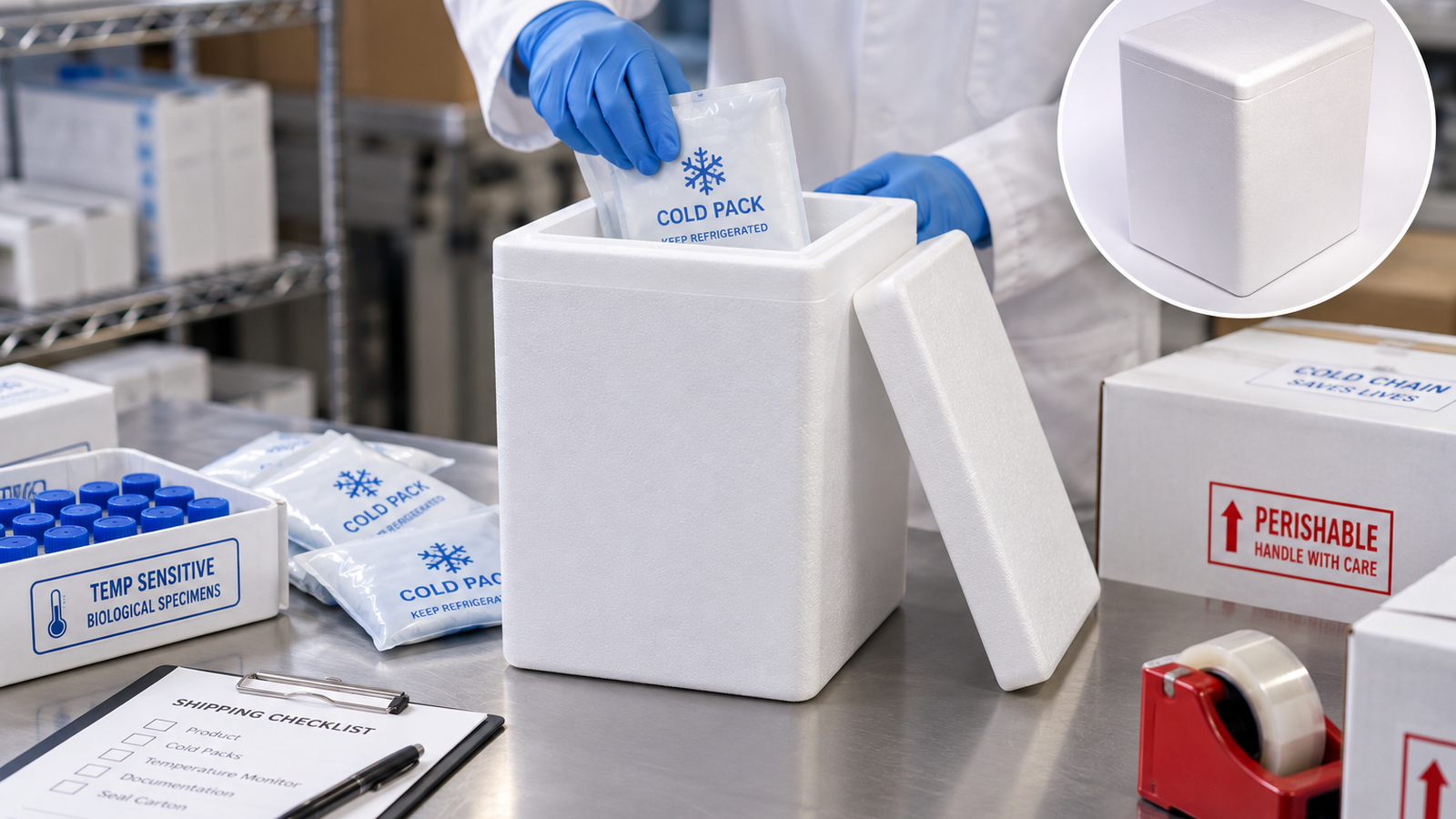
The product itself still has to remain the center of the decision. The 47-quart LoBoy #104 Original is a broad, thick-wall chest, while the 27.5-quart #206 is a taller insulated shipping cooler with a more compact footprint. Those two products illustrate why “Styrofoam cooler” is a category description rather than a complete specification; the right choice depends on what is being packed, how it is being handled, and how the shipment has to travel.
When a Few Cases Are No Longer Enough
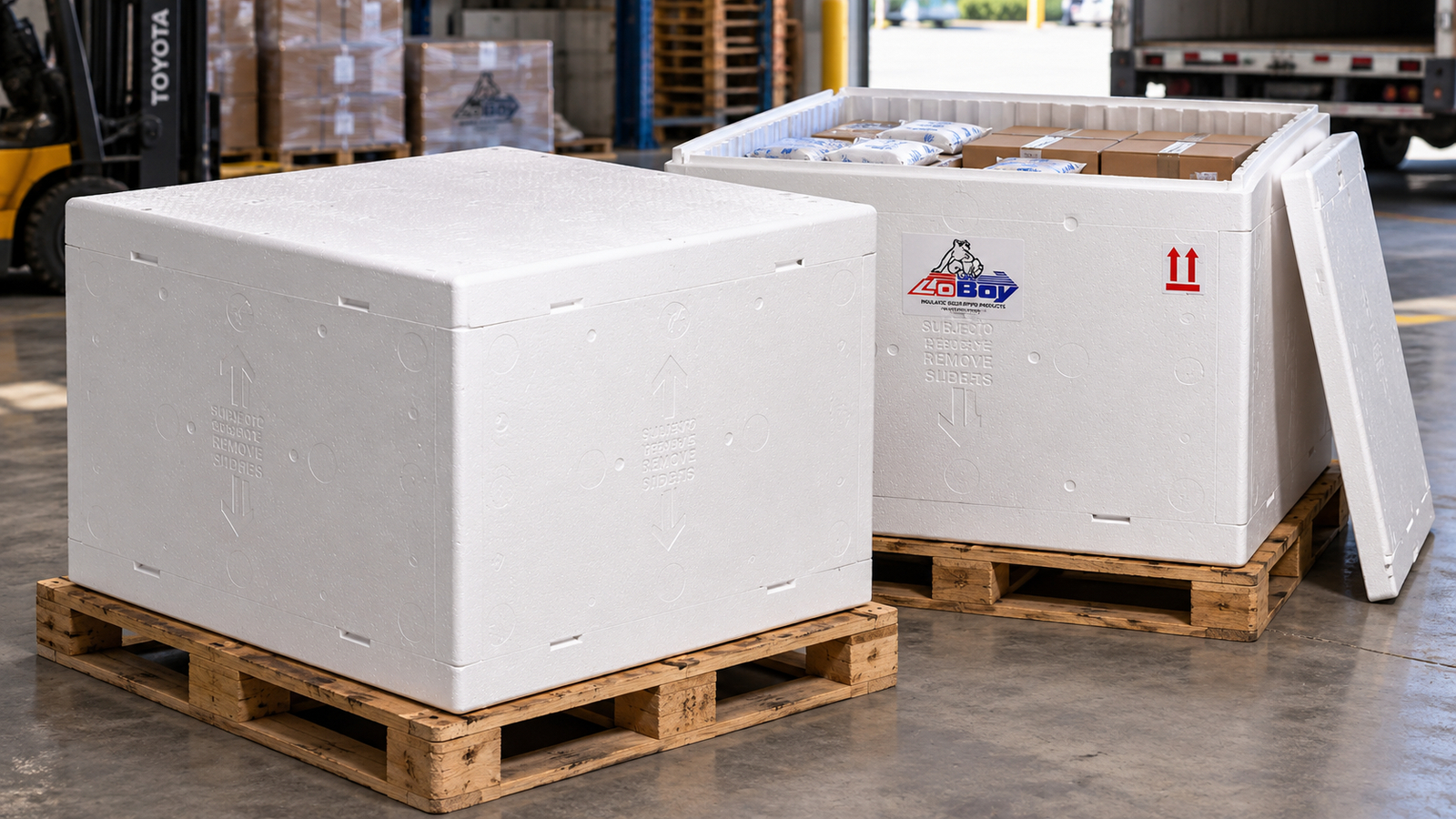
Large-volume requirements deserve a different product conversation. LoBoy’s Gaylord-sized insulated shipping boxes are built for bulk movement of temperature-sensitive products, where the requirement has moved beyond simply ordering more individual Styrofoam Coolers. For a buyer whose regular supplier failed on a high-volume program, the better answer may be a larger insulated shipping system that matches the pallet configuration, product volume, and freight plan already in place.
The right response to a supply problem is not always a substitute SKU. Sometimes the operation has outgrown the container it was using, or the economics of the shipment have changed enough that a bulk insulated format deserves consideration. A supplier with recreational coolers, insulated shipping coolers, and Gaylord-scale options can discuss that choice without forcing every buyer toward the same kind of package.
Flexible ordering becomes commercially useful in this context because it lets the buyer solve the problem at the scale that exists today. A temporary shortage may call for a modest replacement order, while a growing program may need substantially more capacity a few months later. The ability to buy sensibly now without closing off larger options later reduces the risk of trying another supplier.
A human being answering the phone matters because the buyer may need more than confirmation that some kind of cooler is available. The useful questions are practical: which category fits the shipment, whether a different size preserves the existing packing method, whether thicker walls are appropriate, whether an alternate shipper changes refrigerant placement, or whether the volume has become large enough that a Gaylord-sized insulated container deserves consideration. Service has economic value when it helps the buyer make a sound product decision while the shipment can still be saved.
That becomes especially important after the first supplier failure has already forced a decision. Under time pressure, an unfamiliar substitute can create new costs in packing labor, product fit, refrigerant arrangement, freight dimensions, or downstream handling. A supplier that can discuss the actual shipment rather than merely quote whatever SKU is easiest to sell helps keep the replacement decision tied to the operation.
LoBoy’s category structure gives buyers a useful starting point before the call begins. Companies looking for chest-style Styrofoam Coolers can review the recreational thick-wall cooler line; businesses packing perishables can work through the Styrofoam Coolers for insulated shipping category; and operations moving much larger loads can examine the Gaylord-sized insulated bulk shippers. Those paths narrow the product problem before a salesperson ever enters the discussion.
A Backup Supplier Earns the Next Call by Solving This One
Most companies do not replace a supplier that is doing its job. Familiar products, established purchasing habits, and known freight routines all have value, so the incentive to change usually appears only when something stops working. A Styrofoam cooler shortage creates exactly that opening because the buyer now has a reason to compare not only price, but product breadth, ordering flexibility, capacity, and the amount of effort required to get the right product moving again.
The first order does not have to settle the entire supplier relationship. It only has to solve the immediate packaging problem without creating a worse one. If the buyer can identify the right category, get the quantity that makes sense, reach somebody who understands the requirement, and discover that the supplier can also support larger needs later, the comparison with the incumbent supplier has already begun.
LoBoy’s service and product range meet at that point. The service is useful because it helps the buyer navigate the actual choice; the product range is useful because there is something substantial to navigate, from thick-wall Styrofoam Coolers through insulated shipping containers and into Gaylord-scale bulk systems. When the regular supplier cannot deliver, that combination gives the buyer a practical alternative instead of another phone number to leave a message with.
Your Styrofoam Cooler Supplier Can’t Deliver? Let’s Solve It.
Tell LoBoy what you’re shipping, what cooler or insulated container you’ve been using, how many you need, and the timing you’re facing. The Client Solutions Team can help you identify the right option and get the conversation moving.
Call LoBoy Now — (888) 243-1112 Talk to LoBoy Client Solutions
 Why LoBoy Coolers Are the Right Choice for Shipping Venison