
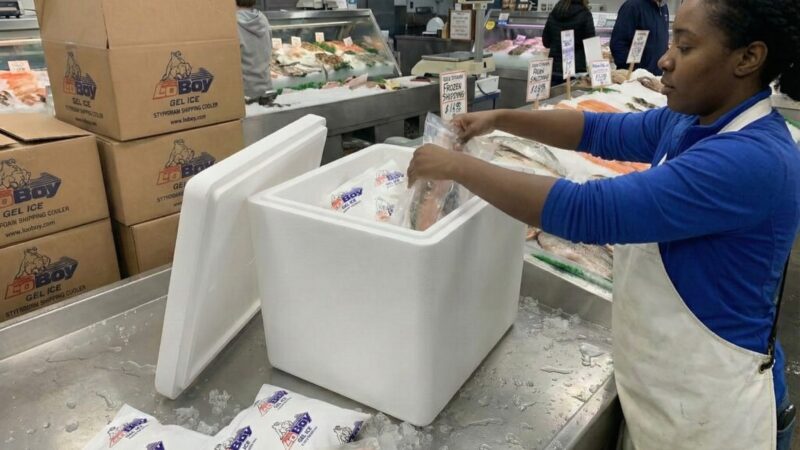
Why Insulated Coolers Are Used in Perishable Seafood Shipping
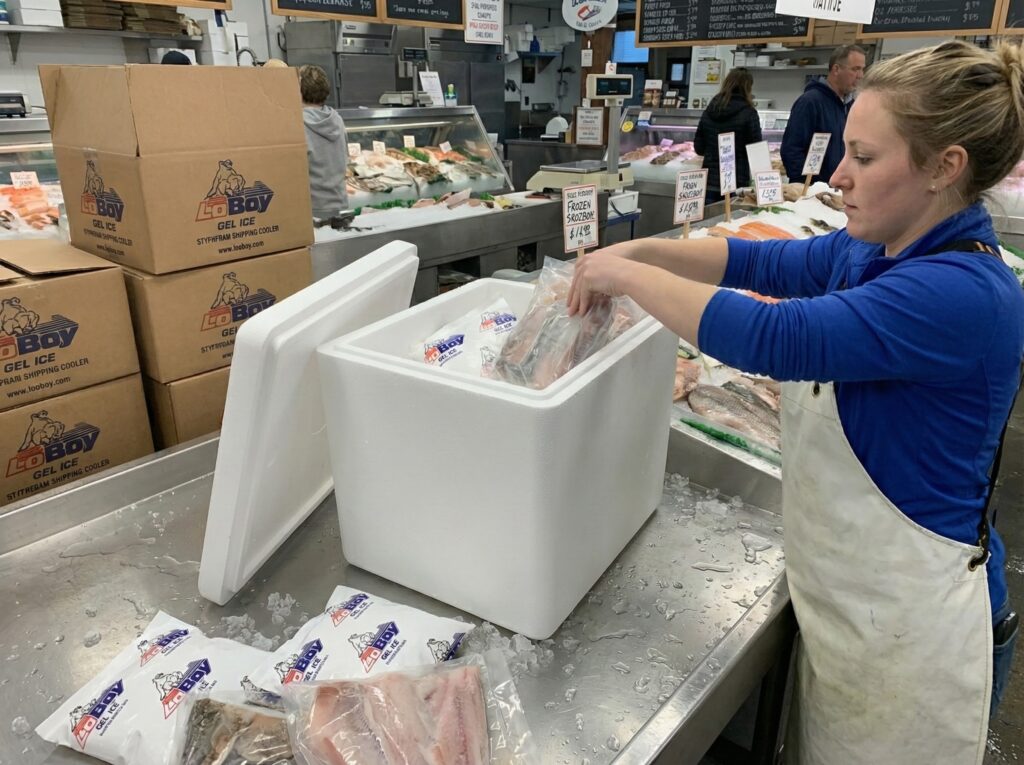
Seafood shipping coolers are essential for maintaining proper temperature control from the moment seafood leaves a facility until it reaches its destination.
For this reason, seafood markets, processors, wholesalers, and distributors rely on insulated seafood shipping coolers designed to help maintain cold temperatures during transit and reduce the risk of entering the Temperature Danger Zone.
A common cold-chain approach used throughout the seafood industry is the combination of insulated styrofoam shipping coolers and gel ice packs, which work together to support temperature stability during shipping.
Why Temperature Control Matters When Shipping Seafood
Seafood is one of the most temperature-sensitive products shipped today. If internal temperatures rise into the range where bacteria grows rapidly, spoilage can accelerate quickly.
Maintaining cold temperatures during shipping helps slow bacterial growth, preserve texture and freshness, protect food safety, and reduce rejected shipments and losses. Proper insulation and refrigerants play a key role in achieving this.
The use of insulated seafood shipping coolers helps prevent products from entering the Temperature Danger Zone, a food safety risk defined by the FDA where bacteria can grow rapidly if temperatures are not properly controlled: FDA Guidelines on How to Store and Work With Food Safely.
The Role of Gel Ice in Seafood Shipping
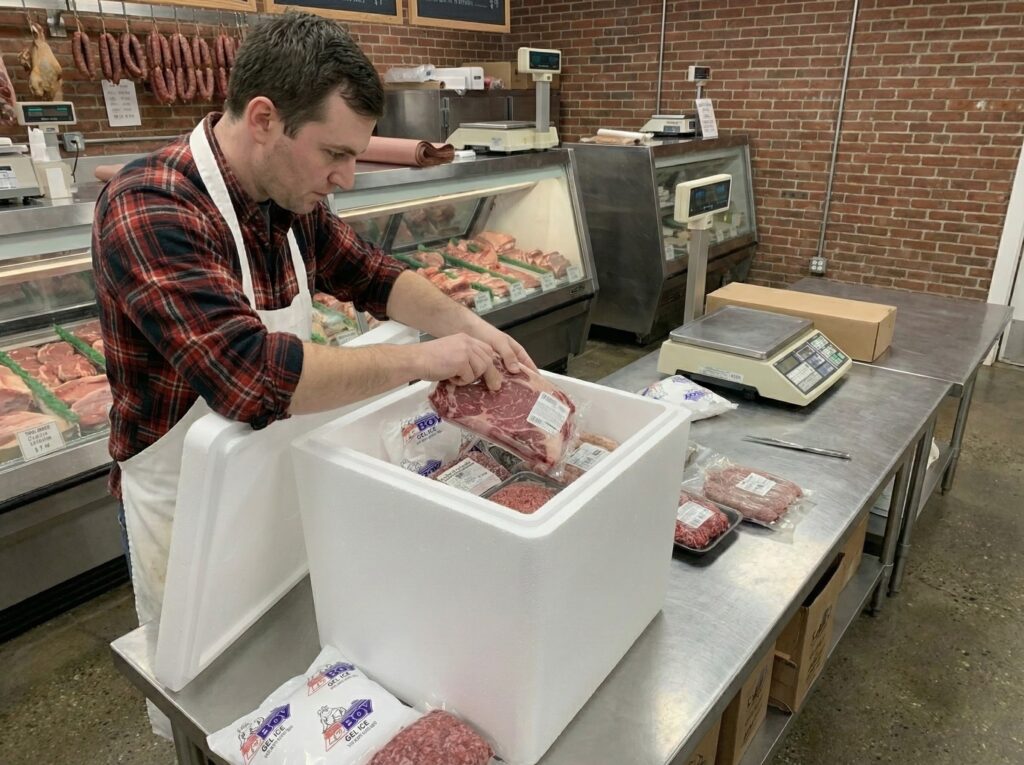
Gel ice packs are commonly used in seafood shipping coolers to help maintain consistent cold temperatures. Compared to loose ice, gel ice melts more slowly and evenly, helping reduce sudden temperature fluctuations inside the cooler.
Reusable gel ice packs are designed for insulated shipping applications and are widely used in seafood and perishable food transport.
Why Styrofoam Shipping Coolers Are Widely Used
Styrofoam, also known as expanded polystyrene, is widely used for seafood shipping coolers because of its insulating properties and lightweight structure. Thick expanded polystyrene walls help trap cold air and slow the transfer of external heat during transit.
Styrofoam shipping coolers are commonly manufactured for insulated shipping of temperature-sensitive products.
Built for Long-Distance and Extended Shipping
When properly packed with insulation and gel ice, insulated seafood coolers are commonly used for overnight shipping, multi-day transit, coast-to-coast deliveries, and international shipments. Performance depends on packing methods, transit time, and external conditions.
Frequently Asked Questions About Shipping Seafood Safely
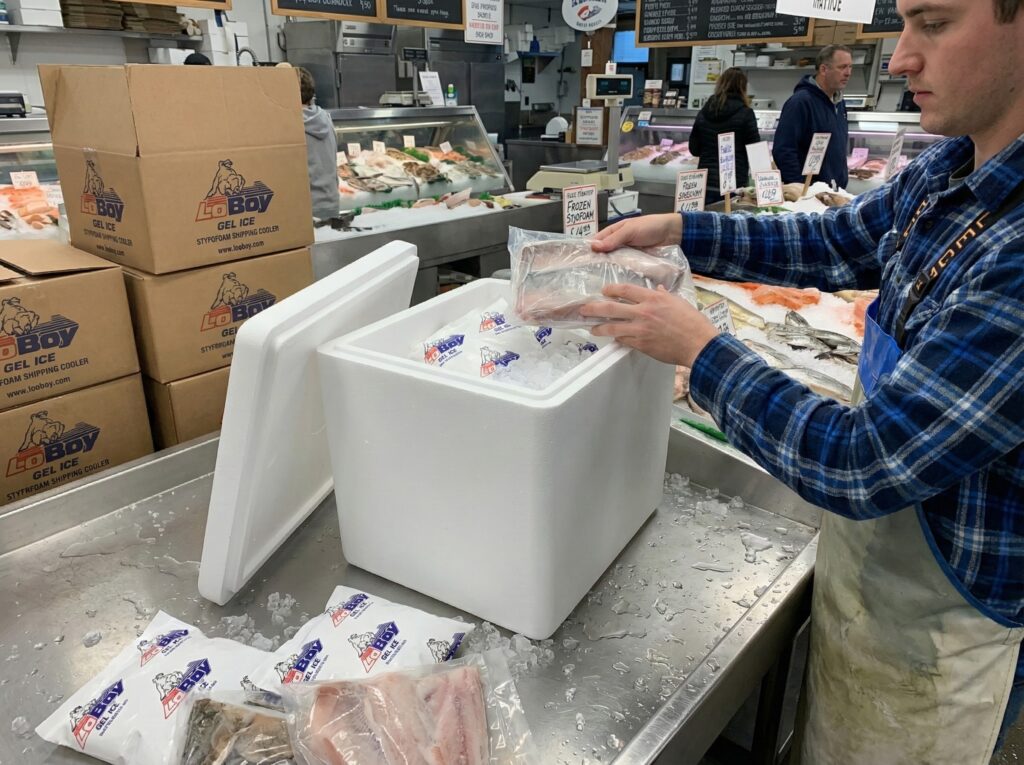
What are seafood shipping coolers?
Seafood shipping boxes and box kits are insulated containers designed to help maintain cold internal temperatures while seafood is being transported. They are commonly used by seafood markets, processors, wholesalers, and distributors.
Why are seafood shipping coolers important?
Seafood is highly perishable and sensitive to temperature changes. Insulated shipping coolers help reduce temperature fluctuations and protect seafood quality during transit.
What is the Temperature Danger Zone in seafood shipping?
The Temperature Danger Zone generally refers to the range between forty degrees Fahrenheit and one hundred forty degrees Fahrenheit, where bacteria can grow rapidly. Seafood shipping coolers are used to help keep products below this range for as long as possible during shipping.
Why is styrofoam used for seafood shipping coolers?
Styrofoam provides strong insulation while remaining lightweight. Thick walls help slow heat transfer and keep cold air inside the cooler during transport.
How do gel ice packs work in seafood shipping coolers?
Gel ice packs melt slowly and evenly, helping maintain more consistent internal temperatures than loose ice. They are commonly used for overnight and multi-day seafood shipments.
Can seafood shipping coolers be used for long-distance shipping?
Yes. Insulated Coolers for Seafood are commonly used for overnight, multi-day, and long-distance shipping when properly packed with insulation and refrigerants.
What types of seafood are shipped using insulated coolers?
Fish, shellfish, lobster, crab, shrimp, oysters, clams, and other perishable seafood products are commonly shipped using insulated seafood shipping coolers.
How long can seafood stay cold in a shipping cooler?
Cold retention time varies based on insulation thickness, refrigerant quantity, shipping duration, and ambient temperatures. Properly packed coolers can help maintain cold temperatures for extended periods.
Are seafood shipping coolers reusable?
Many insulated shipping coolers and gel ice packs can be reused, depending on their condition after shipment. Reuse is common in wholesale and commercial operations.
Who uses seafood shipping coolers?
Seafood shipping box kits are used by seafood markets, processors, wholesalers, distributors, specialty food companies, and cold-chain logistics providers.
What should be considered when selecting seafood shipping coolers?
Insulation thickness, cooler construction quality, compatibility with gel ice, shipping duration, product weight, and handling requirements are common considerations.
 Cold for Days: Why LoBoy Styrofoam Coolers Outlast the Rest